
What the day feels like
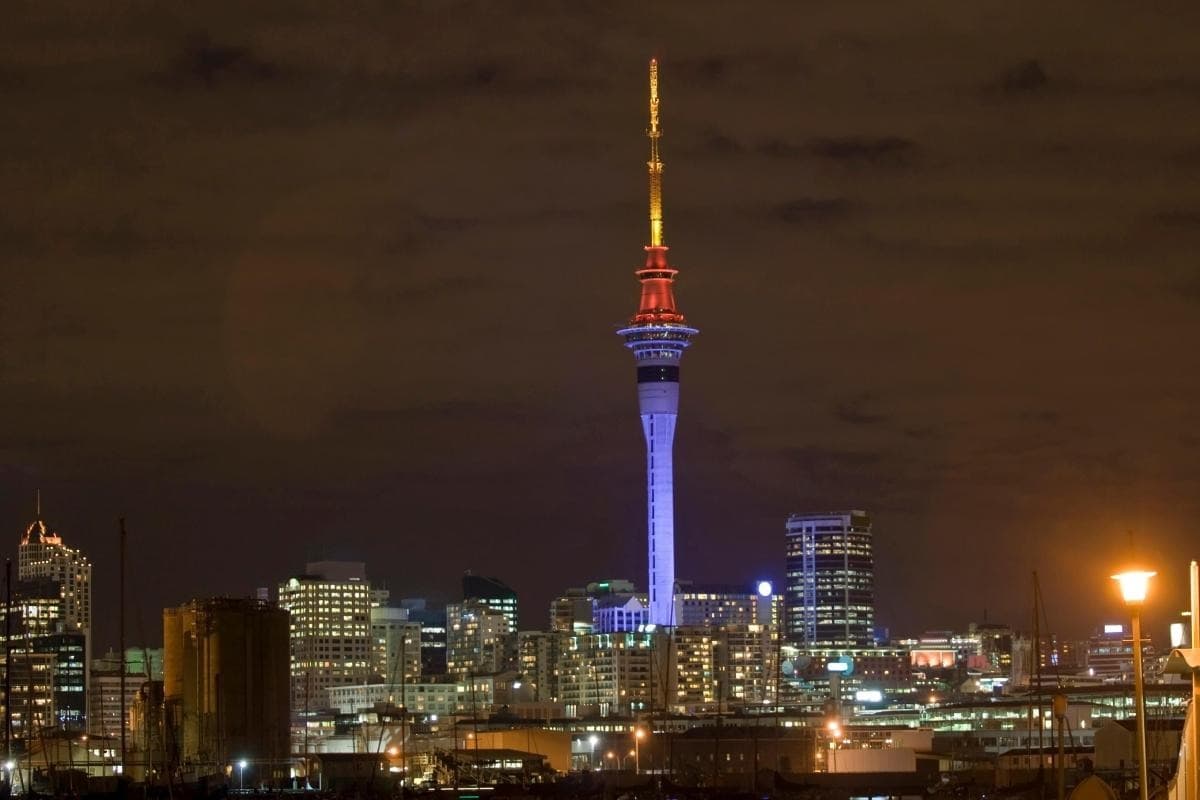
The elevator hums, the city falls away and for a few seconds you are measured not in blocks or beaches but in meters—328 of them, to be precise—rising through glass to a platform where the wind announces itself and the harbor pulls every direction into a single sweep. From the Sky Tower, downtown Auckland unfolds like a map you can walk on: sails of yachts at the Viaduct, the dark, ridged flank of Rangitoto Island, and low volcanic cones that mark this city’s geological past. The view feels intimate and architectural at once—an urban landscape packed with geological memory and modern ambition.
On a clear Auckland morning, the tower’s observation decks are a good place to learn how the city came to be. Tāmaki Makaurau—Auckland’s Māori name—means “the place desired by many,” and the vista explains why. Ringed by two harbors and set atop an isthmus of volcanic cones, the city grew where water and volcanoes made a harbor-rich, strategically valuable landscape. The Sky Tower itself is a late-20th-century punctuation mark in that story: built as part of SkyCity’s casino-and-entertainment precinct, it opened in 1997 and quickly became the city’s signature needle, visible from beaches and suburbs alike.
The tower’s materials and design are pragmatic rather than ornamental. From its base you can see how it anchors to earth, and from its peak you see how the land and sea keep shaping Auckland—Rangitoto’s blunt crater, the green teeth of extinct scoria cones, and the coastline that dares you to explore it. Culture threads through that geology: nearby Waitematā Harbour was a highway for Māori voyagers, and today the city’s waterfront carries cafés, craft breweries, and itineraries that start from the Sky Tower and spin outward—private Auckland City Highlights tours and full-day excursions that pair skyline time with beach walks at Muriwai or a gannet colony view.
The experience is both mellow and architectural-adventure. For most visitors, a General Admission Ticket is a tidy capsule of pleasures: elevator speed, 360-degree panoramas, and a café or two where you can let the scale sink in. For people who want a physical jolt, SkyWalk and SkyJump convert observation into adrenaline—walking the exterior ledge or free-falling with the city as backdrop. For those who prefer an aerial vantage with motion under them rather than under their feet, Hauraki Gulf scenic flights orbit the same skyline you’ve just admired from a fixed tower, giving you close-up passes over Rangitoto and Waiheke Island that reveal the volcanic archipelago from a bird’s-eye view.
A practical note: the Sky Tower is an urban attraction, not a hike. Your exertion will be social and sensory—queuing for views, timing sunset, or navigating elevator windows. But the tower is also the hinge to other Auckland adventures: book a Street Food Tour afterward to ground the panorama in flavor, or join a private City Highlights tour that begins at the tower and drives to Mount Eden, North Head, or the Pohutukawa-lined bays. On full-day excursions you'll trade the tower’s verticality for black-sand beaches and gannet colonies—proof that a single visit can fold several ecosystems into one day.
If you’re planning, consider timing and weather first. Late afternoon through sunset is the most cinematic time—light slants across Waitematā, the islands look like ink sketches on polished steel, and the city lights come on one by one. Cloud can make the tower feel very remote—atmosphere, yes; visibility, less so. Bring a light layer: wind on the observation deck is sincere, and New Zealand weather shifts quickly.
Booking is straightforward and much easier handled in advance, especially for SkyWalk or SkyJump where slots sell out. If you’re short on time, a half-day city tour that starts at the tower will maximize your hours: you’ll see volcanic cones, winter gardens, and a coastline in the same morning. For photographers, morning and late afternoon deliver different moods—sheets of gold or the deep blues of harbor water—but night photography is surprisingly rewarding because the city’s lights reflect in the water below.
Auckland’s Sky Tower is not a wilderness monument; it’s an urban observatory that invites you to orient yourself. Make it an anchor in a longer itinerary: from here you can fly over the Hauraki Gulf, ferry to Waiheke vineyards, hike Rangitoto’s crater rim, or drive west for the wild-coast surf and seasonal gannet colonies. Each of those excursions feels like a logical expansion of the view you just saw—landforms you could only previously identify on a map come into tactile reach.
Respect and curiosity make the visit richer. Start with the skyline, but leave time to taste the city—kai (food), coffee, local beers—and to listen to guides who connect the towers and the cones to Māori history and the story of modern Auckland. If you want the city’s most literal and immediate panorama, the Sky Tower delivers: a place to stand, to measure your appetite for height and horizon, and to plan where you’ll go next.
Practical short list: buy timed tickets online, choose golden hour for photography, reserve SkyWalk/SkyJump early, and pair the tower with a nearby food or coastal tour to translate the view into a day of exploration. Above the city, it’s easy to imagine the whole region as a set of promises: volcanoes to climb, islands to visit, and a harbor that always pulls you out toward the water.
Trail wisdom
Small choices, better day.
Book timed entry and add-ons ahead
SkyWalk and SkyJump have limited slots—reserve online to avoid sold-out times and long queues.
Aim for golden hour
Late afternoon gives the warm side-light that makes Rangitoto and the harbor glow—plan for sunset viewing if you can.
Layer up for wind
Even on warm days the observation deck can be blustery—bring a light windbreaker for comfort.
Pair the visit with a land tour
Combine your ticket with a City Highlights or full-day tour to see Mount Eden, North Head and coastal bird colonies in one day.
Local knowledge
Read the place, not just the route.
Watch for native species including Gannets (seasonal viewing on west coast tours), Dolphins and orcas can occasionally be seen on Hauraki Gulf boat or scenic flight trips.
Keep an eye out for wildlife during the transition between areas and habitats. Respect distance guidelines.
Use public transport or shared transfers to the tower to reduce emissions; support local conservation efforts that protect the Hauraki Gulf and native bird colonies.
Follow the guide's instructions on size limits, ethical handling, and leave-no-trace practices.
Orbit 360° Dining—book sunset for a revolving restaurant experience with the same views as the observation deck. Combine Sky Tower entry with a short ferry ride to Devonport for quieter viewpoints and boutique cafés
Locally recommended viewpoints and quiet spots known best to local operators.
The Sky Tower opened in 1997 and quickly became Auckland’s defining skyline feature; Auckland itself sits atop a volcanic field of around 50 dormant cones dating back thousands of years.
Maritime roots and regional tradition shape the waterways and working coasts.
Seasonal guide
Four versions of the same landscape.
Spring
Best forBlossoming parks · Clear morning views · Milder crowds
ChallengesUnpredictable showers · Windy days
Spring (Sept–Nov) brings mild weather and blooming parks—great for pairing a tower visit with walks in the Auckland Domain.
Summer
Best forSunset vistas · Harbor activities · Island day trips
ChallengesBusier attractions · Hot midday sun
Summer (Dec–Feb) has long, clear days ideal for Hauraki Gulf flights and ferry trips—book early for peak season.
Fall
Best forCrisp light for photos · Fewer tourists · Calmer harbor waters
ChallengesShortening days · Occasional rain fronts
Autumn (Mar–May) offers crisp skies and softer light—perfect for photography and quieter tours.
Winter
Best forDramatic skies · Clear long-range views · Lower prices
ChallengesCooler temperatures · Possible low cloud
Winter (Jun–Aug) can give dramatic contrasts and clearer long-range visibility if skies clear, but bring warm layers.
Pack with intention
What to bring.
Good to know
Common questions.
Allow 30–90 minutes for the observation decks; longer if you include dining, SkyWalk, or SkyJump.
Plan the edges
The details that make the day easier.
Auckland Sky Tower stands 328 meters tall and, since opening in 1997, has been one of the tallest freestanding structures in the Southern Hemisphere.
Auckland mixes Māori cultural touchstones with maritime café life—pair your Sky Tower visit with a street food tour to sample manuka honey treats, kumara fries, and waterfront seafood, then try a craft beer on the Viaduct.
- Open daily; allow 30–90 minutes; address
- SkyCity Auckland precinct in central city; nearest hub: Britomart (10–15 min walk); book SkyWalk
Choose public transport or shared transfers, avoid single-use plastics on-site, and consider local conservation tours that contribute fees to protect the Hauraki Gulf and bird colonies.
Explore by topic
Follow the threads.
Keep exploring
Make the story part of the trip.
Set out from Bass Harbor for a private, customizable day on Blue Hill Bay — lighthouses, puffins, seals, and the chance to feel Acadia from the water. Small groups, local captains, unforgettable views.
In four hours you can move from shaded canyon ferns to wind-scoured coastal ridgelines, guided by someone who knows where the light—and the hidden views—live. This private half-day hike on the Monterey Peninsula or Big Sur is compact, curated, and perfect for travelers who want depth without a multiday commitment.
 Related story
Beneath a sky of shifting light, Skaftafell’s ice reads like a map of time. This three-hour guided glacier hike mixes technical instruction with geology and culture: compact, safe, and unforgettable.