
What the day feels like
You arrive at the base of Mount Machinchang in the humid blue light of early morning, when the island’s heat is still a promise and the rainforest smells like wet cardboard and green. A line of cable car cabins hums uphill, each one lifting you through cloud and creeper-tangled canopy until the island drops away beneath you—villages, mangroves and the fractured geometry of limestone coastline. The cable car’s angle feels audacious, the glass beneath your feet making the slope seem almost vertical; when you step out at the top, you’re on a narrow ridge older than the idea of Malaysia itself, and the wind has stories to tell.
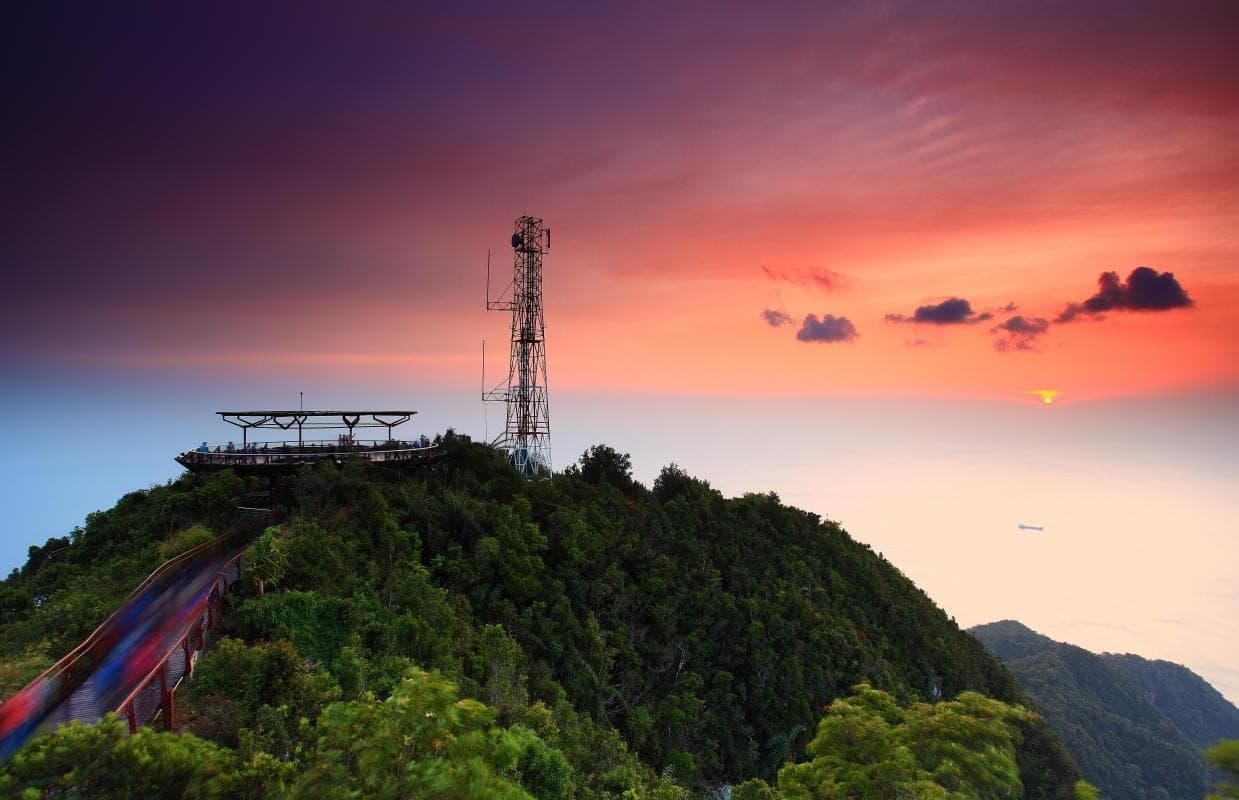
Mount Machinchang—locally Gunung Mat Chinchang—is the geological backbone of northern Langkawi. Its Cambrian-aged sandstone and quartzite are among the oldest exposed rocks in Southeast Asia; every outcrop is an archive of deep time. The mountain’s jagged ridgeline plunges into coastal mangroves, and that dramatic change—ridgetop to tidal flat in a few kilometers—gives the place its cinematic contrasts. The modern draw is the Langkawi SkyCab and the curved Sky Bridge: a 125-meter pedestrian span that hovers over a drop and frames the Andaman Sea like an old photograph. But the mountain isn’t just an Instagram backdrop. It’s a living, breathing tropical place where geology, rainforest ecology and local folklore meet.
History and culture braid through the climb. Langkawi’s island stories include the legend of Mahsuri, whose curse and memory are woven into many island tours; on trips such as The Grand Tour of Langkawi or Charming Langkawi in Half a Day, guides will point to nearby cultural sites and tell the tale of a woman whose fate shaped local identity. The island’s human history—seafaring traders, local Malay communities, and a rising tourism economy—sits quietly beside the prehistoric stones. Local vendors sell kaya and roti, and small shrines and cairns appear in unexpected clearings. The ridge has always been a landmark; now it’s a destination where traditional life and modern access converge.
Geology is the mountain’s quiet headline. The Machinchang Formation is a Cambrian-age sequence—rock that formed roughly 500 million years ago. Those layers were uplifted and tilted, then carved by monsoon rains and shoreline forces into the steep escarpments you ascend today. The result is not only excellent vistas, but a classroom for anyone curious about earth history: banded sandstones, sawtooth ridges and cliff faces that throw down scree like geological confetti.
Practically speaking, you can experience Mt. Machinchang in several ways. The easiest is the SkyCab to the top station, followed by the boardwalk and the graceful Sky Bridge—an option that suits most fitness levels and delivers maximum view for minimal sweat. If you want more of the mountain’s backcountry, guided hikes follow trails that thread into primary rainforest, steep staircases and occasionally exposed ridge-lines; these treks are best for fit walkers comfortable with slippery rocks and sudden elevation changes. Tour options like The Grand Tour of Langkawi and Charming Langkawi in Half a Day bundle the SkyCab with cultural stops—Kuah Town, Mahsuri’s tomb, and local lunches—so you get both panoramic perspective and regional context in a single outing.
The mountain’s weather is mercurial. Mornings and late afternoons deliver the clearest light; midday clouds and rain can roll in fast. If you time your visit for early day you’ll avoid the thickest heat and have a better chance of seeing the coast in full clarity. Birders and wildlife watchers will want to linger near the canopy: hornbills and swiftlets wheel through the trees, and long-tailed macaques patrol the lower viewing platforms (don’t feed them). The ridge presents photographic opportunities from sweeping coastal panoramas to intimate moss-and-fungus close-ups.
Planning notes that matter: footwear, sun protection and timing will make or break your experience. If you take the SkyCab, allow time at the top for the boardwalk and Sky Bridge—don’t rush a visit that should include pauses to look back over the archipelago. If you hike, expect muddy sections and steep steps; trekking poles help. For either option, bring cash for snack stalls and modest vendor stands at the top, and plan transfers in advance if you’re staying in Pantai Cenang or Kuah.
Sustainability and etiquette are straightforward: stay on designated paths, respect signage and avoid feeding wildlife. The Sky Bridge and the boardwalk are managed to limit erosion; follow stewardship rules and support local guides and vendors so the community benefits from visitor interest.
Why go? Because Mt. Machinchang condenses a dozen good reasons into one place: geological wonder, rainforest intimacy, adrenaline-tinged exposure on the Sky Bridge, and a practical travel day that pairs perfectly with beach time. Whether you take a half-day excursion like Charming Langkawi in Half a Day or a fuller circuit on The Grand Tour of Langkawi, a morning on Machinchang will give you a compact lesson in Langkawi’s natural and cultural landscape—and a view you’ll remember long after the island sand is swept from your shoes.
Trail wisdom
Small choices, better day.
Take the first SkyCab
Morning cabins offer the clearest views and cooler conditions—arrive early to beat crowds and clouds.
Pack for quick storms
Light rain jackets and quick-dry layers will keep you comfortable; conditions can change fast at ridge-top.
Respect the macaques
Do not feed or try to photograph macaques up close; keep bags zipped and food stowed.
Wear grippy shoes
Even short boardwalks and access trails can be slippery; footwear with good traction helps prevent falls.
Local knowledge
Read the place, not just the route.
Watch for native species including Long-tailed macaque, Oriental pied hornbill.
Keep an eye out for wildlife during the transition between areas and habitats. Respect distance guidelines.
Stick to boardwalks and marked trails to reduce erosion; support local guides and vendors who practice low-impact tourism.
Follow the guide's instructions on size limits, ethical handling, and leave-no-trace practices.
Telaga Tujuh (Seven Wells) waterfall and natural pools. Kilim Karst Geoforest Park mangrove channels (short boat trip from nearby)
Locally recommended viewpoints and quiet spots known best to local operators.
The Machinchang Formation exposes Cambrian sandstone and quartzite—rocks that predate many modern landmasses, telling a story of ancient seas and tectonic uplift.
Maritime roots and regional tradition shape the waterways and working coasts.
Seasonal guide
Four versions of the same landscape.
Spring
Best forfewer tourists · lush rainforest flora · clear mornings
Challengesoccasional heavy showers · sticky humidity
March–May brings lush vegetation and fewer crowds, but expect intermittent rain and warm humidity.
Summer
Best forlong daylight · birdwatching · combining with island hopping
Challengeshigher humidity · afternoon storms · strong sun
June–August is hot with occasional storms—early starts and sun protection are key.
Fall
Best fordramatic cloudscapes · off-peak travel deals · calmer waters nearby
Challengesincreased rain later in season · reduced visibility at times
September–November sees more variable weather and the start of wetter months; cloud-filled vistas can be dramatic.
Winter
Best forclear coastal views · comfortable mornings · ideal for SkyCab rides
Challengeshigher visitor numbers · breezy ridge conditions
December–February is generally the driest, offering the best chance of clear views—expect busier days.
Pack with intention
What to bring.
Good to know
Common questions.
Most visitors use taxis or hotel transfers from Pantai Cenang and Kuah; many tours include round-trip transfers.
Plan the edges
The details that make the day easier.
The Machinchang Formation on Langkawi is Cambrian in age—roughly 500 million years old—making parts of the mountain some of the oldest exposed rocks in Southeast Asia.
Combine a mountain visit with local flavors: try nasi lemak or freshly grilled seafood in Pantai Cenang, and stop at Kuah Town for local crafts—vendors near the top sell traditional snacks and woven goods.
- Nearest tourist hubs
- Pantai Cenang (20–30 min drive). Access: SkyCab provides easiest summit access; expect ticketed entry and short queues at peak times. Facilities: basic food stalls, restrooms at base and summit. Language: Malay and English widely spoken.
Use established access routes, avoid single-use plastics, and hire local guides to ensure economic benefits stay in the community while minimizing environmental impact.
Explore by topic
Follow the threads.
Keep exploring
Make the story part of the trip.
Set out from Bass Harbor for a private, customizable day on Blue Hill Bay — lighthouses, puffins, seals, and the chance to feel Acadia from the water. Small groups, local captains, unforgettable views.
In four hours you can move from shaded canyon ferns to wind-scoured coastal ridgelines, guided by someone who knows where the light—and the hidden views—live. This private half-day hike on the Monterey Peninsula or Big Sur is compact, curated, and perfect for travelers who want depth without a multiday commitment.
 Related story
Beneath a sky of shifting light, Skaftafell’s ice reads like a map of time. This three-hour guided glacier hike mixes technical instruction with geology and culture: compact, safe, and unforgettable.