
Why the Blue Ridge Mountains Wear Their Blue Hue
The Blue Ridge Mountains owe their name to a natural blue haze created by isoprene, a chemical emitted by local trees like oaks and tulip poplars. Explore how this chemical interplay shapes your hiking experience while offering practical tips to prepare for your adventure in the Carolina highlands.
Start Early for Cooler Air and Best Views
The blue haze is most pronounced in the morning before heat builds up, so an early start means cooler hiking and richer scenery.
Hydrate Frequently
Isoprene production and heat often coincide with warmer conditions, making hydration critical to maintain stamina on steep trails.
Wear Footwear with Good Traction
Trail surfaces include rocky and root-covered sections that demand reliable grip to avoid slips and twists.
Respect the Forest’s Chemistry
Avoid disturbing plant life, as trees like oaks and sourwoods are the natural producers of isoprene essential to the environment's unique atmosphere.
Why the Blue Ridge Mountains Wear Their Blue Hue
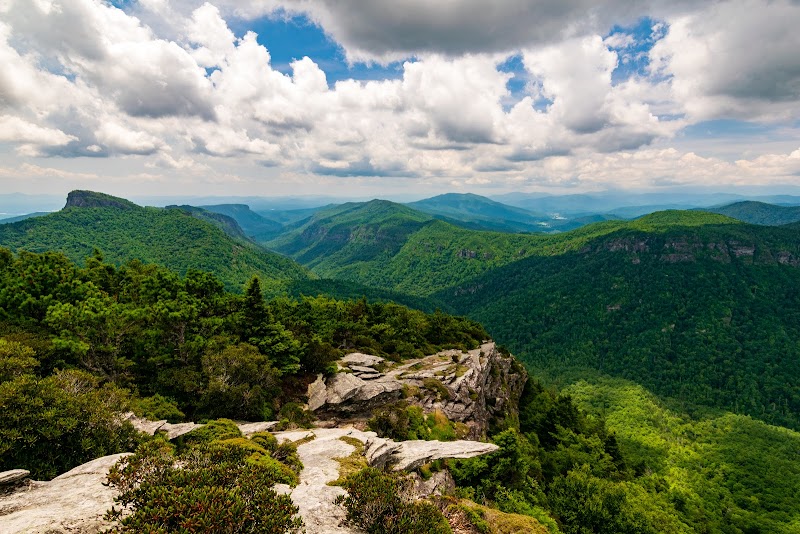
Many adventurers are familiar with the Blue Ridge Mountains' signature blue haze, but fewer know what gives these peaks their iconic color. The answer lies in a chemical called isoprene—a natural compound emitted by several deciduous tree species that carpet these mountains. Isoprene acts like a sunscreen for trees, shielding them from excessive heat and UV damage during the warmer months. When sunlight filters through the vapor released by isoprene, it refracts and scatters in a way that bathes the mountains in that soft, unmistakable blue glow.
Among the primary producers of isoprene here are common trees such as oaks, tulip poplar, sassafras, hickory, and sourwood. As these species release isoprene into the air, they collectively create the atmospheric conditions responsible for the Blue Ridge's signature haze. This effect is especially visible on clear, warm days, when the sunlight intensifies the scattering of blue wavelengths across the forest canopy.
Hiking through the Blue Ridge is not only a journey across steep ascents and ridge lines but also a walk through a living chemical interaction between flora and atmosphere. The trails wind under vast leafy canopies where the very air seems to hum with this invisible but powerful force. Oaks and tulip poplars tower overhead, while the sweet scent of sourwood flowers and the hint of sassafras leaves mingle with the fresh mountain air.
The terrain here offers a range of challenges: expect undulating forest paths with occasional rocky stretches and moderate elevation gains that push you to stay focused and hydrated. The forest floor sometimes gives way to sudden openings, revealing panoramic views where the blue haze stretches into the distance, making those summit moments deeply satisfying.
To prepare for your Blue Ridge adventure, pack sturdy hiking shoes with reliable traction to handle both roots and stones. Bring adequate water, because the climb, combined with summer heat, can swiftly drain energy. Early morning hikes are ideal for catching the haze at its most vibrant before midday heat rises. Fall offers cooler temperatures and a different visual treat, with isoprene emissions mated to bright autumn foliage.
This hike asks you to respect the mountain’s natural pulse—a landscape fiercely itself. The interaction between sunlight, trees, and atmosphere shapes your experience as much as the physical trail beneath your feet. Understanding the role of isoprene adds a new layer of respect for the Blue Ridge as you journey through it, connecting you directly to the biology and chemistry that paint this world in blue.
Nearby Trips
All Adventures
Boat Charters
Water Activities
Adventures near Boone, North Carolina
Discover the unique and memorable adventures that make Boone, North Carolina special.
Frequently Asked Questions
What exactly is isoprene and how does it create the blue haze?
Isoprene is a volatile organic compound emitted by trees to protect themselves from heat stress. When sunlight interacts with isoprene in the atmosphere, it scatters light in a way that causes the mountains to appear blue.
Which trees contribute most to the Blue Ridge haze?
Key isoprene producers include oaks, tulip poplar, sassafras, hickory, and sourwood. Their abundance in the Blue Ridge Forest creates the concentrated emissions necessary for the haze.
When is the best time to see the blue haze effect during a hike?
Early morning and late afternoon on warm days provide the best light angle and temperature conditions for maximizing the blue haze visibility.
Are there any lesser-known spots within the Blue Ridge to experience this blue haze?
Try hidden ridges just off main trails near Boone, NC, especially on the Appalachian Trail segments or less-traveled peaks like Elk Knob for expansive views.
How can hikers minimize their impact on this delicate natural process?
Sticking to designated trails preserves tree roots and undergrowth that support isoprene-producing trees. Avoid picking leaves or disturbing the forest floor.
What wildlife can be spotted around the isoprene-rich forests?
Look for white-tailed deer, black bears (from a distance), and a variety of songbirds that thrive in the deciduous woodlands.
Recommended Gear
Sturdy Hiking Boots
Essential for navigating roots, rocks, and variable trail conditions safely.
Hydration Pack or Water Bottles
Key to maintain hydration, especially in warm months when isoprene levels and heat rise together.
Layered Clothing
Necessary to adjust for temperature swings common in mountain environments.
Insect Repellent
Helps protect against bugs attracted by rich forest ecosystems during warmer seasons.
Local Insights
Hidden Gems
- "Calloway Peak Overlook"
- "Plott Balsams Ridge Trail"
- "Price Lake Shoreline"
- "Daniel Boone Native Gardens"
Wildlife
- "Eastern box turtle"
- "Pileated woodpecker"
- "Black bear"
- "Red fox"
History
"The Blue Ridge Mountains have long been home to the Cherokee people and early settlers who relied on the forests for medicine and timber, shaping the cultural fabric still evident in local crafts and traditions."