
What the day feels like
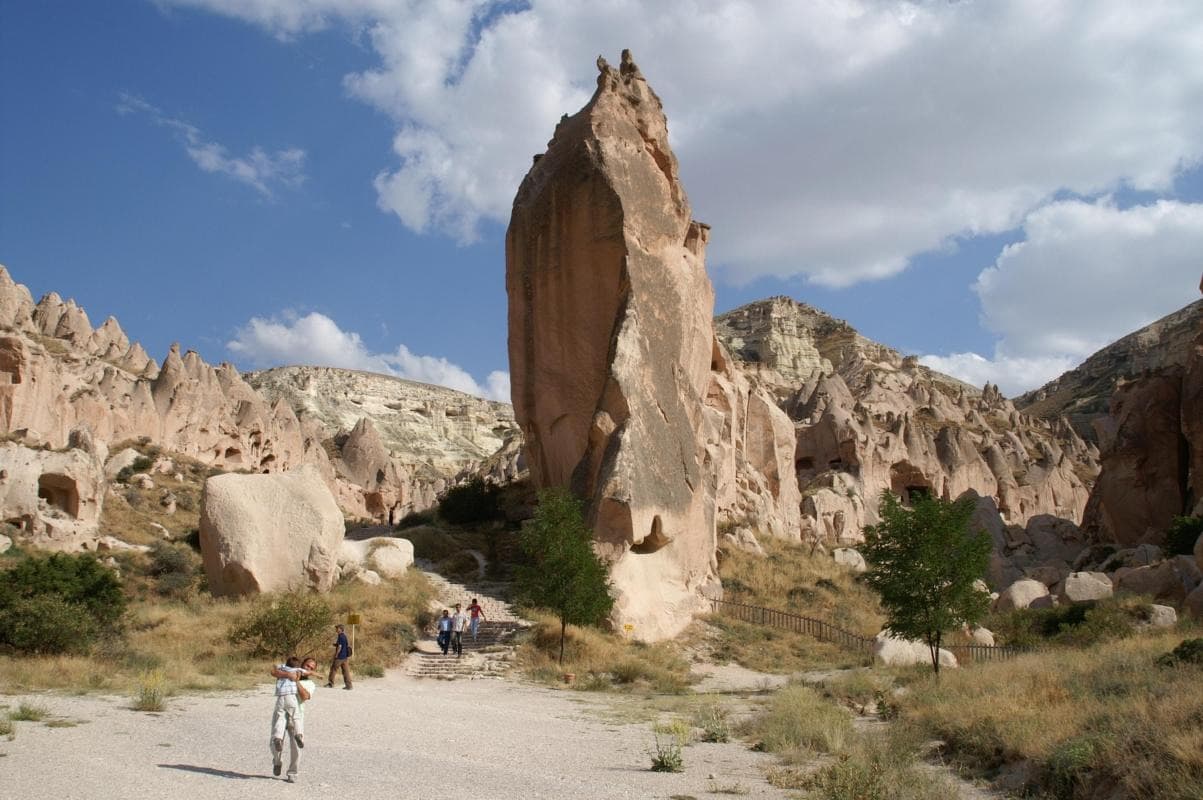
The path into Zelve unfurls like a map drawn by wind and patience. Sunlight pours over pale, honey-colored tuff, and the valley feels quietly inhabited by absence—doorways, windows and stairways carved into the rock that open to chambers where people once lived, worshipped and worked. A breeze carries the faint scent of thyme and dust; somewhere above, a hot-air balloon drifts like a painted thought. Here, among the fairy chimneys and hollowed spires, the landscape behaves like a city made by erosion, and you walk through streets time hollowed out of stone.
Zelve Open-Air Museum sits a short drive from Göreme in Cappadocia, Turkey, but it has a feeling of its own scale. The site covers three interconnected valleys where volcanic ash—soft tuff—was compacted over millions of years, then sculpted by wind, rain and freeze-thaw cycles into pinnacles and honeycombed cliffs. Human hands finished the work: early Christians, then local villagers, carved homes, churches and pigeon houses into the soft rock. The result is an urban archaeology of daily life, not a monument—an intimate place where chapels rub shoulders with ovens and shepherds’ rooms.
Historically, Zelve was long-inhabited; it remained a living settlement until 1952 when erosion and rock instability forced relocation. Before that, the valley was notable as an early monastic center—narrow chapels and faded frescoes still whisper fragments of prayers. Unlike the more curated cave churches of Göreme, Zelve feels raw and domestic: places where people cooked, stored grain and used pigeon droppings to fertilize fields below. The contrast between grand geological time and the small-scale chores of residents makes the place compelling.
Geologically, the area is an obvious textbook. Layers of ignimbrite and ash from ancient volcanic eruptions—the Erciyes and Hasandağı systems—solidified into tuff. Over centuries, water and wind carved that tuff into cones, mesas and chimneys. The fairy chimneys—tall columns topped with harder capstones—are the region’s signature; at Zelve, you’ll see them both clustered and solitary, wearing the scars and stairways of human habitation. Walking the ravines, you can read the processes: soft faces eroding faster than protective caps, ledges where cave dwellings cling like birds’ nests.
How to experience Zelve well: give it a morning or late-afternoon half-day. The loop through the three valleys is roughly 2–3 kilometers of uneven dirt and stone paths with modest elevation changes—expect short climbs and carved steps rather than strenuous ascents. The terrain is loose in places; treads with good grip and ankle support are essential. Bring water, sun protection and a camera. Most guided ‘Red’ or ‘Mix’ full-day tours that sample Cappadocia’s highlights include Zelve along with Paşabağ (Monks Valley), Devrent Valley and the pottery town of Avanos, which makes it easy to combine culture, geology and craft in a single day.
Timing matters. Early morning delivers cool air and softer light across the formations, and you’ll often see balloon silhouettes above the horizon. Late afternoon brings warmer tones and long shadows for photography. Midday can be hot and harsh, especially in summer; shade is scarce. Inside the cave chapels, the air is cool but fragile frescoes and plaster should not be touched—respect the conservation signage and stay on marked paths.
Practicalities: there’s a small entrance fee and an onsite ticket booth; the site is typically open daily though hours vary by season. Facilities are basic—parking, a small visitor area and restrooms—so plan accordingly. Combine Zelve with nearby Paşabağ for the best concentration of fairy chimneys and Avanos for lunch and a pottery demonstration. If you’re on a guided mix tour, expect a balanced day of viewpoints, a local lunch and opportunities to try your hand at pottery or visit underground cities like Kaymaklı—each pairing helps tell Cappadocia’s larger story of human adaptation to the volcanic landscape.
Safety and etiquette: the tuff is soft, and erosion is ongoing—don’t climb fragile formations or enter closed-off caves. Stick to paths, keep children close near cliff edges, and wear sturdy footwear. For photography, telephoto lenses compress the fairy chimneys and reveal textures; a wide-angle lens captures their scale against sky. Sunrise and sunset offer the most dramatic light, while overcast conditions enhance detail without deep shadows.
Zelve is quieter and less curated than Göreme’s museum but no less powerful. The site is a living ledger of geology and human persistence, offering a compact, accessible taste of Cappadocia’s peculiar beauty. Whether you arrive independently or via one of the popular Red or Mix tours, plan to move slowly—let the hollowed doors and carved benches tell you how people lived with the land, not just on it.
For travelers, the museum is an invitation to slow exploration: watch where your feet land, read the weathered inscriptions, and imagine daily life in a place shaped as much by its rocks as by the people who used them. Zelve delivers a lesson in scale—how eruptions, rain and human hands together produce a landscape that insists you pay attention.
Trail wisdom
Small choices, better day.
Wear grippy footwear
Paths are loose tuff and carved stone—sturdy trail shoes with good traction reduce slips.
Go early or late
Morning or late-afternoon light is best for photos and cooler temperatures; midday is hot and harsh.
Respect fragile sites
Do not climb on formations or enter closed caves; many areas are unstable from ongoing erosion.
Combine with nearby sites
Pair Zelve with Paşabağ and Avanos for a full day of geology, fairy chimneys and local craft workshops.
Local knowledge
Read the place, not just the route.
Watch for native species including wild goats (occasionally on cliff ledges), various raptors—kestrels and buzzards hunting the valleys.
Keep an eye out for wildlife during the transition between areas and habitats. Respect distance guidelines.
Erosion remains active—visitors are asked to stay on marked paths, avoid touching frescoes and follow local signage to protect fragile formations.
Follow the guide's instructions on size limits, ethical handling, and leave-no-trace practices.
Small, weathered pigeon houses carved into valley faces just south of the main loop. A narrow, less‑traveled ravine with carved storage niches that often gets overlooked by visitors
Locally recommended viewpoints and quiet spots known best to local operators.
Zelve was inhabited until 1952 and was an important early Christian monastic center; villagers later used cave homes for centuries until erosion forced relocation.
Maritime roots and regional tradition shape the waterways and working coasts.
Seasonal guide
Four versions of the same landscape.
Spring
Best forwildflowers · mild hiking · balloon views
Challengesmud after rains · variable temperatures
Spring brings mild weather, blooming thyme and comfortable walking conditions—ideal for half‑day exploration.
Summer
Best forlong daylight · clear skies · photography of silhouettes
Challengeshigh heat · limited shade · crowds
Summer offers brilliant skies and long days but pack sun protection and hydrate—early starts are recommended.
Fall
Best forcrisp light · fewer crowds · cool hikes
Challengesshorter days · chilly mornings
Autumn’s golden light highlights textures on the tuff and draws fewer visitors—great for photography and comfortable walking.
Winter
Best forquiet visits · different moods · snow-accented formations
Challengescold, icy paths · reduced access to some areas
Winter can be atmospheric with snow on the chimneys but expect icy patches and limited services—use caution on steps.
Pack with intention
What to bring.
Good to know
Common questions.
A focused walk through the three valleys takes about 1–2 hours; combine with nearby sites for a half‑ or full‑day.
Plan the edges
The details that make the day easier.
Zelve was continuously inhabited until 1952 when authorities evacuated residents due to dangerous erosion and rockfall—making it one of the last inhabited cave towns in Cappadocia.
Pair Zelve with a lunch stop in Avanos to sample gözleme (Turkish flatbread) and watch a pottery demonstration—local crafts tie directly to the region’s clay‑rich geology.
- Location
- ~15 minutes from Göreme by car; Duration: 1–3 hours; Terrain: uneven tuff paths and carved steps; Facilities: basic restrooms, parking; Tickets: paid entrance at gate.
Stay on marked trails, refrain from climbing fragile chimneys, support licensed local guides and avoid touching frescoes to minimize impact on this eroding landscape.
Explore by topic
Follow the threads.
Keep exploring
Make the story part of the trip.
 Related story
Less than two hours from Nairobi, Kereita Forest pairs hands-on canopy adventure with quiet montane trails and a sobering colonial history—perfect for families, teams, and curious travelers seeking a full-day pulse of nature.
Set out from Bass Harbor for a private, customizable day on Blue Hill Bay — lighthouses, puffins, seals, and the chance to feel Acadia from the water. Small groups, local captains, unforgettable views.
In four hours you can move from shaded canyon ferns to wind-scoured coastal ridgelines, guided by someone who knows where the light—and the hidden views—live. This private half-day hike on the Monterey Peninsula or Big Sur is compact, curated, and perfect for travelers who want depth without a multiday commitment.