
What the day feels like
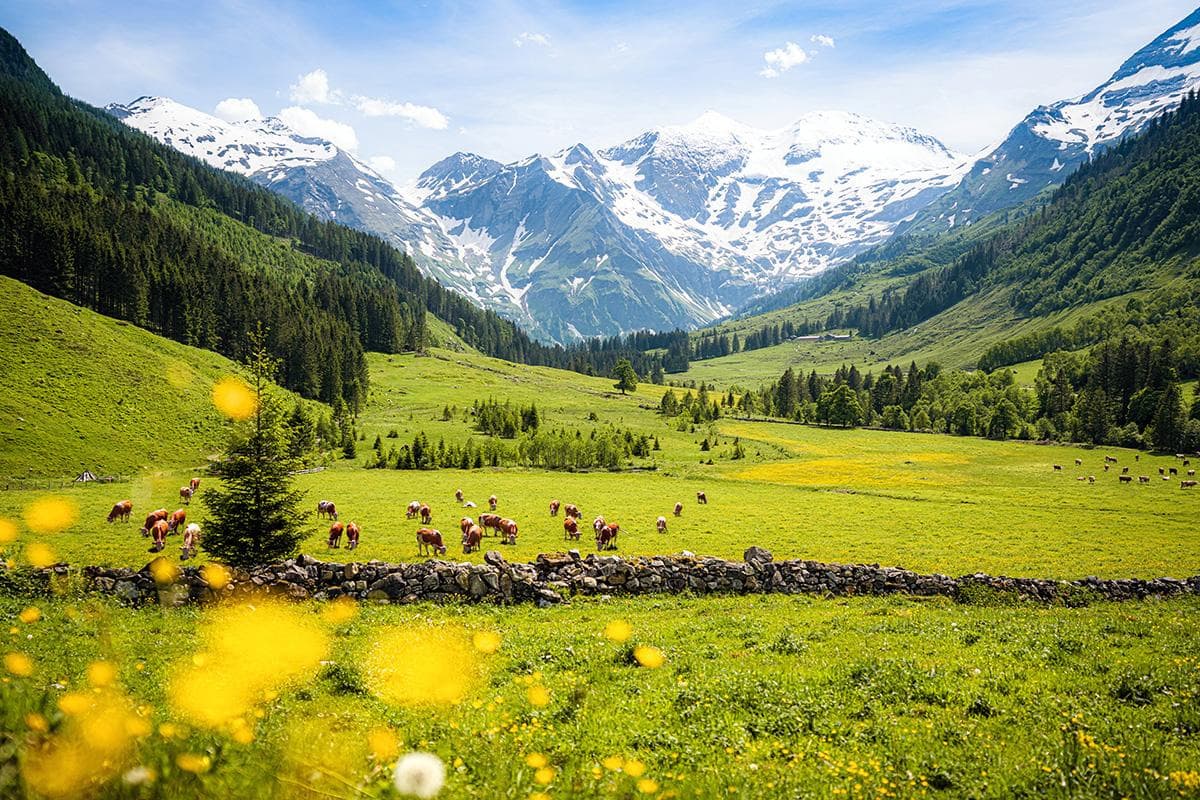
You arrive with wind in your face and the high, bright smell of stone and snow. The road climbs out of the Salzach valley, firs tightening at the shoulders, until the world flattens into a series of ridgelines and glaciers. In National Park Hohe Tauern the landscape does the talking: glaciers that creak and thin, ridgelines that cut the sky, and alpine meadows that still hold the late-summer riot of gentians and edelweiss. The park doesn’t demand admiration so much as presence—your breath, your steps, your smallness against a hard, ancient geology.
Hohe Tauern is Austria’s alpine cathedral. Established in 1981, it’s the country’s largest national park and the guardian of Grossglockner, Austria’s highest peak (3,798 m), and the Pasterze, the Eastern Alps’ longest glacier. The park is not a single trail but a stitched landscape of high valleys, rock faces and permanent ice spread across the states of Salzburg, Carinthia and Tyrol. Geologically, it’s a lesson in uplift: gneiss and schist thrust up from tectonic collisions, shaped over millennia by glaciers that still carve and push the terrain into new profiles. That motion—slow but inevitable—gives the park a feeling of subtle urgency: you watch the world in a state of change.
Culturally, Hohe Tauern sits within the rhythms of alpine life. Mountain huts—simple, communal, and stubbornly hospitable—serve as the human punctuation to long ridge days. Farmers still graze alpine pastures, and small villages keep traditions like folk music and high-country cheese alive. In nearby Salzburg you can swap alpine solitude for Mozart concerts and a pastry that tastes of both butter and place.
The park’s personality reveals itself in the details. Marmots whistle in shadowed scree fields as chamois pick their way across shale ledges. Rivers born of snowmelt gamble down steep incisions, daring you to cross on high alpine bridges. On clear days, the Grossglockner High Alpine Road unfolds as cinematic alpine engineering—tight turns, viewpoints, and a persistent view of the Pasterze cascading down the valley. Yet real rewards are quieter: a ridge traverse where a breeze polishes the taste of wild thyme, or the hush of glaciers grinding in slow dialogue with rock.
Practicalities are simple but matter. Many classic approaches begin at Franz-Josefs-Höhe for Pasterze views, or from trailheads near Heiligenblut, Kaprun, Zell am See and Mittersill. Trail grades vary from gentle meadow walks to steep, exposed scrambles and glaciated routes that require proper mountaineering skills. If you’re here for marked trails and day hikes, plan on well-maintained paths with alpine huts spaced for sensible days; if you want to climb or cross glaciers, hire a guide and bring the proper gear.
Timing defines the experience. Late June through September is hiking season: snow on higher cols melts, alpine flowers peak, and huts are staffed. Shoulder seasons—May and October—offer fewer people and vivid light but variable weather and lingering snow. Winter transforms the park: powder bowls, high-mountain ski touring and structured ski areas near Kaprun invite a different kind of attention and expertise.
Safety and sustainability go hand in hand. Weather in the high Alps changes fast—layer, check forecasts, and leave an itinerary. The park’s management emphasizes minimal impact: stay on trails, carry out waste, and avoid disturbing wildlife. Climate change is visible here—glaciers are receding, and the Pasterze is a case study in alpine retreat—so visit with curiosity and a readiness to learn as much as to photograph.
Why go? Hohe Tauern is the place for contrast: easy meadow mornings and technical ridge afternoons; cinematic, high alpine vistas and soft, village-level hospitality; education about geology and a visceral reminder that mountains are working landscapes. For hikers, there are long, purposeful days that feel like real travel across terrain rather than mere recreation. For families, gentle lake loops and lower-valley waterfalls offer accessible introduction. And for photographers or anyone chasing the slow-motion of the high Alps, the light here rewards patience. Plan a week to do justice to the park’s scale—use Salzburg or Zell am See as your base, and build in solid rest days to acclimatize and watch the weather.
A trip to Hohe Tauern is equal parts humility and reward. You will leave with tired legs and a new sense of how alpine time moves—slow enough to witness change, fast enough to remind you that landscapes are alive and asking for care.
Trail wisdom
Small choices, better day.
Acclimatize before big days
Spend your first day at lower elevations—village walks or lake loops—before attempting high ridge trails or glacier approaches.
Respect glacier routes
If you plan to cross or approach Pasterze or other icefields, hire a certified guide and bring crampons, rope and crevasse-rescue knowledge.
Layer for sudden weather
Alpine weather turns quickly; pack a windproof shell, insulating midlayer and waterproof layer even on sunny mornings.
Reserve huts in high season
Popular alpine huts fill in July-August—book ahead for overnight stays on classic long trails and ridge traverses.
Local knowledge
Read the place, not just the route.
Watch for native species including Alpine ibex, Marmot (groundhog).
Keep an eye out for wildlife during the transition between areas and habitats. Respect distance guidelines.
Park authorities monitor glacier retreat and biodiversity; visitors are urged to follow leave-no-trace principles and use marked paths to protect fragile alpine flora.
Follow the guide's instructions on size limits, ethical handling, and leave-no-trace practices.
Krimml Waterfalls and the quieter upper-side trails away from the main viewpoints. Franz-Josefs-Höhe early-morning viewpoint for low crowds and raw glacier light
Locally recommended viewpoints and quiet spots known best to local operators.
Hohe Tauern was established in 1981 to protect the Eastern Alps' high-mountain ecosystems and traditional alpine land use; the park preserves both natural and cultural alpine heritage.
Maritime roots and regional tradition shape the waterways and working coasts.
Seasonal guide
Four versions of the same landscape.
Spring
Best forearly wildflowers · lower-valley hikes · waterfalls at peak flow
Challengeslate snow on high passes · limited hut openings
Snow lingers above ~1,800–2,000 m; lower trails bloom and rivers run high—great for meadows and waterfall viewing but expect patchy snow on higher routes.
Summer
Best forfull trail access · alpine hut stays · peak visibility of ridgelines
Challengescrowds on popular roads and viewpoints · afternoon thunderstorms
June through September is prime hiking season—trails and huts are mostly open, but start early to avoid storms and crowds.
Fall
Best forautumn colors · quieter trails · clear air for photography
Challengesshorter days · early snow at elevation
September and October offer crisp light and fewer people; higher passes may begin to see snow—check conditions before heading up.
Winter
Best forski touring · snowshoeing · glacial photography from safe viewpoints
Challengesavalanche risk · many trails inaccessible
Winter changes the park into a backcountry playground—only for skilled winter travelers and guided groups; many facilities close.
Pack with intention
What to bring.
Good to know
Common questions.
No general entry permit is required for visitors, but certain restricted zones and guided activities (glacier crossings, research) have permits or require guides—check park regulations before specialized trips.
Plan the edges
The details that make the day easier.
National Park Hohe Tauern is Austria's largest national park, established in 1981, and includes Grossglockner and the Pasterze Glacier, the longest glacier in the Eastern Alps.
The Salzburger alpine culture shows in mountain huts, hearty cheese and dumpling dishes, and seasonal festivals—sample local alpine cheese, try Salzburger Nockerl in town, and listen for yodeling at village events.
- Nearest major airport
- Salzburg (SZG). Best base towns: Zell am See, Kaprun, Heiligenblut. Road access: Grossglockner High Alpine Road (seasonal). Park entry: no general fee; visitor centers provide maps. Emergency: Alpine rescue numbers posted at trailheads.
Stick to marked trails, use public transport where possible, book local guides to support the regional economy, and be mindful that glaciers here are rapidly retreating due to climate change.
Explore by topic
Follow the threads.
Keep exploring
Make the story part of the trip.
 Related story
Less than two hours from Nairobi, Kereita Forest pairs hands-on canopy adventure with quiet montane trails and a sobering colonial history—perfect for families, teams, and curious travelers seeking a full-day pulse of nature.
Set out from Bass Harbor for a private, customizable day on Blue Hill Bay — lighthouses, puffins, seals, and the chance to feel Acadia from the water. Small groups, local captains, unforgettable views.
In four hours you can move from shaded canyon ferns to wind-scoured coastal ridgelines, guided by someone who knows where the light—and the hidden views—live. This private half-day hike on the Monterey Peninsula or Big Sur is compact, curated, and perfect for travelers who want depth without a multiday commitment.