
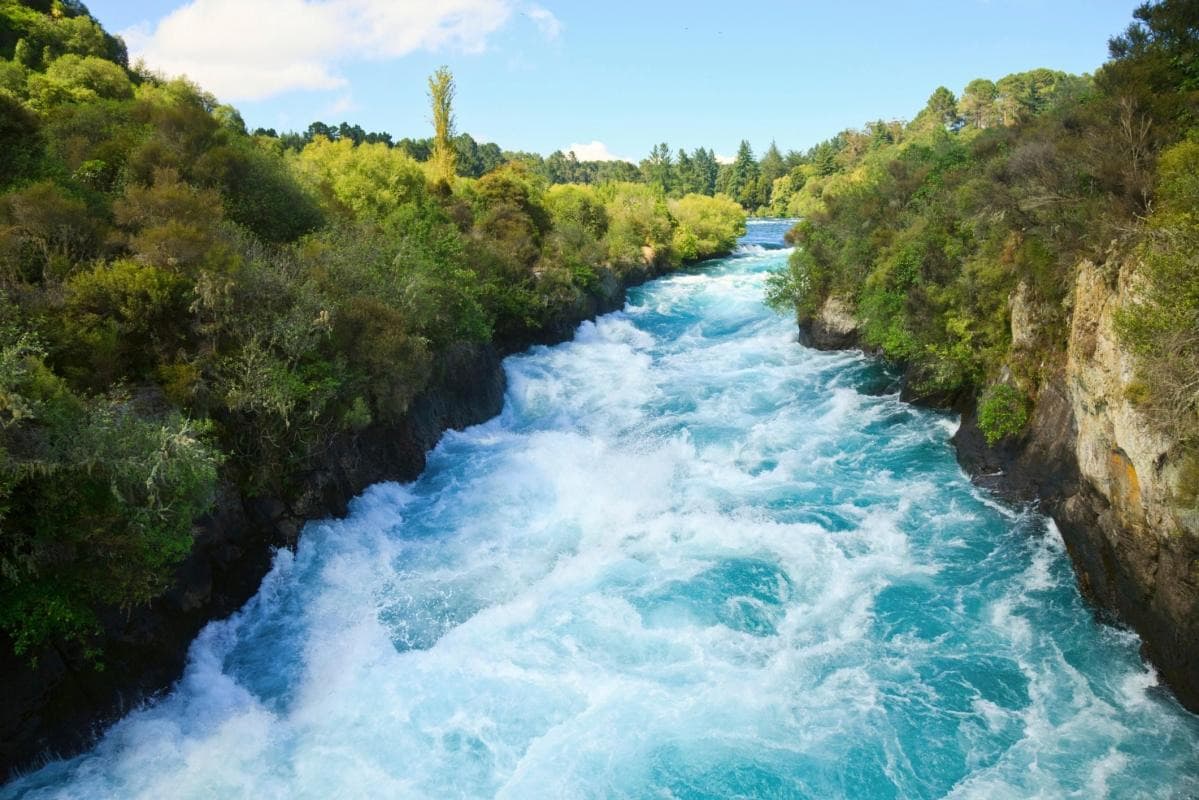
What the day feels like
The moment the gates open at Aratiatia, the river remembers it is still alive. A hush of expectation—families, cyclists, and cameras—collects along the concrete overlook, then the Waikato answers with a thunderous surge. Water that has been restrained by the hydroelectric dam for hours, sometimes days, explodes down a stepped channel, carving foam into the sunlight and hurling mist against the viewing platforms. It is theatrical, precise and unapologetically loud—one of the most immediate ways in New Zealand to witness controlled power and natural force in a single breath.
Aratiatia Rapids sits a short ride from Taupo, where the Waikato River tumbles out of Lake Taupo and begins its long course northward. The rapids themselves are less a permanent cascade than a series of stone channels and concrete gates designed to deliver scheduled releases from the Aratiatia Power Station. That engineered cadence—quiet reservoirs followed by timed roar—has shaped the place: tourists flock to watch the spectacle, photographers plan their days around the schedule, and local guides weave the event into broader narratives about geology, Māori history and modern energy needs.
Geologically, this is a young landscape. Taupo is the rim of a massive caldera; scars from eruptions and the slow work of rivers are visible in terraces and thermal seepages. The Waikato’s impatience to leave the lake edges has sculpted basalt steps and shallow chutes here, which the dam uses as a natural channeling system. Around the viewing area, native shrubland and pockets of regenerating pōhutukawa and manuka soften the concrete edges and call the local birdlife—tui and fantail—back to the river’s margin.
The human story is layered. For centuries Māori navigated and sustained themselves along this river, and the name Aratiatia—loosely translated as “stairway to the sky” or “path of ascent”—reflects both the physical steps of the rapids and the spiritual relationship to the water. In the mid-20th century, engineered control arrived with the Aratiatia Dam and power station. The infrastructure brought electricity and economic change, and also a scheduled rhythm that now entertains and educates. Today, watching the release is a cultural ritual of its own: a reminder that New Zealand balances preservation and utility in close quarters.
The most immediate way to experience this place is to make the journey by bike. The Taupo Private Geothermal Bike Tour threads a practical and scenic arc from Spa Park—Taupo’s manicured thermal reserve—out along the Waikato River toward Aratiatia. It’s not a race so much as a paced revelation: hot steam rising from the Otumuheke thermal stream, a quiet soak in natural pools if the tour includes a permitted stop, a breathless viewpoint at Huka Falls, and then the crescendo at the Aratiatia gates. The route favors mixed surfaces—sealed cycleways and compact gravel—so a hybrid bike and a steady cadence make the day comfortable rather than heroic.
Why do this by bike instead of by car? Wheels offer a pace that matches the landscape. You feel the thermal waft on your skin before you see the steaming pools; you can stop at leafy eddies or hop off to read a plaque about Māori connection to the river. A guide adds context—local geology, the engineering behind the releases, and hints about where to stand for the best photographic composition. Bikes also make it easy to stitch Aratiatia into a broader day: Huka Falls, Spa Park, and riverside cafés are all close enough to be sampled without sacrificing time to parking or logistics.
Practical detail matters. The guided bike tour typically takes half a day and covers 20–30 kilometers roundtrip depending on exact start and stop points. Trail surfaces are mostly flat with occasional short climbs; expect a low-to-moderate level of exertion. The scheduled dam releases usually occur multiple times a day—check local listings before you go and arrive 20–30 minutes early to claim a good viewing spot: the water arrives fast. Bring a windproof jacket and a waterproof shell—the mist from the release will find you, and river spray can cut through unprepared layers. Shoes should be stable for brief walks over uneven rock and boardwalks.
Safety is straightforward but non-negotiable: obey signage, don’t cross barriers, and keep children close. The river post-release is powerful and deceptively mobile; currents drag and eddies surprise. Photography buffs should set lenses to mid-range focal lengths to capture the scale, and use a fast shutter if you want to freeze the spray, or a neutral-density filter and tripod if you prefer the silky-flow look post-release.
For visitors wanting more than the scheduled spectacle, the broader Taupo circuit pays dividends. Start early with a soak at Otumuheke’s thermal pools, loop past the punchy whitewater of Huka Falls, then let the tour drop you at Aratiatia for the engineered crescendo. Guides will often include local stories about Māori use of the river and explain how hydropower is balanced against ecological flows—context that turns a single event into a day of layered experiences.
Arrive prepared and respectful. These are working hydro facilities surrounded by pockets of fragile thermal ecology and Māori cultural sites. Keep to trails, pack out what you pack in, and if you visit thermal pools, use only designated areas. The releases are scheduled events; they are theatrical but also a reminder that human systems still depend on and alter the natural ones.
Aratiatia is loud, precise and a little humbling. It’s a place where geology flexes, human engineering converses with nature’s appetite, and a bicycle can be the right-speed vehicle to stitch it all together. Whether you’re after a crisp, photogenic river roar or a day that mixes geothermal soaks with subtle bird calls and engineered spectacle, the trip from Spa Park to Aratiatia delivers a concise slice of central North Island drama—powered by water, timed by humans, and enjoyed by anyone willing to come a little early and stand a little wet.
Trail wisdom
Small choices, better day.
Time it with the release schedule
Check the Aratiatia release times before you go and arrive 20–30 minutes early for the best viewing and photos.
Bring a waterproof layer
Mist and spray from the release will reach the viewing platforms—wear a windproof waterproof jacket.
Wear sturdy shoes
The bike trail includes gravel sections and short walks across uneven surfaces at viewing points—closed-toe shoes recommended.
Respect barriers and signs
This is a working hydro site—stay behind barriers and follow ranger or guide instructions for safety.
Local knowledge
Read the place, not just the route.
Watch for native species including Tui (songbird), Rainbow trout in the Waikato River.
Keep an eye out for wildlife during the transition between areas and habitats. Respect distance guidelines.
The site balances energy production with local ecology—visitors are asked to stick to paths, respect cultural sites and not disturb thermal features.
Follow the guide's instructions on size limits, ethical handling, and leave-no-trace practices.
Otumuheke Stream thermal pools—natural hot springs near Spa Park. Small riverside picnic spots downstream from Huka Falls with local birdlife
Locally recommended viewpoints and quiet spots known best to local operators.
The Aratiatia area carries Māori cultural significance tied to the Waikato River; mid-20th-century hydro development created the scheduled-release dynamic now central to the site.
Maritime roots and regional tradition shape the waterways and working coasts.
Seasonal guide
Four versions of the same landscape.
Spring
Best forGeothermal blooms · Birdwatching · Fewer crowds
ChallengesUnpredictable showers · Cool mornings
Spring brings warming weather, flowering manuka and active birdlife—ideal for combining thermal pools with a quieter viewing of the releases.
Summer
Best forWarm soaks · Full daylight hours · Family outings
ChallengesHigher visitor numbers · Strong sun and UV
Summer offers the most predictable warm weather and long days—arrive early to avoid crowds and bring sun protection for riverside viewing.
Fall
Best forCrisp light for photos · Fewer tourists · Comfortable cycling temperatures
ChallengesCooler evenings · Occasional gusty winds
Autumn delivers excellent light for photography and pleasant rides without summer heat—dawn and dusk are particularly photogenic.
Winter
Best forSteam contrasts · Quieter paths · Dramatic skies
ChallengesCold temperatures · Reduced release daylight windows
Winter’s cold makes thermal steam more dramatic; dress warmly and check daylight release times to plan your visit.
Pack with intention
What to bring.
Good to know
Common questions.
Release times vary seasonally—check the official local schedule maintained by Taupo District Council or the Department of Conservation before your visit and arrive early.
Plan the edges
The details that make the day easier.
Aratiatia Rapids’ dramatic flows are not natural waterfalls but scheduled releases from the Aratiatia Power Station; the timed events were engineered to manage Lake Taupo’s outflows while supplying hydroelectricity.
Taupo’s lakefront cafés and Māori cultural centers pair well with a morning on the river—try local trout dishes and seek a short conversation with guides about iwi (tribal) connections to the Waikato.
- From Taupo town center
- 15–25 minute drive or a guided 3–5 hour bike tour; check release times; wear layered gear; guided tours supply bikes and helmets.
Choose guided operators who follow Leave No Trace, stick to designated thermal bathing areas, and support local Māori-run tours to ensure cultural respect and direct community benefit.
Explore by topic
Follow the threads.
Keep exploring
Make the story part of the trip.
 Related story
Less than two hours from Nairobi, Kereita Forest pairs hands-on canopy adventure with quiet montane trails and a sobering colonial history—perfect for families, teams, and curious travelers seeking a full-day pulse of nature.
Set out from Bass Harbor for a private, customizable day on Blue Hill Bay — lighthouses, puffins, seals, and the chance to feel Acadia from the water. Small groups, local captains, unforgettable views.
In four hours you can move from shaded canyon ferns to wind-scoured coastal ridgelines, guided by someone who knows where the light—and the hidden views—live. This private half-day hike on the Monterey Peninsula or Big Sur is compact, curated, and perfect for travelers who want depth without a multiday commitment.