
What the day feels like
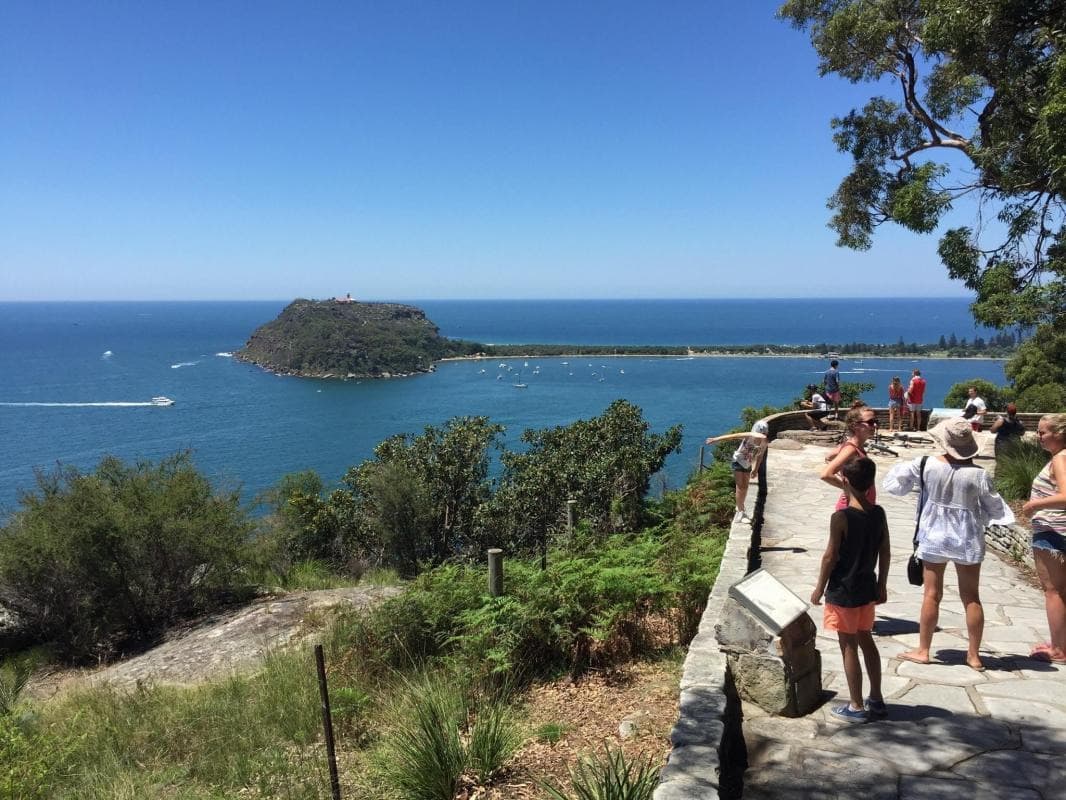
You arrive at dawn when the world is still half-asleep and the horizon is an unbroken pencil line. Wind chisels the clouds into long, low scars and the first light turns Hawkesbury sandstone into warm ochre; from West Head Lookout the coastline reads like a weathered map—penninsulas, inlets, and the white teeth of surf on the Northern Beaches. A lone fisherman below studies the water with the kind of patience the ocean demands. Behind you, eucalyptus breathes a resinous scent that hangs in the air like a local greeting. Here, facing Broken Bay, the city’s skyline is a distant memory and the scale of the coast becomes the thing that matters.
West Head is less a single vista than a sequence of perspectives—sweeping panoramas of Pittwater and Lion Island, cliffs that fall away into green-blue, and sheltered bays where water rearranges itself with each tide. Though the parking area and lookout are easily accessible—a short paved stroll from the lot—there are multiple tracks that peel away into Ku-ring-gai Chase National Park, where Aboriginal engravings, boat-access-only beaches and quiet coves expand the day into a small coastal expedition.
Geology and history have conspired here. The exposed Hawkesbury sandstone that forms the cliffs and headlands is more than scenic backdrop; it tells a 200-million-year-old story of rivers and deltas, compressed and baked into the bedrock you sit upon. That same sandstone preserves traces of millennia of human presence: the land and waters around West Head belong to the Guringai (also spelt Kuringgai) peoples, whose middens and engravings in nearby gullies are a reminder that these lookouts were not merely scenic—they were surveillance points and living places for generations.
The modern appeal is straightforward. For Sydneysiders and visitors pressed for time, West Head is a perfect balance of immediacy and wildness. You can stand at the rail and watch yachts thread the heads, hop onto short boardwalk loops for a more intimate taste of the bush, or use West Head as the launch point for longer walks to America Bay or Resolute Beach. Guided tours that pair West Head with the Northern Beaches—Palm Beach’s Barrenjoey Lighthouse, Manly’s ferry crossing, and the golden sands of Narrabeen—turn the day into a coastal sampler and add context: your guide points out Aboriginal sites, explains the sandstone’s story, and times the route so you’re back in the city before sunset if needed.
Practicalities matter out here. The main lookout is an easy 5–15 minute stroll from the carpark (roughly 600–800 metres roundtrip) with minimal elevation gain—think 20–40 metres—on firm paths and short flights of steps. If you want to extend that into a proper hike, the circuit to Resolute Beach and America Bay can take 2–3 hours and features rooty singletrack, some rock scrambles and crumbly sandstone sections where sure footing matters. Trails are well-marked but exposed; sun, wind and sudden weather swings are part of the experience.
Choosing how to see West Head depends on what you want from the day. Small-group tours that combine the Northern Beaches and Ku-ring-gai Chase let you layer beaches, lookouts and cultural sites with minimal logistics. Private tours let you linger—bring a picnic to a secluded bay or ask your guide for a quick beachside history lesson. If you go self-guided, plan for transport: it’s about 50–70 kilometres from Sydney CBD, and depending on traffic the drive takes roughly an hour to 90 minutes. There is parking at the lookout but it fills quickly on weekends and holidays.
Safety and preparation are simple, concrete requirements. Sunscreen and a hat are non-negotiable year-round; even a short walk becomes uncompromising under an Australian sun. Bring water (1–2 litres per person for a half-day), sturdy shoes with grip for sandstone and loose rock, and a light wind layer—breezes can be strong across the headland. Respect cultural sites: don’t touch or walk on rock engravings, and keep to marked trails to protect fragile ecosystems.
Wildlife here is discreet but present. Keep an eye on the water for bottle-nosed dolphins that sometimes hunt the shallows, and look down in the bush for swamp wallabies at dawn and dusk. Birdlife is a highlight—white-bellied sea eagles and ospreys patrol the airspace, making the headlands feel like a working theatre of predator and prey.
For photographers and walkers alike, timing is everything. Golden hour softens the sandstone and gives the surf a long, cinematic sheen. Mid-morning is best for clarity if you’re trying to capture distant city skylines across the heads, while late afternoon can warm the cliffs in a color that rivals the sandstone itself.
West Head is not a mountain challenge or a remote wilderness—its power is smaller, quieter, and immediate. It’s a place for tuned-in walks, for learning how coastal geology frames human history, and for pairing short, restful vistas with longer coastal rambles if you have the time. Whether you come on a guided Northern Beaches tour that transports you between beaches and bush, or make the drive yourself to stand and watch the tide rearrange the coastline, West Head offers a tidy, honest Australian coastal experience that leaves you with new lines on the map and a clearer sense of how the city and the wild meet at the water’s edge.
Trail wisdom
Small choices, better day.
Start early for calm seas
Mornings have less wind and fewer people—ideal for clear views and calmer photography conditions.
Wear grippy shoes
Sandstone can be slippery when wet; choose footwear with good traction for short rock scrambles on nearby tracks.
Bring water and sun protection
There’s limited shade on the headland—1–2 litres of water and a hat will make your visit more comfortable.
Respect cultural sites
Observe and don’t touch Aboriginal engravings or middens; stay on marked trails to protect fragile areas.
Local knowledge
Read the place, not just the route.
Watch for native species including white-bellied sea eagle, swamp wallaby.
Keep an eye out for wildlife during the transition between areas and habitats. Respect distance guidelines.
Stay on marked tracks to prevent erosion of fragile sandstone; guided tours often contribute to local conservation and offer cultural education.
Follow the guide's instructions on size limits, ethical handling, and leave-no-trace practices.
America Bay—secluded cove reachable by track for a quiet beach picnic. Aboriginal engraving sites in Ku-ring-gai Chase (ask a guide for respectful viewing locations)
Locally recommended viewpoints and quiet spots known best to local operators.
The headlands sit on traditional lands of the Guringai peoples; Ku-ring-gai Chase National Park was protected in the 1890s and contains significant Aboriginal heritage.
Maritime roots and regional tradition shape the waterways and working coasts.
Seasonal guide
Four versions of the same landscape.
Spring
Best forwildflowers along the tracks · mild bushwalking · birdwatching
Challengesoccasional rain · busy weekends
Spring brings wildflowers, comfortable temperatures and active birdlife—one of the most pleasant seasons for walking the headlands.
Summer
Best forsunrise views · extended beach visits · boat-access bays
Challengesstrong sun · heat and bushfire risk
Long, hot days and brilliant light make for spectacular views; take extra water and avoid midday heat.
Fall
Best forcrisp skies · clear coastal visibility · photography
Challengescooler mornings · shorter daylight hours
Autumn delivers clear air and dramatic light—great for photography and longer coastal walks as temperatures moderate.
Winter
Best forstorm-watching · dramatic surf · quieter trails
Challengescold wind · rainy days
Winter can be raw and windy but offers dramatic skies and fewer crowds—dress warmly and expect gusts.
Pack with intention
What to bring.
Good to know
Common questions.
From the carpark it’s an easy 5–15 minute stroll (roughly 600–800 metres roundtrip) with minimal elevation gain; longer walks into America Bay or Resolute Beach take 2–3 hours.
Plan the edges
The details that make the day easier.
Ku-ring-gai Chase National Park was established in the 1890s and is one of New South Wales’ earliest protected areas, preserving significant Aboriginal sites and coastal sandstone country.
The area blends Indigenous cultural history with a surf-and-café coastal lifestyle—finish a day with fish-and-chips at nearby Palm Beach or a coffee in Manly, and look out for weekend markets that showcase local seafood and crafts.
- Distance from Sydney CBD
- ~50–70 km (1–1.5 hours); Parking: limited at lookout; Entry: no general park fee; Accessibility: short paved stroll to main lookout; Mobile: patchy in gullies.
Stick to marked trails, take all rubbish out, and choose licensed local guides who contribute to conservation and respect Indigenous heritage sites.
Explore by topic
Follow the threads.
Keep exploring
Make the story part of the trip.
 Related story
Less than two hours from Nairobi, Kereita Forest pairs hands-on canopy adventure with quiet montane trails and a sobering colonial history—perfect for families, teams, and curious travelers seeking a full-day pulse of nature.
Set out from Bass Harbor for a private, customizable day on Blue Hill Bay — lighthouses, puffins, seals, and the chance to feel Acadia from the water. Small groups, local captains, unforgettable views.
In four hours you can move from shaded canyon ferns to wind-scoured coastal ridgelines, guided by someone who knows where the light—and the hidden views—live. This private half-day hike on the Monterey Peninsula or Big Sur is compact, curated, and perfect for travelers who want depth without a multiday commitment.