
What the day feels like
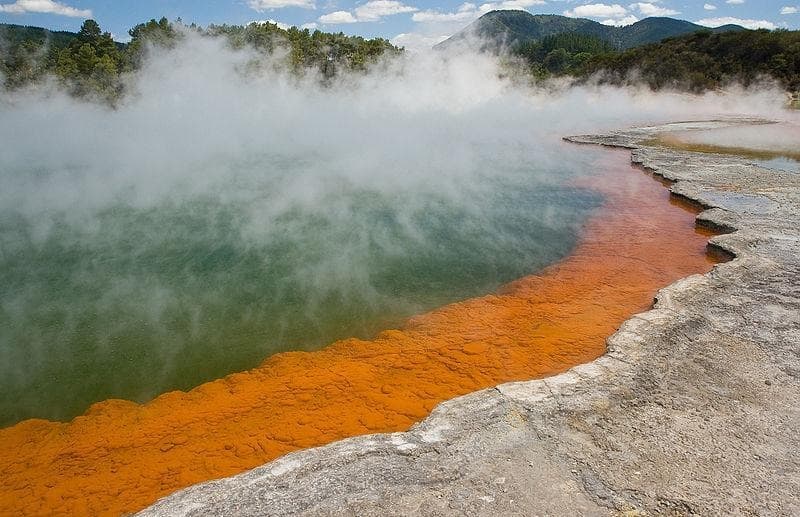
You step off the coach and the air changes—warm, metallic, faintly egg-scented. Steam fingers the pines and drifts down the boardwalks like a living thing, lifting in ribbons from pools whose pigmentation looks almost deliberate: acid greens like vintage glass, rusty ochres, and the impossible, liquid turquoise of the Champagne Pool. Wai-O-Tapu Thermal Wonderland doesn’t whisper; it stages its spectacle. It dares you to keep your hands in your pockets and your camera at the ready.
Located a short drive from Rotorua, Wai-O-Tapu is a compact cathedral of geothermal activity: hot springs, geysers, steaming fumaroles and expanses of bubbling mud that have been shaping this patch of Aotearoa for millennia. The boardwalk loop takes you past the famous Champagne Pool—its surface constantly fizzing as gases flee the subterranean furnace—then to a cluster of bubbling mud and steam vents that look like the planet’s guts, curdled and exposed. Each feature has its personality: the Champagne Pool lounges like a dismissed monarch; the Lady Knox Geyser performs to a schedule, a punctual and theatrical reminder that human hands have long choreographed nature’s theatrics for spectators.
Geology and culture run together here. Wai-O-Tapu sits on the Taupo Volcanic Zone, a vast seam of the Earth's crust where heat and water have been working on the landscape for hundreds of thousands of years. The 1886 eruption of Mount Tarawera reshaped the region and opened new conduits for hot water and steam to push up into the light. To Māori, these sites are more than curiosities; they’re living features woven into whakapapa (genealogy) and tūpuna (ancestors). Nearby Rotorua is a cultural hub where geothermal activity and Māori traditions—food cooked in the earth, stories shaped around the steam—remain intertwined.
Visitors usually pair Wai-O-Tapu with nearby Te Puia or Waimangu Volcanic Valley on day trips from Rotorua or Auckland. Tours range from short, self-guided visits to multi-day itineraries that thread through Hobbiton, Waitomo glowworm caves, and Taupo’s thunderous Huka Falls. No matter how you arrive, plan to move slowly. The site is compact but dense with sensory hits: stinging steam, a chorus of hissing vents, the chromatic drama of mineral precipitation. The boardwalks—well-maintained and sometimes narrow—are the only legal route across the fragile terrain; straying off them risks severe injury and permanent damage to delicate mineral formations.
Practical detail: The main loop is an easy 3 km of walking with minimal elevation change and takes roughly 1–2 hours at a relaxed pace, longer if you linger for photos or the Lady Knox geyser performance (typically staged at 10:15 AM). The surfaces are mostly timber and compacted track; waterproof footwear with good grip is sensible because you’ll encounter damp, mineral-slick boards and occasional overflow. The weather in this part of New Zealand can flip quickly—sun one minute, soupy steam and drizzle the next—so layers are more useful than one heavy coat.
For photographers and quiet observers, the pools are a masterclass in texture and color. A polarizing filter tames glare and deepens the turquoise of thermal waters; small macro lenses capture mineral encrustations that read like abstract landscapes. Try shooting low to the boardwalk to use the steam as negative space and to capture reflections when the wind calms.
Safety and respect are non-negotiable here. The pools sit atop scalding springs; signs warn against touching water or stepping off the path. Many operators in the area are Māori-owned or -operated—supporting them helps the local economy and connects you to cultural interpretation that will enrich the visit. If you combine Wai-O-Tapu with Te Puia, expect a deeper cultural layer: carving and weaving demonstrations, a chance to hear haka and learn how geothermal life has shaped local practice.
Timing matters. Early morning light softens colors and often means fewer crowds; late afternoon brings long shadows and dramatic contrasts. Midday is busiest—especially when coaches arrive—and that’s when the Lady Knox display draws a crowd. If you're short on time, guided day trips from Auckland or Rotorua compress the logistics (and include transport), but for independent travelers, staying in Rotorua overnight lets you approach the site with a relaxed rhythm and leave space for a dip in a geothermal spa later.
Wai-O-Tapu is not a rugged backcountry hike; it’s a lesson in scale and fragility. Walk deliberately, listen—the steam sometimes sounds like a distant surf or a hissing brass instrument—and take the time to match the landscape’s pace. Leave only footprints on the boardwalk, and if you leave with one memory, let it be the Champagne Pool: a bowl of molten color, exhaling its bubbles into the Rotorua sky.
Getting there, what to expect, what to pack and when to visit are practicalities you can plan. But the central truth is experiential: Wai-O-Tapu is a place where Earth’s heat becomes visible art, and where the demands of care and curiosity sit side by side. Show up prepared, keep your distance, and let the place do the rest.
Trail wisdom
Small choices, better day.
Stay on the boardwalk
The ground around thermal features is brittle and scalding beneath a thin crust—never step off the designated paths.
Bring grip-friendly footwear
Water and mineral deposits make boards slippery—sturdy hiking shoes reduce the risk of slips.
Time your visit around Lady Knox
The geyser demonstration is scheduled (usually around 10:15 AM); arrive early to secure views without the coach crowds.
Carry water and small snacks
There are limited facilities on the loop; a liter of water and a snack keep you energized for photography and exploration.
Local knowledge
Read the place, not just the route.
Watch for native species including Tūī (songbird), Pīwakawaka / fantail.
Keep an eye out for wildlife during the transition between areas and habitats. Respect distance guidelines.
Stay on boardwalks and pack out waste; many local operators are Māori-run—supporting them helps care for the land under customary guardianship (kaitiakitanga).
Follow the guide's instructions on size limits, ethical handling, and leave-no-trace practices.
Artist's Palette spring—a smaller, intensely colored pool often overlooked by large tour groups. The quieter mud-pool terraces on the southern loop—great for macro mineral shots
Locally recommended viewpoints and quiet spots known best to local operators.
Wai-O-Tapu’s geothermal features are part of the Taupo Volcanic Zone; eruptions such as the 1886 Mt. Tarawera event reconfigured the landscape and opened new thermal conduits.
Maritime roots and regional tradition shape the waterways and working coasts.
Seasonal guide
Four versions of the same landscape.
Spring
Best forwildflower displays · mild temperatures · fewer crowds
Challengeschangeable weather · muddy approaches early season
Spring (September–November) brings mild weather and fewer tour groups—ideal for photography and quiet walks.
Summer
Best forlonger daylight · warmer mornings · combining with other activities
Challengeslargest crowds · hot sun and glare
Summer offers long days but also peak crowds; go early or late afternoon to avoid the busiest hours.
Fall
Best forcrisp light for photos · fewer tourists · comfortable walking
Challengescooler mornings · shorter days
Autumn’s cool clarity sharpens the park’s colors—expect brisk mornings and golden-hour opportunities.
Winter
Best fordramatic steam plumes · less crowded boardwalks · contrast photography
Challengescold, wet conditions · some services reduced
Winter makes the steam more theatrical but brings cold and wet conditions—dress in layers and waterproofs.
Pack with intention
What to bring.
Good to know
Common questions.
Plan 1–2 hours for the main boardwalk loop; add time if you attend the Lady Knox geyser demonstration or linger for photography.
Plan the edges
The details that make the day easier.
The Champagne Pool at Wai-O-Tapu is roughly 65 meters in diameter; its vivid colors are created by mineral deposits and microbial mats forming on the hot-spring rim.
Rotorua’s food scene riffs on geothermal tradition—try a hangi (earth-cooked meal) or visit a local Māori arts studio to see carving and weaving inspired by the steaming landscape.
Respect boardwalks and signage, choose Māori-operated tours when possible to support local guardianship, and avoid single-use plastics while visiting fragile geothermal features.
Explore by topic
Follow the threads.
Keep exploring
Make the story part of the trip.
 Related story
Less than two hours from Nairobi, Kereita Forest pairs hands-on canopy adventure with quiet montane trails and a sobering colonial history—perfect for families, teams, and curious travelers seeking a full-day pulse of nature.
Set out from Bass Harbor for a private, customizable day on Blue Hill Bay — lighthouses, puffins, seals, and the chance to feel Acadia from the water. Small groups, local captains, unforgettable views.
In four hours you can move from shaded canyon ferns to wind-scoured coastal ridgelines, guided by someone who knows where the light—and the hidden views—live. This private half-day hike on the Monterey Peninsula or Big Sur is compact, curated, and perfect for travelers who want depth without a multiday commitment.