
What the day feels like
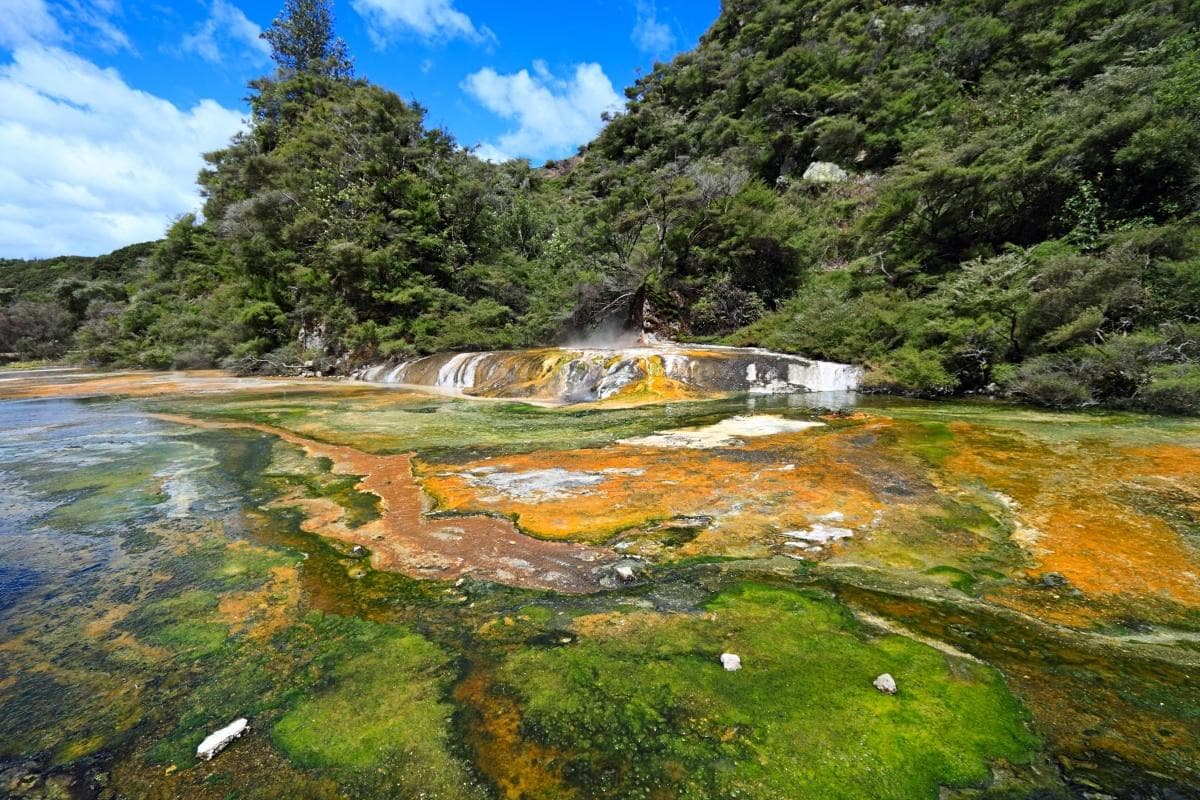
Steam curls through native bush like a message from the earth—thin white fingers lifting from fumaroles, pooling in the cool gullies and dissolving into the canopy. You step on the boardwalk and the forest answers: bellbirds ping, tūī whistle, and from the valley depths comes the low, constant huff of geothermal breath. This is Waimangu Volcanic Valley, a place born of violence in 1886 and now softened by fern and time. The landscape here is both raw and domestic: brilliant blue pools, blackened craters, a lake that remembers a lost wonder, and trails that thread the geology like stitches.
Set an early alarm and you can have the upper valley mostly to yourself. The walk from the reserve entrance down toward Lake Rotomahana is roughly 4 km of well-constructed trails and boardwalks, dropping through regenerating podocarp forest and past steaming vents, bright silica terraces, and the pulsing Inferno Crater with its impossible aquamarine. The path has a rhythm—gentle descents that let you settle into the place, steeper switchbacks that make the lungs take notice—and a score of natural voices: the hiss of steam, the plink of mineral deposits, and the distant lap of water on the lake.
Geology is the valley's language. In 1886 Mount Tarawera exploded in one of New Zealand’s most catastrophic eruptions, reshaping the landscape overnight and burying the famed Pink and White Terraces—the world’s lost geothermal marvel. Waimangu is the world’s youngest geothermal system, the result of that upheaval. Frying Pan Lake, a broad boiling expanse, and Inferno Crater, with its shimmering, gas-churned blue, are direct descendants of that event. Where the terraces once glowed, new features now sing a different, still-young song.
Culturally, the valley is braided with Māori meaning. Local iwi (tribes) have stories about Tarawera and the terraces that stretch back generations; the land is taonga (treasured) and visitors are asked to tread respectfully. That cultural thread is visible at small interpretation stops along the trail and in the presence of local guides who tie the geothermal features to whakapapa—the ancestry of the land.
Walks through Waimangu are not a long-distance slog; they are a concentrated education in geothermal dynamics. A self-guided hike will take most people two to three hours if you move steadily, longer if you’re photographing or reading every plaque. Many visitors combine a walk with the Lake Rotomahana cruise—a 45-minute boat trip that glides past steam vents and hidden hot springs accessible only from water, with views of the scarred slopes of Tarawera rising above the lake. The cruise turns the valley inside out, revealing fumaroles and bubbling edges that the trail can’t reach.
Practical sense matters here. Boardwalks are good, but the ground beyond them is dangerously hot and unstable—stick to marked paths. The air carries sulfur and selenium scents that can be sharp if you’re sensitive, and the sun can be intense even on cool days; layers are wise. Footwear should be sturdy and grippy; hiking poles help on the few steeper pitches and can stabilize you on the occasional damp boardwalk. Hydration is simple—carry at least a liter, more in summer—and factor in the walk plus the optional cruise when you plan your day.
If you’re planning a visit, think about timing. Mornings deliver clearer light for the blues and greens of Inferno Crater, and fewer people means cleaner photos and quieter contemplation. The valley is open year-round; summer brings lush growth and long daylight, while spring shows the forest in fresh green and offers cooler, more comfortable walking temperatures. Rain can make some wooden sections slippery, so bring a lightweight rain shell and take your time.
For photographers, the trick is to balance scale with detail. Wide-angle shots show the crater lakes framed by bush; late morning light often picks out the mineral rims. On the water, the lake’s reflections can yield glassy, surreal portraits of fumaroles and shoreline formations—use a polarizer to manage glare and a low ISO for the crispiest colors.
Local logistics are straightforward. Waimangu is a short drive from Rotorua, a regional hub with accommodations and cultural experiences—many tours run from Rotorua and include Wai-O-Tapu Thermal Wonderland as a companion stop. Independent visitors can follow the marked loop and return via shuttle bus if they prefer not to backtrack. Facilities include a visitor center and a café where you can warm up and learn more about the Pink and White Terraces and the 1886 eruption.
Ultimately, Waimangu is a lesson in scale and time. The valley asks you to watch water boil, to stand where a mountain once tore itself open, and to acknowledge the human stories that sit quietly alongside the geology. It’s an intimate piece of New Zealand’s volcanic personality, equal parts classroom, cathedral, and playground—best experienced on foot and with a little patience.
Why go? For the everyday drama of change: to see a landscape still reforming itself, to feel the warmth under your feet, to watch steam become a language, and to cross a few short kilometers that tell a much bigger story. Bring curiosity, good shoes, and a camera; leave room in your plans for the slow work of listening to the earth.
Trail wisdom
Small choices, better day.
Stick to the boardwalks
The ground outside marked trails is dangerously hot and unstable—always stay on designated paths and viewing platforms.
Combine walk + cruise
Finish the downhill 4 km loop at Lake Rotomahana and take the 45-minute cruise to see geothermal features only visible from the water.
Wear grippy footwear
Expect wooden boardwalks, muddy patches, and occasional slick surfaces—sturdy trail shoes or light hikers are ideal.
Protect your camera gear
Steam and mineral spray can be corrosive—use a rain cover and carry a microfiber cloth to wipe lenses.
Local knowledge
Read the place, not just the route.
Watch for native species including tūī (native honeyeater), kākāriki (New Zealand parakeet) or other native birdlife.
Keep an eye out for wildlife during the transition between areas and habitats. Respect distance guidelines.
The valley is managed with strict track and boardwalk systems to protect fragile geothermal features; visitors are asked to follow signage and respect culturally significant sites.
Follow the guide's instructions on size limits, ethical handling, and leave-no-trace practices.
Frying Pan Lake rim viewpoints—less crowded and excellent for crater detail shots. The lesser-known side tracks near the crater fields that reveal small fumaroles and mineral runs
Locally recommended viewpoints and quiet spots known best to local operators.
Waimangu formed after the 1886 eruption of Mount Tarawera and is considered the world’s youngest geothermal system; the same eruption buried the famous Pink and White Terraces on Lake Rotomahana.
Maritime roots and regional tradition shape the waterways and working coasts.
Seasonal guide
Four versions of the same landscape.
Spring
Best forwildflower displays · cooler hiking · fewer mid-winter rains
Challengeschangeable weather · muddy boardwalks
Spring brings fresh green growth and comfortable walking temperatures—great for exploring trails before the summer crowds arrive.
Summer
Best forlong daylight hours · lush foliage · combining other Rotorua attractions
Challengeshigher visitor numbers · strong sun and heat
Summer offers long, bright days and the fullest expression of the valley’s vegetation—arrive early to avoid crowds and midday glare.
Fall
Best forrich colors in the bush · crisper air for photography
Challengesshorter daylight · cooler mornings
Autumn tones and clearer light make for excellent photography; layer up for cool starts and warmer afternoons.
Winter
Best fordramatic steam plumes · fewer tourists
Challengescolder temperatures · possible rain and slippery paths
Cold air intensifies steam plumes and moodiness in the valley—dress warmly and expect wet, slick sections on the trail.
Pack with intention
What to bring.
Good to know
Common questions.
The main walk from the valley head to Lake Rotomahana is roughly 4 km and typically takes 2–3 hours at a relaxed pace; allow extra time for stops and photography.
Plan the edges
The details that make the day easier.
Waimangu Volcanic Valley is the world’s youngest geothermal system, created by the 1886 eruption of Mount Tarawera which also buried the famed Pink and White Terraces.
Rotorua’s Māori culture is woven into visits—look for local guides who share iwi stories and enjoy geothermal-cooked hangi and café fare near the reserve; the Waimangu Café offers local snacks and interpretation.
- Distance
- ~4 km one-way trail; Time: 2–4 hours walking + optional 45-minute cruise; Getting there: 20–40 minute drive from Rotorua; Facilities: visitor centre and café; Accessibility: boardwalks make much of the site accessible but some slopes are steep.
Follow marked tracks and signage to protect fragile geothermal formations; dispose of waste properly, respect cultural sites, and consider booking local guides or services that partner with iwi.
Explore by topic
Follow the threads.
Keep exploring
Make the story part of the trip.
 Related story
Less than two hours from Nairobi, Kereita Forest pairs hands-on canopy adventure with quiet montane trails and a sobering colonial history—perfect for families, teams, and curious travelers seeking a full-day pulse of nature.
Set out from Bass Harbor for a private, customizable day on Blue Hill Bay — lighthouses, puffins, seals, and the chance to feel Acadia from the water. Small groups, local captains, unforgettable views.
In four hours you can move from shaded canyon ferns to wind-scoured coastal ridgelines, guided by someone who knows where the light—and the hidden views—live. This private half-day hike on the Monterey Peninsula or Big Sur is compact, curated, and perfect for travelers who want depth without a multiday commitment.