
What the day feels like
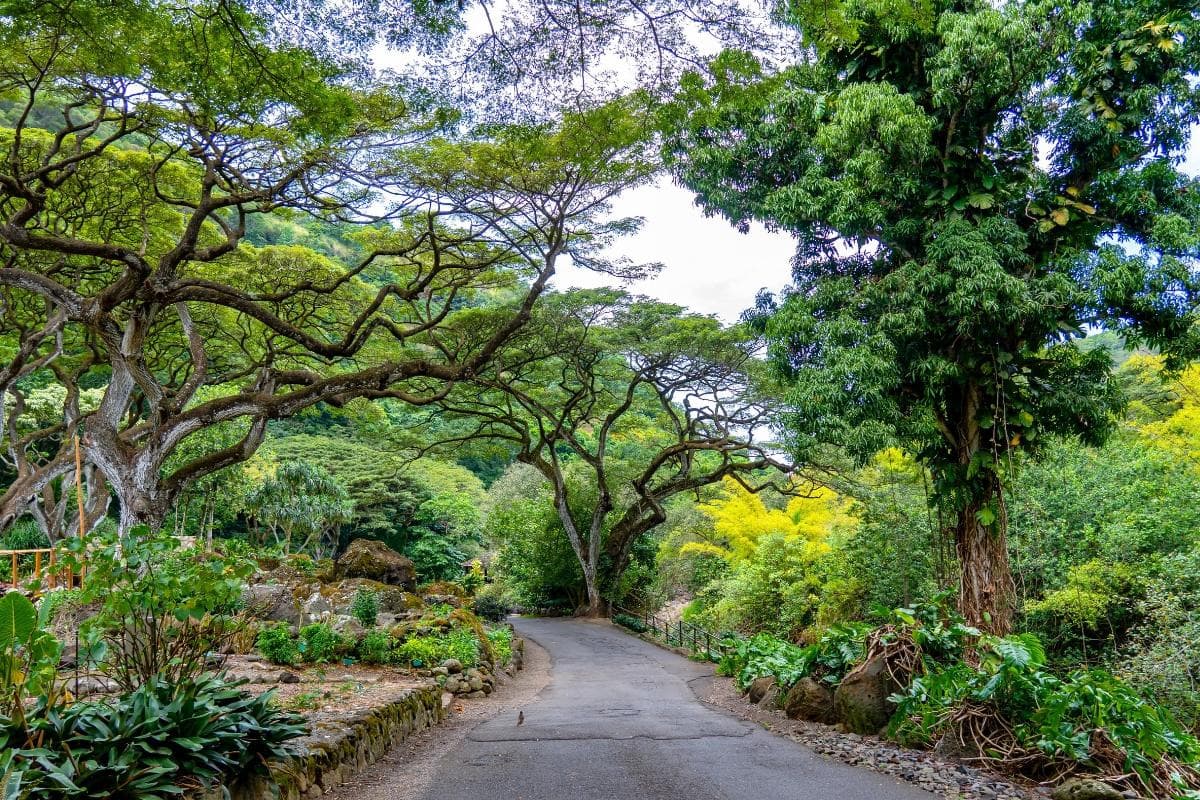
You enter Waimea Valley the way you slip into a familiar, restorative rhythm—the footsteps slow, the air cools, and the noise of the highway gives way to a layered chorus of water, birds and a breeze through palms. A paved avenue of tropical trees and carefully labeled native species funnels you past loʻi kalo (taro terraces) and past restored heiau (ancient temple sites) toward the promise at the valley’s heart: a waterfall you can actually swim beneath when conditions allow. It’s the kind of place that refuses to be merely scenic; the landscape wants to teach you something about place, stewardship and the meeting of land and sea on Oʻahu’s North Shore.
Waimea Valley is a compact ecosystem and a cultural classroom. Geologically, it’s carved by streams fed from the Koʻolau Range—over millennia runoff shaped the valley’s terraces and created the pool-fed waterfall that still attracts families, photographers and day-trippers. Botanically, the valley is as deliberate as a museum: native species have been reintroduced and clustered so visitors can walk through a living collection of Hawaiian plants—ohiʻa lehua, kalo, hala—while interpretive signs and kiaʻi (cultural stewards) explain how these species anchored local life.
The valley has a long human story. For centuries, Waimea was a productive ahupuaʻa—an integrated land division stretching from the mountains to the sea—where chiefs managed fishponds, taro cultivation, and ceremonial spaces. You can still see remnants of that management in terraced loʻi and freshwater systems. In the 19th and 20th centuries, the land shifted under private ownership, but today it’s a managed cultural and botanical park where Hawaiian cultural programming—lei-making, chant, hula and native-plant stewardship—meets everyday recreation.
Why come? For many travelers the draw is immediate: a 45–60 minute garden walk ending at a waterfall-dropped pool that’s safe to swim in when staff permit. But Waimea Valley rewards slower attention. Wander the shaded trails and you’ll find quiet alcoves where endemic birds forage, interpretive exhibits that explain the valley’s agricultural past, and a small cultural center where local practitioners offer demonstrations. The valley also serves as a natural anchor for longer North Shore days—combine a morning at Waimea with an afternoon surf-gazing at Banzai Pipeline or a shave-ice stop in Haleʻiwa.
Most visitors arrive on packaged tours—Waimea figures prominently on full-day Circle Island itineraries such as the Oahu Deluxe Grand Circle Island Tour and the Ultimate Circle Island Experience, which pair the valley with stops at Diamond Head, the Byodo-In Temple and the south shore. Private options like the PRIVATE TOUR—Ultimate North Shore Experience or the Oahu Personalized Private North Shore Highlight Custom Tour let you linger: swap a rushed stop for an unhurried walk, add a cultural session, or time your visit to the waterfall’s best conditions.
On the practical side: the valley is sensibly developed. Trails are mostly paved and accessible, but there are steps and short climbs—bring comfortable shoes. Swimming is allowed only when staff deem the pool safe; lifeguards are not typical, so exercise judgment and keep kids close. Facilities include a small café and restrooms near the entrance; plan to spend 1–3 hours depending on whether you join a cultural program or the waterfall swim.
Timing matters. Early morning visits beat the coaches and catch the birdlife at its most active; late afternoon light gilds the falls for photographers. Rain brings drama to the stream flow but can close the waterfall; conversely, very dry months can reduce the cascade to a trickle. If you’re building a North Shore day, allow for crowds and factor in traffic—private tour options give you the flexibility to visit outside peak group windows.
Respect and preparation make the experience better for everyone. Wear reef‑safe sunscreen (Hawaiian marine life is fragile), pack a refillable water bottle, and stick to established paths to protect native plantings. If you have extra time, explore Haleʻiwa for food trucks, local galleries and shave ice; several tour products—like the private North Shore experiences—include curated stops in town, making for an easy, culturally-rich day.
For the adventure planner: choose the Oahu Deluxe Grand Circle Island Tour or the Ultimate Circle Island Experience if you want logistical simplicity and a sampling of the island’s highlights in one long, informative day. If you prefer pacing and depth, book a private North Shore tour that can emphasize cultural interpretation at Waimea or add a river paddle at Haleʻiwa for a complementary water-activity. The Go City Oahu Explorer Pass can be useful for flexible sightseeing itineraries if you’re combining multiple attractions across several days.
Practical tips in short: go early, bring swim gear and reef‑safe sunscreen, and listen to cultural staff—many will explain how the valley’s waterways and taro patches once fed communities across the ahupuaʻa. Waimea Valley is not just a photo stop; it’s a site where geology, culture and conservation intersect in a walkable, family-friendly package. Walk with curiosity, swim with care, and fold the quiet lessons of the valley into the rest of your North Shore day—there won’t be another pocket of Oʻahu that feels quite like it.
Whether you’re chasing waterfalls, tracing Hawaiian plant stories, or sketching the curve of the pool, Waimea Valley is a place that insists you slow down enough to notice. That’s the real pleasure: it returns the favor, giving you a cooler pace, clearer air and, if you’re lucky, a quiet moment beneath falling water that makes the rest of your trip feel more connected and intentional.
Trail wisdom
Small choices, better day.
Arrive early
Beat the tour buses and softer light for better photos and quieter trails by arriving when gates open.
Bring reef-safe sunscreen and a refillable bottle
The valley encourages reef-safe products to protect downstream marine life; hydration stations help refill water bottles.
Swim only when permitted
Park staff monitor stream conditions—obey signs and lifeguard directives; the pool is safe only during authorized swim windows.
Combine with a North Shore tour
Book a private North Shore tour to add Haleʻiwa food stops or extra cultural sessions at the valley without the rush of group itineraries.
Local knowledge
Read the place, not just the route.
Watch for native species including Green sea turtle (nearshore), Native Hawaiian songbirds and seabirds.
Keep an eye out for wildlife during the transition between areas and habitats. Respect distance guidelines.
The valley actively reintroduces native plants and controls invasive species; visitors are encouraged to stay on paths and use reef‑safe sunscreen to protect downstream habitats.
Follow the guide's instructions on size limits, ethical handling, and leave-no-trace practices.
Small interpretive heiau sites tucked along the loʻi terraces. Early-morning birdwatching alcoves away from the main path
Locally recommended viewpoints and quiet spots known best to local operators.
Waimea was historically an important ahupuaʻa where taro cultivation, fishponds and ceremonial sites supported local communities; many terrace features reflect this long agricultural history.
Maritime roots and regional tradition shape the waterways and working coasts.
Seasonal guide
Four versions of the same landscape.
Spring
Best formoderate stream flow · fewer crowds · birdwatching
Challengesoccasional showers · variable waterfall size
Spring offers a good balance of waterfall flow and smaller crowds—expect intermittent rain but pleasant walking temperatures.
Summer
Best forcalmer seas nearby · turtle spotting on beaches · longer daylight
Challengeshigher visitor numbers · drier stream flow
Summer brings beach-friendly conditions across the North Shore but the waterfall can be reduced—early starts help avoid crowds.
Fall
Best forphotography with warm light · cultural events · comfortable temperatures
Challengespossible late-season rains · occasional busier weekends
Fall is comfortable for walking and photography; watch for increased visitor traffic on holiday weekends.
Winter
Best fordramatic stream flow · surf-watching on the North Shore · lusher valley foliage
Challengesbig surf nearby causing beach closures · possible waterfall closures due to runoff
Winter can produce spectacular water volume and lush vegetation, but heavy rains and high surf occasionally impact access and swimming.
Pack with intention
What to bring.
Good to know
Common questions.
Yes—swimming is allowed only when staff determine conditions are safe; look for posted signs and lifeguard instructions before entering the pool.
Plan the edges
The details that make the day easier.
Waimea Valley was an important ahupuaʻa with ancient loʻi kalo (taro terraces) and heiau; the valley’s name—"Waimea"—means "reddish water," a reference recorded in historical accounts.
Haleʻiwa’s surf-town vibe pairs perfectly with Waimea—sample local poke bowls, garlic shrimp trucks and shave ice, and look for family-run art stalls featuring native koa woodworking and lei-making demonstrations.
- Hours
- morning to late afternoon (check site); Time needed: 1–3 hours; Accessibility: paved main trail with some steps; Tickets: timed-entry may be used in peak season; Swim: allowed only when staff permit.
Support local conservation by using reef-safe sunscreen, staying on designated paths, refilling water bottles, and choosing tours that partner with cultural stewards.
Explore by topic
Follow the threads.
Keep exploring
Make the story part of the trip.
 Related story
Less than two hours from Nairobi, Kereita Forest pairs hands-on canopy adventure with quiet montane trails and a sobering colonial history—perfect for families, teams, and curious travelers seeking a full-day pulse of nature.
Set out from Bass Harbor for a private, customizable day on Blue Hill Bay — lighthouses, puffins, seals, and the chance to feel Acadia from the water. Small groups, local captains, unforgettable views.
In four hours you can move from shaded canyon ferns to wind-scoured coastal ridgelines, guided by someone who knows where the light—and the hidden views—live. This private half-day hike on the Monterey Peninsula or Big Sur is compact, curated, and perfect for travelers who want depth without a multiday commitment.