
What the day feels like
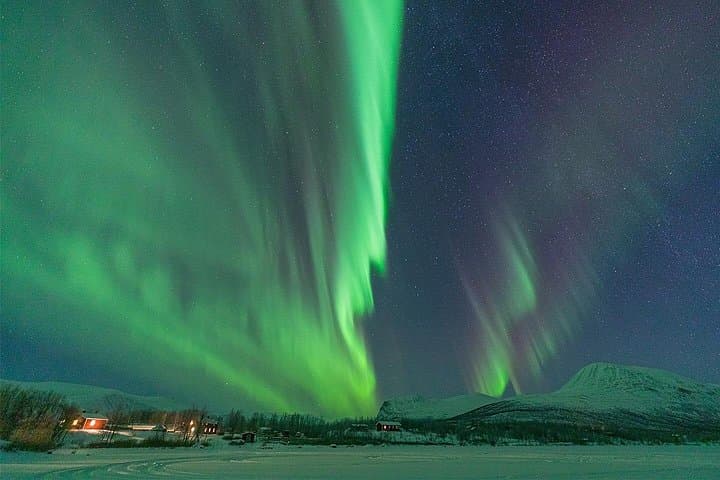
The bus pulls off the black ribbon of the E10 and the town lights of Kiruna shrink behind you, like coins extinguished one by one. A low, breathy quiet settles over the tundra; the air already feels thinner and keener. Ahead, the mountains—Kebnekaise and the ragged ridgeline of the Scandinavian range—sit like dark guardians. Your guide kills the van’s headlights and for a moment the sky takes over: a slow, tentative curtain of emerald unfurls, then gathers momentum, fingers of light reaching and retreating as if testing the horizon. It isn’t just spectacle. It’s conversation—between sun and atmosphere, between centuries of Sami sky-watching and the modern tourist camera perched on a borrowed tripod.
This is a Kiruna winter: a compact, intense education in cold-weather patience. The Northern Light Tour with Sami Dinner folds together two of Lapland’s most essential experiences—aurora hunting and Sami cultural hospitality—into one evening. Over roughly five and a half hours you’ll drive away from light pollution to high-probability aurora spots, hear local stories that anchor the sky’s show in place, and sit for a warm two-course Sami meal that tastes of reindeer, smoke, and the long, quiet dark outside.
The aurora itself is geology’s and solar physics’ noisy cousin; charged particles racing off the sun slam into Earth’s magnetosphere and paint the polar sky. Locally, the presence of adjacent mountain ranges—like Kebnekaise—can help by creating wind-scoured weather pockets and cold inland air that produces clearer skies. But the human story matters almost as much. The Sami people have been reading the night long before aurora expeditions were packaged and booked. Their stories—of respectful observation, of naming the land and sky—give context to the light show. Your hosts on this tour share those stories across the table, placing you in a continuous line between local culture and the cosmic.
Practically, this is not a trekking expedition. You’ll be driven to vantage points selected for darkness and forecasted weather, with short walks from parking spots to open viewpoints. The tour’s tempo alternates between the hush of being still under the lights and warmth indoors: a simple, soulful two-course Sami dinner—often slow-cooked reindeer or fish, root vegetables, and a sweet cloudberry finale—served with hot beverages. If the aurora goes quiet for a spell, guides pivot to storytelling, local ecology, or a primer on how to photograph the lights; if the sky rips open, it’s head-out-the-door and tripod time.
Why go on a guided tour? In a place like northern Sweden, the odds of a good night hinge on reading weather and roads, and on access to truly dark sites. Guides here track cloud bands, aurora forecasts, and microclimates; they’ll alter plans to chase clearer patches. The inclusion of Sami hosts turns an otherwise photogenic outing into a culturally grounded evening: the food, the stories, the sense of place deepen what could otherwise be a simple checklist experience.
For travelers, the logistics are straightforward but worth respecting. The tour departs from Kiruna and runs about 5.5 hours, often after dinner-hour; temperatures can fall sharply, so insulation and good boots are non-negotiable. Cameras benefit from a tripod and a remote shutter; if you don’t own one, guides often have tripods to borrow. And patience—both literal and practical—pays off: good aurora nights feel like waiting for a crescendo that rewards you with a private performance.
Beyond the lights, the region offers context: Jukkasjärvi’s Icehotel sits an easy drive away; the iron-rich bedrock beneath Kiruna explains why the town itself is being slowly relocated; and the mountain valleys around Kebnekaise are a winter playground of cross-country trails and snowmobile corridors. Returning to town after the tour, many travelers find themselves hungry for more—more sky, more stories, more local supper. That appetite points to the best part of the experience: it’s an invitation. One perfect aurora night can turn a quick stopover into a multi-day excuse to learn Sámi craft, try ice-fishing, or sleep in the sculpted corridors of the Icehotel.
If you go: expect a well-paced evening that blends culture and sky. Dress in layers, think of the camera settings you’ll use before the lights appear, and come ready to listen. The aurora will do the rest, but the Sami dinner will make you care about the land you’re watching it from.
Trail wisdom
Small choices, better day.
Layer for the cold
Dress in insulated layers with a windproof outer shell—temperatures can plunge quickly at night.
Bring a tripod or borrow one
Long exposures are necessary for crisp aurora photos; guides often lend tripods if you don’t have one.
Charge and protect batteries
Cold drains batteries fast—carry spares in an inner pocket and keep phones warm until you shoot.
Respect Sami spaces
Follow guide instructions when visiting private reindeer herding areas and ask before photographing people or private property.
Local knowledge
Read the place, not just the route.
Watch for native species including Reindeer, Arctic fox (occasionally).
Keep an eye out for wildlife during the transition between areas and habitats. Respect distance guidelines.
Tours emphasize low-impact travel—stay on designated tracks, avoid disturbing reindeer herds, and follow guide guidance to reduce light and noise pollution.
Follow the guide's instructions on size limits, ethical handling, and leave-no-trace practices.
Short stop at Jukkasjärvi for a quick visit to the Icehotel (nearby). A quiet viewpoint near Nikkaluokta for sunrise/sunset on the mountains
Locally recommended viewpoints and quiet spots known best to local operators.
Kiruna is in Sápmi, the traditional territory of the Sami people, whose herding and cultural traditions remain central to the region.
Maritime roots and regional tradition shape the waterways and working coasts.
Seasonal guide
Four versions of the same landscape.
Spring
Best forLate-night aurora viewing · Longer daylight for side excursions
ChallengesUnpredictable melt cycles · Variable road conditions
Early spring still offers strong aurora chances with improving daylight—dress for cold nights and slushy roads.
Summer
Best forMidnight sun and hiking · Sami cultural visits
ChallengesNo auroras during midnight sun · Inaccessible winter-only routes
Summer is spectacular for daylight activities but unsuitable for aurora tours—visit for culture rather than sky shows.
Fall
Best forAurora season kickoff · Autumn color in tundra
ChallengesEarly snow and variable temps · Shortening daylight windows
Fall brings the first reliable aurora displays; expect cold evenings and rapidly changing weather.
Winter
Best forPrime aurora viewing · Snow-based activities like snowmobiling
ChallengesExtreme cold · Short daylight hours
Winter is peak aurora season—clear nights are common, but be prepared for deep cold and winter driving.
Pack with intention
What to bring.
Good to know
Common questions.
The tour lasts approximately 5.5 hours (330 minutes), typically departing in the evening from Kiruna.
Plan the edges
The details that make the day easier.
Kiruna is the northernmost town in Sweden and is undergoing a multi-decade relocation due to ground subsidence from the large LKAB iron ore mine beneath the town.
After the tour, warm up with local flavors: try reindeer stew at a family-run eatery in Kiruna, visit the Icehotel in Jukkasjärvi for a drink in an ice bar, and browse Sami handicrafts for hand-made gákti and silverwork.
- Closest airport
- Kiruna Airport (KRN); Typical driving: 20–90 minutes from Kiruna depending on chosen aurora site; Cell service: generally available near Kiruna but can be spotty at remote vantage points; Permits: none required for this guided tour.
This tour supports local Sami hosts—minimize light pollution, pack out all waste, and avoid approaching or feeding reindeer to reduce disturbance.
Explore by topic
Follow the threads.
Keep exploring
Make the story part of the trip.
 Related story
Less than two hours from Nairobi, Kereita Forest pairs hands-on canopy adventure with quiet montane trails and a sobering colonial history—perfect for families, teams, and curious travelers seeking a full-day pulse of nature.
Set out from Bass Harbor for a private, customizable day on Blue Hill Bay — lighthouses, puffins, seals, and the chance to feel Acadia from the water. Small groups, local captains, unforgettable views.
In four hours you can move from shaded canyon ferns to wind-scoured coastal ridgelines, guided by someone who knows where the light—and the hidden views—live. This private half-day hike on the Monterey Peninsula or Big Sur is compact, curated, and perfect for travelers who want depth without a multiday commitment.