
What the day feels like
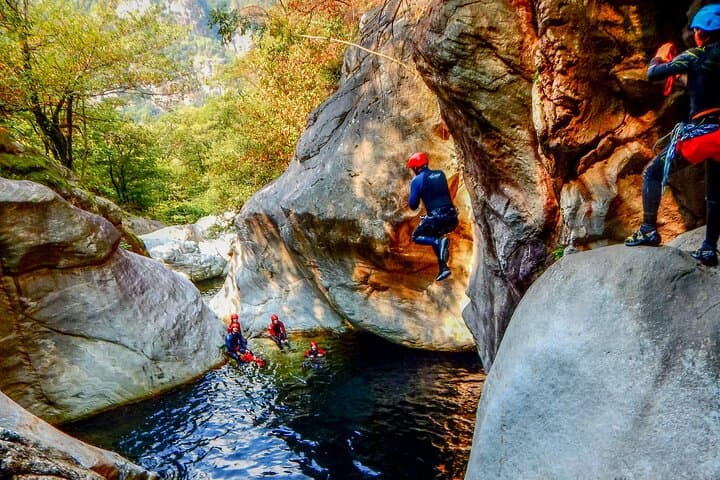
You step off a narrow path and the temperature drops. The world contracts to the sound of water—bright, impatient, carving its will into stone for millennia. Sunlight hits the rim and catches on droplets that ricochet like thrown coins; below, the Boggera River threads a slot of polished granite, a staircase of bowls and chutes cut by glacial melt and the patient insistence of Alpine water. This is Ticino’s Boggera Gorge, and within a few minutes of gearing up you’ll be slipping into pockets of turquoise that dare you to jump, sliding through water-sculpted chutes, and lowering yourself down waterfalls that feel, in a single, roaring instant, like the exact right thing to do.
Canyoning here wears two faces: raw, geological theater and a convivial southern temperament. Ticino is the Italian-speaking edge of Switzerland—sunlit, olive-tree dotted, shorter on stiffness and longer on grotti (rustic eateries) and a local gusto for life. The Boggera is part of that personality. Its granite walls tell an older story: repeated glaciations, tributary streams, and the slow hewing of amphitheaters where plunge pools now collect crystal-clear water. The gorge’s sculpted channels, potholes and natural slides make it a textbook canyoning playground—steep enough for adrenaline, sheltered enough for beginners.
This particular guided outing is four hours in the field and built for people who want thrills without performance pressure. Certified guides set the pace: they teach safe jumping techniques, rig abseils where needed, and give options for those who prefer a gentler line through the gorge. That flexibility means novices can experience the signature moves—slides, swims, and rappel down basalt-shaped lips—while experienced canyoners can push into the steeper drops and longer swims on offer. Either way, the finale is usually the same: a local beer shared on sun-warmed rocks and the sort of laughter that sticks to your clothes.
Practicalities are straightforward but matter. The tour runs roughly four hours, priced from about $205, and includes wetsuits, helmets, and ropes. You need basic fitness: not an athlete, but comfortable walking on uneven terrain and able to swim. Most of the technical skills—abelay, proper jumping posture, rope management—are taught by guides, though prior abseil or canyoning experience helps you move faster. Water temperature can be brisk even in summer, so a well-fitting wetsuit is non-negotiable for comfort and safety.
Timing is everything. Summer is peak canyoning season—stable weather, longer days, and sun-warmed exit rocks—but avoid the heaviest afternoon sun on weekends if you prefer solitude. Spring brings strong flows that heighten the drama but raise the technical demands; autumn offers quieter canyons and rich light on the cliffs. Winter, for most operators, means the gorge is closed: freezing water and icy approaches make most sections dangerous.
Safety is part of the draw here. Guides running the Boggera route are certified and familiar with micro-variations in the canyon: where the current pins you, which jump is optional, and where a rope is the better choice. That local knowledge matters: water levels change rapidly after rainfall, and the granite can be slick where it retains moss. As you lower into a waterfall or line up a jump, the guide’s voice will be steady and practical—exactly what you want when granite and water negotiate your brief passage.
The culture around the canyon is as important as the canyon itself. Ticino’s lifestyle leans Mediterranean—shaded piazzas, polenta and risotto, and grotti serving hearty regional fare and local Merlot. After a canyoning trip, locals often decompress over a beer or a plate of prosciutto and local cheese at a nearby grotto. If you’re staying in Lugano or Locarno, the city’s lakeside cafes and market stalls make a friendly bookend to a day of river-tight thrills.
If you go: plan for layers, allow time to reach the meeting point (public transport gets you most of the way but private transfers shave time), and listen to your guide. Canyoning is intensely satisfying because it compresses effort and reward: focus on each move, trust your team, and let the water do its work. The memory you bring back isn’t just the jump or the rappel—it’s the sensation of moving through a place that was shaped in patience, and of doing it with people who know how to keep that patience safe and deliciously present.
In short: Boggera is an accessible, atmospheric canyon. It’s scenic enough for a first-timer to feel awe, technical enough for repeat visitors to return, and small enough that the human scale of Ticino—food, language, and warmth—remains part of the experience. Come for the slides and the rope work; stay for the beer on sun-warmed stone and the particular quiet that follows a day spent moving with water.
Length & logistics snapshot: About four hours total in the canyon, physically graded for active beginners to intermediate canyoners, with certified guides, wet suits and helmets provided. Expect a mix of short hikes, swims and simple abseils; bring a positive attitude and a willingness to get wet.
Trail wisdom
Small choices, better day.
Dress for cold water
Wear a snug wetsuit and neoprene booties—the water is deceptively chilly even on warm days.
Start early
Morning launches avoid afternoon crowds and often mean lower water traffic and better light for photos.
Listen and ask
Guides brief the group on exact jump lines and rope techniques—ask questions if anything is unclear.
Protect your gear
Leave electronics in waterproof cases or the van; a dry bag at the meeting point keeps valuables safe.
Local knowledge
Read the place, not just the route.
Watch for native species including Alpine salamander, Grey wagtail along stream edges.
Keep an eye out for wildlife during the transition between areas and habitats. Respect distance guidelines.
Operators minimize impact by sticking to established routes, using local guides, and emphasizing leave-no-trace practices—pack out everything and avoid disrupting riparian vegetation.
Follow the guide's instructions on size limits, ethical handling, and leave-no-trace practices.
A sunlit rock ledge near the gorge’s exit good for a picnic and photos. Nearby grotti that serve local polenta and Ticinese Merlot—perfect post-adventure stops
Locally recommended viewpoints and quiet spots known best to local operators.
The gorge was sculpted by glacial melt and centuries of river action; Ticino’s gorges have long been routes for water and local industry but are now prized for recreation.
Maritime roots and regional tradition shape the waterways and working coasts.
Seasonal guide
Four versions of the same landscape.
Spring
Best forHigh water flow · Spectacular waterfalls
ChallengesCold water · Unpredictable weather
Spring shows the gorge at its most powerful—visually impressive but technically demanding; ideal for experienced canyoners or those willing to accept stronger currents.
Summer
Best forWarmer exit rocks · Beginner-friendly conditions
ChallengesPeak visitor numbers · Strong sun at the exit points
Summer is the season for most guided trips: stable conditions, comfortable wetsuit temps, and easy access—book in advance on weekends.
Fall
Best forQuieter canyons · Rich light on cliffs
ChallengesShorter days · Cooler water temperatures
Autumn brings fewer people and beautiful light; temperatures begin to drop so a thicker wetsuit may be necessary.
Winter
Best forOff-season observation
ChallengesIcy approaches · Closed or unsafe sections
Winter typically closes the canyon for safety; access can be treacherous and most operators pause trips until spring.
Pack with intention
What to bring.
Good to know
Common questions.
No—this trip is designed for beginners; guides teach jumping technique, rappelling basics, and the safest lines through the gorge.
Plan the edges
The details that make the day easier.
Ticino is the only Swiss canton where Italian is the sole official language, giving the region a distinct Mediterranean cultural flavor.
After the canyon, head to a local grotto for polenta or risotto al salto and a glass of Ticinese Merlot; in Lugano, lakeside cafes offer light bites and swim spots to decompress.
- Closest international airport
- Milan Malpensa (~1.5–2 hours by car). Nearest city base: Lugano (~30–60 minutes drive depending on canyon access). Cell service: intermittent inside the gorge; arrange meeting details ahead. Permits: none typically required for guided commercial trips—confirm with operator.
The Boggera and other Ticino canyons are sensitive riparian environments—stick to routes, avoid single-use plastics, and follow guide instructions to minimize erosion and disturbance.
Explore by topic
Follow the threads.
Keep exploring
Make the story part of the trip.
 Related story
Less than two hours from Nairobi, Kereita Forest pairs hands-on canopy adventure with quiet montane trails and a sobering colonial history—perfect for families, teams, and curious travelers seeking a full-day pulse of nature.
Set out from Bass Harbor for a private, customizable day on Blue Hill Bay — lighthouses, puffins, seals, and the chance to feel Acadia from the water. Small groups, local captains, unforgettable views.
In four hours you can move from shaded canyon ferns to wind-scoured coastal ridgelines, guided by someone who knows where the light—and the hidden views—live. This private half-day hike on the Monterey Peninsula or Big Sur is compact, curated, and perfect for travelers who want depth without a multiday commitment.