
What the day feels like
Dawn arrives on Mt. Fuji the way it does everywhere that matters—slow enough to see colors change, quick enough that if you’re not moving you’ll miss the light. From the Subaru Line 5th Station, the summit sits above the clouds like an invitation: stark, regular, uncompromising. You feel small in the first hour, footfalls scrunching on volcanic scree, breath fogging in the thinning air. The mountain has a hush to it; not silence exactly, but a kind of restrained attention, as if the summit is waiting to see if you’re serious.
Fuji-san is Japan’s highest peak at 3,776 meters (12,389 feet), a stratovolcano whose symmetry has shaped art, religion, and travel for centuries. Pilgrims have climbed these slopes since at least the 7th century and the mountain’s profile is stitched into the national imagination—painted by Hokusai, venerated by Shinto and Buddhist practitioners, and framed daily from towns like Fujikawaguchiko. The 1707 Hōei eruption left a crater on the southeastern flank (the Hoei Crater) and the geological story is still readable underfoot: layers of lava, ash, and pumice give the trails the loose, rolling feel climbers learn to respect.
What modern climbers need to know is straightforward. Most ascents start at one of the 5th Stations—Yoshida, Subashiri, Gotemba, or Fujinomiya—each with different approach distances and characters. The Yoshida Trail, popular with those coming from Kawaguchiko, offers mountain huts, stations with vending machines and simple shrines, and a steady but exposed climb: roughly 7–9 km one-way from the Subaru Line 5th Station with about 1,470 meters of vertical gain. Expect 5–7 hours to ascend and 3–4 hours to descend depending on pace and acclimatization.
Fuji’s personality changes with the season. Summer—July through early September—is official climbing season, when the trails and huts are staffed and the weather is least hostile. Outside that window snow, ice and high winds make the mountain a serious alpine objective; Fujiyama becomes a place that demands technical gear and local knowledge. But beyond summit bids, the Fuji region provides varied ways to experience the mountain: a winter day on the slopes at Fujiyama Snow Resort Yeti, a contemplative walk around Kawaguchiko’s lakefront for photographers, a hike into the Hoei Crater that puts the volcano’s eruption history in dizzying perspective, or a drive to nearby Shiraito Falls for cool, mossy canyons where water still cuts ancient lava flows.
On any Mt. Fuji trip, the cultural and practical mesh. Many climbers begin in Tokyo—an hour-plus by train to Odawara and then a local bus or private transfer to the Fuji Five Lakes region—so you can have sushi in the city and a bowl of yamanashi soba by a ryokan the night before. Hot springs (onsen) are the classic way to shake muscle knots and flush dust after a climb; some onsen in the area offer views of the mountain for a final, quiet goodbye.
Practical planning is where the adventure becomes responsible. Hydration and pacing matter: the steep switchbacks are relentless and the air thins fast past 2,500 meters; a slow ascent reduces acute mountain sickness risk. Footwear should be a stable hiking boot with a grippy outsole for volcanic scree; trekking poles help on long descents. Hut reservations are recommended during peak season—many climbers book an evening check-in to rest and then make a midnight start for sunrise from the summit. Weather can swing from calm and clear to whiteout in minutes; layers, waterproofs, and a headlamp are non-negotiable.
If you want to expand beyond the summit, several guided products near Fuji make good complements. A Hoei Crater hike frames the mountain’s explosive history and brings you to raw volcanic scenery; Shiraito Falls offers a cool contrast—a UNESCO-recognized ribbon of water that spills off volcanic rock into fern-filled pools. For families or non-skiers, the Yeti snow park at the second station supplies sledding and snow play in winter, while cyclists can take on the Fuji Subaru Line—the highest public road in Japan—for a long, satisfying climb with sustained gradients and a supportive infrastructure of mechanics and support cars.
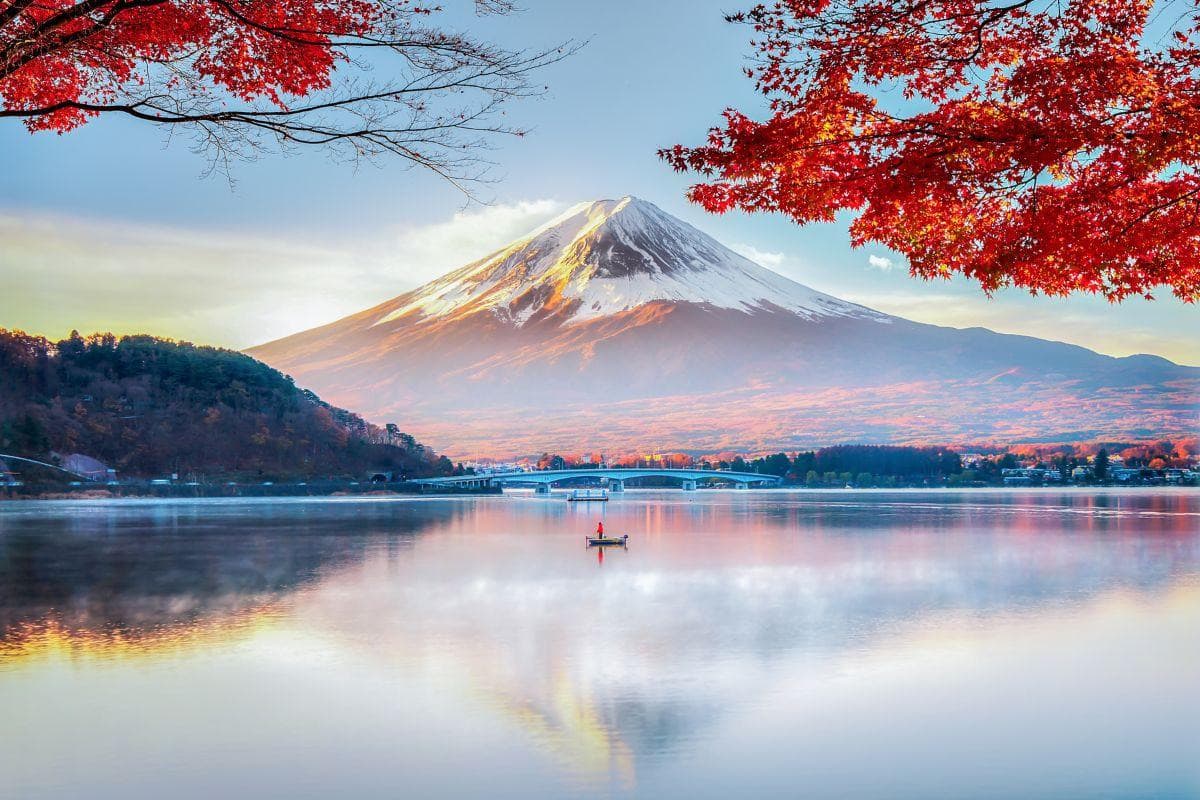
For photographers and quiet observers, the mountain rewards patience. Clear mornings from Arakurayama Park or the Kawaguchiko shoreline offer that classic, symmetrical composition—snow-capped peak reflected in a placid lake—while stormy conditions sculpt dramatic skies behind the cone. For those after solitude, pre-dawn departures to the less-trafficked trails (outside official season with an experienced guide) showcase a rawer, winter-face Fuji.
Fuji is both a personal test and a shared ritual. You’ll meet families, seasoned alpinists, pilgrims chanting at a way-side shrine, and day-tour groups all moving up the same spine. The practical companion to reverence is respect: stick to marked routes, carry out trash, limit loud behavior in huts, and time your summit push with weather windows.
When you stand at the top at sunrise, the reward is plain—light on the islands of cloud below, the silhouette of distant ranges, the simplicity of having reached something that has meant so much to so many. That moment is what brings people back, whether via skis and onsen, a reflective lakeside stay, or the straightforward slog of those last, serrated steps to the lantern-lit shrine. Mt. Fuji is a mountain with a pulse—calm and steady most days, assertive when it decides to remind you you’re in its presence. Approach prepared, tread respectfully, and it will give you one of the cleanest, most elemental mountain experiences in Asia.
Trail wisdom
Small choices, better day.
Acclimatize before ascent
Spend a night at 1,000–2,000 m (Kawaguchiko or a local ryokan) and hydrate; start your summit push slowly to lower altitude-sickness risk.
Use a headlamp for summit pushes
Many climbers start around midnight for sunrise; a reliable headlamp and fresh batteries are indispensable when moving on loose scree in the dark.
Bring layered clothing
Temperatures can drop quickly above 2,500 m—pack an insulating midlayer plus a windproof shell to handle wind and exposure.
Plan descent recovery
Your knees will take the brunt on the way down; bring trekking poles and consider an onsen booking or light massage in town afterward.
Local knowledge
Read the place, not just the route.
Watch for native species including Japanese serow (Capricornis crispus) at lower slopes, Varied alpine birdlife such as the Japanese accentor.
Keep an eye out for wildlife during the transition between areas and habitats. Respect distance guidelines.
Trails are monitored during climbing season and visitors are urged to use designated paths, avoid weekend peak congestion when possible, and carry out all trash to protect fragile alpine ecosystems.
Follow the guide's instructions on size limits, ethical handling, and leave-no-trace practices.
Hoei Crater rim hike for raw volcanic scenery. Early-morning Arakurayama Park for classic Fuji-and-pagoda compositions
Locally recommended viewpoints and quiet spots known best to local operators.
Mt. Fuji has been a site of religious pilgrimage for over a millennium; the 1707 Hōei eruption deposited ash as far as Edo (Tokyo).
Maritime roots and regional tradition shape the waterways and working coasts.
Seasonal guide
Four versions of the same landscape.
Spring
Best forFewer crowds · Wildflower viewing at lower elevations
ChallengesSnow and ice at higher elevations · Limited hut services outside official season
Late spring can provide clear low-elevation trails and blossoms in the Fuji Five Lakes area, but higher slopes still hold winter conditions—check local reports before attempting a summit.
Summer
Best forOfficial climbing season · Hut access and shuttle services
ChallengesHeavy crowds mid-July to August · Midnight ascents can be cold and crowded
Summer, especially July–early September, is the safest and most supported time to climb with staffed huts and predictable trail conditions.
Fall
Best forClear, crisp views · Autumn foliage around the lower lakes
ChallengesShorter daylight hours · Rapidly cooling temperatures at elevation
Fall brings superb visibility and colorful lower slopes but cooling weather—hi-res outerwear becomes essential as the season advances.
Winter
Best forSkiing at Yeti snow park · Dramatic, snow-draped landscapes
ChallengesTechnical alpine conditions · Most trails and facilities closed
Winter is for experienced mountaineers or resort visitors; the mountain transforms into an alpine objective with snow, ice, and severe weather risks.
Pack with intention
What to bring.
Good to know
Common questions.
Typically early July through early September—during this window huts and many services are open and trails are least hazardous.
Plan the edges
The details that make the day easier.
Mt. Fuji's last major eruption was the Hōei eruption in 1707–1708, which deposited ash as far as present-day Tokyo—this event created the Hoei Crater on the mountain’s southeast flank.
Pair a climb with an onsen stay in Fujikawaguchiko, try local Hoto or yamanashi soba, visit small shrine stations on the trails and support family-run ryokans that preserve regional foodways.
- From Tokyo
- 2–3 hours by train+bus; common start at Subaru Line 5th Station (2,305 m); ascent ~1,470 m; expect 5–7 hours up, 3–4 down; huts available in season; book transport and huts early.
Use established trails and facilities, pack out all waste, avoid peak weekend congestion when possible, and support local businesses to keep the area protected and economically resilient.
Explore by topic
Follow the threads.
Keep exploring
Make the story part of the trip.
 Related story
Less than two hours from Nairobi, Kereita Forest pairs hands-on canopy adventure with quiet montane trails and a sobering colonial history—perfect for families, teams, and curious travelers seeking a full-day pulse of nature.
Set out from Bass Harbor for a private, customizable day on Blue Hill Bay — lighthouses, puffins, seals, and the chance to feel Acadia from the water. Small groups, local captains, unforgettable views.
In four hours you can move from shaded canyon ferns to wind-scoured coastal ridgelines, guided by someone who knows where the light—and the hidden views—live. This private half-day hike on the Monterey Peninsula or Big Sur is compact, curated, and perfect for travelers who want depth without a multiday commitment.