
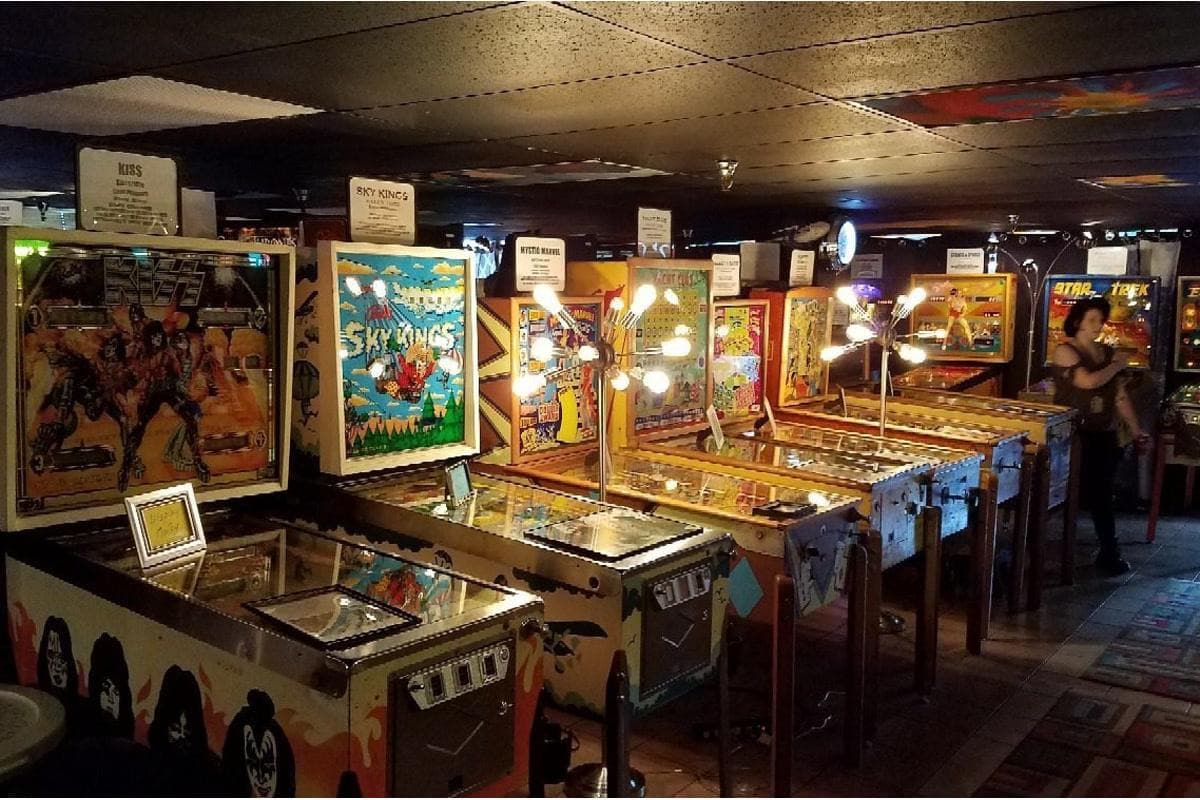
What the day feels like
On a drizzly Blue Ridge afternoon, when the mountains pull a curtain of mist over their shoulders and the river hums low, downtown Asheville crackles to life in neon. You feel it before you see it—the buzz, the clack, the chiming chorus that spills from the Asheville Pinball Museum like a dare. Step inside and the room greets you with a kinetic glow: backglasses blaze like stained glass, score reels chatter, and chrome balls race across bright fields of possibility. In this city known for trail miles and craft brews, the machines become a different kind of terrain—fast, unpredictable, and decidedly analog.
The museum lives in the historic heart of the city, a short walk from breweries, galleries, and the venerable Grove Arcade. It’s less a museum and more a living archive; you don’t just stare at these artifacts—you play them. Fingers on flippers, hips leaning into the cabinet, you negotiate gravity and momentum, a conversation that rewards touch and timing over screens and swipes. The older electromechanical tables hum like old radios; newer solid-state machines explode with light and layered rules. Some tables are famous—their artwork a cultural time capsule. Others are cult classics, the kind you might remember from a dim pizza parlor or a roadside bar, now resurfaced and restored.
Pinball’s story is always more rebellious than people expect. For decades, major U.S. cities banned it, calling the game a gateway to gambling rather than skill. That started to shift in 1976, when an enthusiast named Roger Sharpe proved in a New York City courtroom that pinball’s flippers made it a game of skill. The switch flipped, and pinball surged into the mainstream—an eruption of wild themes, pop-culture mashups, and engineering ingenuity. Walk these aisles and you feel that arc of history under your palms, each machine a chapter you can read by playing.
Asheville is a fitting home for the revival. This is a town that thrives on craft—beer, bread, banjos, bent-steel sculpture—and pinball fits right in. Restoring an old table is not so different from lutherie or baking: it’s patience and precision, parts and polish, and the quiet satisfaction of coaxing something back to life. The museum’s collection rotates, ensuring repeat visits unfold like new trail loops. One moment you’re battling the clock on a fast modern shooter; the next you’re nudging a mid-century beauty, watching score reels roll like odometers.
Spend an hour here and you’ll start to notice the soundtrack: the bell that rings at multiball, the crisp thunk of the plunger, the sudden hush when a ball drains and the machine inhales before letting go of the next. Pinball rewards presence, the kind you hone on a ridge walk. The ball dares you to predict its line, then laughs and slingshots to the unexpected. You push forward, sharpen your aim, read the angles, try again. It’s not unlike learning a river’s language: current, eddy, return.
The practical edge is part of the fun. Go early or late to dodge peak crowds—Asheville’s weekend pulse is strong, and this spot is a magnet for families, couples, and solo players on a nostalgia tear. Expect an immersive, hands-on experience rather than a quiet viewing; this is not a place to tiptoe. Comfortable shoes help, as you’ll be on your feet drifting from table to table, chasing high scores and favorite themes. Keep your hands clean—machines appreciate it—and respect that every cabinet is both entertainment and artifact.
When you’re ready to come up for air, downtown wraps you in choices. Step across to admire the Grove Arcade’s Art Deco bones, or loop around to the Flat Iron sculpture at Battery Park Avenue for a quick photo. If your day includes a brewery stop, the South Slope is walkable, a stout-and-sours wonderland that pairs surprisingly well with flippers and flashing inserts. Build a rainy-day itinerary around the museum and nearby galleries, then reward yourself with a late lunch or early dinner—Asheville’s kitchens speak fluent comfort and creativity.
Families will find the museum welcoming but energized—loud in the way that signals play and discovery. Newcomers get the hang of it fast; the basics are intuitive, and that first well-timed flip that sends the ball snapping up a ramp lands like a small triumph. Seasoned wizards will relish the chance to hunt for deep rule sets and chase the right stack—a multiball here, a mode there—until the machine surrenders a score you’ll talk about over tacos.
In a city famous for waterfalls and blue ridgelines, the Pinball Museum offers something unexpected: the joy of analog focus in an increasingly digital world. It’s a reminder that adventure doesn’t always require a summit, just intention and a willingness to play. Outside, the mountains breathe a steady rhythm. Inside, the machines keep time with lights and bells and the bright tap of a steel ball. Both ask the same thing: pay attention; there’s skill in the flow.
Planning is simple. Check current hours before you go—Asheville’s event calendar ebbs and flows—and be ready for a short wait at peak times. Parking is straightforward in nearby garages; walking from most downtown hotels is often easier. Bring curiosity, patience, and the muscle memory of a kid. The rest will come back the moment you press start and feel the cabinet alive beneath your hands.
Trail wisdom
Small choices, better day.
Go Early or Late
Arrive near opening or closer to closing to avoid peak weekend crowds and shorten any potential wait.
Comfort First
Wear comfortable shoes—most visitors stand and move between machines for 1–3 hours.
Respect the Machines
Keep hands clean and avoid aggressive nudging; these cabinets are restored artifacts as well as games.
Plan Your Downtown Loop
Pair your visit with nearby galleries, the Grove Arcade, and a South Slope brewery for a simple, walkable itinerary.
Local knowledge
Read the place, not just the route.
Watch for native species including Carolina wren, Red-tailed hawk.
Keep an eye out for wildlife during the transition between areas and habitats. Respect distance guidelines.
Support small cultural institutions by treating machines gently and packing out any trash. Walk, bike, or use public transit to minimize your footprint in downtown Asheville.
Follow the guide's instructions on size limits, ethical handling, and leave-no-trace practices.
Grove Arcade’s Art Deco interior—just across the way—for a quick architecture fix between games. The Flat Iron sculpture at Battery Park Avenue, a quirky photo stop steps from the museum
Locally recommended viewpoints and quiet spots known best to local operators.
Pinball was banned in several major U.S. cities for decades and re-legalized in the 1970s after it was proven to be a game of skill. Asheville’s creative culture has helped fuel a broader pinball resurgence, preserving classic machines for hands-on play.
Maritime roots and regional tradition shape the waterways and working coasts.
Seasonal guide
Four versions of the same landscape.
Spring
Best forMild temps for downtown walking · Weekday visits with lighter crowds
ChallengesRain showers · Spring break surges
Spring’s mild weather makes downtown strolling easy; expect occasional showers and family travel spikes around holidays.
Summer
Best forRainy-day backup plans · Evening play after hikes
ChallengesPeak tourism crowds · Warmer indoor temps during rush hours
Summer brings the most visitors—go early or late and hydrate; the museum makes a perfect break from afternoon heat.
Fall
Best forLeaf season getaways · Cool, comfortable downtown walks
ChallengesHigh demand on weekends · Limited street parking
Autumn is prime Asheville—pair leaf-peeping with a pinball session, but expect weekend waits and plan parking in garages.
Winter
Best forHoliday lights and cozy downtown vibes · Less crowded weekdays
ChallengesShort daylight hours · Potential weather-related schedule changes
Winter’s quieter weekdays are ideal for longer, unhurried play; always confirm hours if snow or ice are in the forecast.
Pack with intention
What to bring.
Good to know
Common questions.
Yes. It’s hands-on and approachable for most ages, with engaging machines that appeal to kids and adults alike.
Plan the edges
The details that make the day easier.
Pinball was banned in New York City from 1942 until 1976, when player Roger Sharpe demonstrated a skill shot in court to prove the game wasn’t gambling.
After a round of high scores, wander to the South Slope for a pour at Burial Beer Co. or Wicked Weed’s Funkatorium. Grab elevated comfort food at Tupelo Honey near Pack Square, or tuck into small plates at Curate for a celebratory post-play dinner. The Grove Arcade’s market hall offers quick bites and coffee if you’re mid-itinerary.
- Closest airport
- Asheville Regional (AVL). Location: Downtown Asheville near the Grove Arcade; easily walkable from many hotels. Driving: About 10–15 minutes from Biltmore Village; garages nearby. Cell service: Strong across downtown. Permits
- Passes
- None—standard admission
Choose to walk or use public transit downtown, and bring a reusable bottle (if allowed) to reduce waste. Treat every machine with care—gentle play helps preserve these restored cabinets for future visitors.
Explore by topic
Follow the threads.
Keep exploring
Make the story part of the trip.
 Related story
Less than two hours from Nairobi, Kereita Forest pairs hands-on canopy adventure with quiet montane trails and a sobering colonial history—perfect for families, teams, and curious travelers seeking a full-day pulse of nature.
Set out from Bass Harbor for a private, customizable day on Blue Hill Bay — lighthouses, puffins, seals, and the chance to feel Acadia from the water. Small groups, local captains, unforgettable views.
In four hours you can move from shaded canyon ferns to wind-scoured coastal ridgelines, guided by someone who knows where the light—and the hidden views—live. This private half-day hike on the Monterey Peninsula or Big Sur is compact, curated, and perfect for travelers who want depth without a multiday commitment.