
What the day feels like
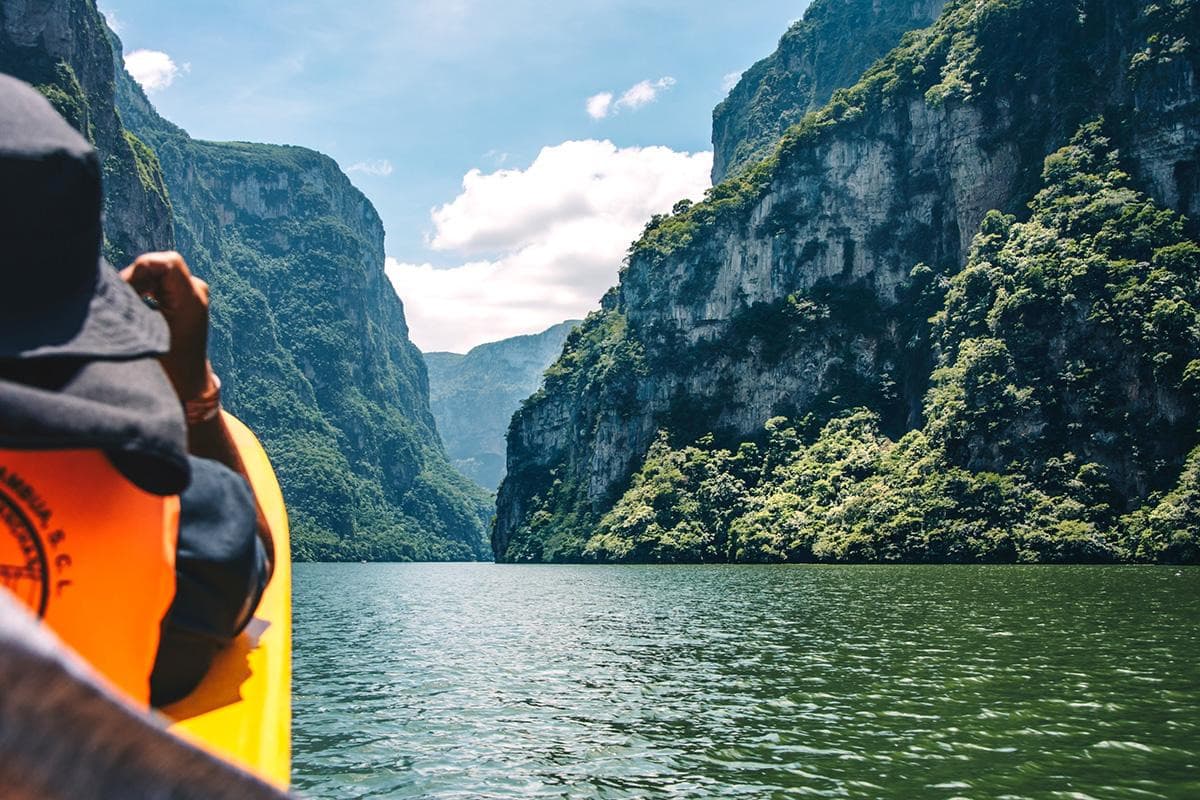
The boat slips from the jetty like a key turning in a heavy lock. At first the world is ordinary—riverbank palms, the soft chatter of other travelers—but within minutes the Grijalva River tightens and the walls arrive: black basalt and limestone thrust straight up, shadowed bands like the pages of some ancient ledger. Water birds wheel and call. A heron tilts its head and dares you closer. The river pushes the boat forward and the canyon takes over, an amphitheater of stone that seems to measure not distance but silence.
Sumidero Canyon National Park (Parque Nacional Canón del Sumidero) is less a place than an encounter: a corridor where tectonics and time carved cliffs that reach more than 1,000 meters above the Grijalva. Most visitors experience the park by boat—powerful, nimble launches that thread a ribbon of water between vertical gardens. The standard cruise lasts roughly 1.5–2 hours and covers the canyon’s spectacular central reaches, with stops to point out caves, hidden inlets, and the wildlife that has adapted to life on these sheer faces.
But the canyon is also a cultural spine for Chiapas. Downriver lies Chiapa de Corzo, a colonial town with a Mudéjar fountain and a proud culinary tradition (look for pozol, a fermented corn drink that locals sip like a cold handshake). Hikes along rim roads and the rim’s miradores—roadside viewpoints—offer panoramic counterpoints to the river’s intimate passage: from above you can measure the canyon’s scale, watch rain clouds grow over the western peaks, and spot the small, stubborn green of trees clinging to cracks.
Geology lovers will find Sumidero instructive. The canyon formed as the Chiapas uplift forced riverbeds to cut downward, exposing a columned cross-section of the region’s past. The vertical faces are a textbook of erosion and river incision: bands of volcanic rock and sediment denote episodes of lava flows and ancient seas. That dramatic verticality is what makes the canyon a refuge for wildlife—crocodiles nesting along quiet banks, spider monkeys hopping through canopy corridors, and an avian cast that includes kingfishers and herons.
Historically, Sumidero has long braided natural and human stories. Indigenous communities lived along the river and used its banks for fishing and transport long before colonial roads reshaped the landscape. The canyon’s modern protection dates from the late 20th century, when Sumidero was declared a national park to preserve both its geological heritage and the biodiversity anchored to the Grijalva. Today, boat operators, guides, and local towns share the obligation—and the opportunity—to steward a place that’s part wilderness, part cultural landscape.
The practical side is straightforward. Most visitors book a half-day tour that combines a morning or afternoon boat cruise with stops at rim viewpoints and a break in Chiapa de Corzo. Tours operate year-round, but the river’s personality changes with the seasons: the dry months yield cleaner water and easier wildlife viewing; the wet season brings higher flows and more dramatic cascades where runoff plunges from the rims. A typical full itinerary from San Cristóbal de las Casas or Tuxtla Gutiérrez includes a 90–120 minute boat ride, a series of miradores with short walks, and an optional lunch sampling pozol and regional tamales.
Preparing for Sumidero is more logistical than technical. Wear closed-toe shoes with good grip for boarding and stepping across muddy riverbanks; pack a light rain shell (squalls are common in afternoons), sunscreen, and insect repellent. Bring a waterproof bag for electronics—spray from the Grijalva finds the camera lens even on calm days. If you want wildlife, choose an early departure: mornings are cooler, less crowded, and animals are often more active. If you’re combining the canyon with San Cristóbal and the waterfalls of Agua Azul or Misol-Ha, plan a two- to four-day circuit—many guided packages stitch these into a seamless regional route.
Responsibility matters here. Stick to the operators that provide life jackets and follow the guide’s instructions; avoid feeding wildlife, and favor groups that hire local guides and pay community fees. The Grijalva is a working river—its health matters to people who grow food and to those who make their living on tours—and your choices ripple beyond photo ops.
For photographers, Sumidero rewards both wide-angle drama and tight wildlife study. Early light brings warm ridges and long shadows; late afternoons knit together texture and mood. Bring a mid-range zoom (24–70mm or 24–120mm) for versatility, a polarizer to cut glare on the water, and a small monopod if you want steadier shots from a moving boat.
Ultimately, visiting Sumidero Canyon is an exercise in scale: how small a human feels between walls of stone, and how connected you become to the layered stories running through that narrow river. Whether you are a casual traveler who wants a powerful half-day outside the cities of Chiapas, or an enthusiast folding this natural cathedral into a multi-day circuit that includes San Cristóbal de las Casas, Palenque, and regional waterfalls, Sumidero offers a vivid, accessible plunge into one of Mexico’s most dramatic landscapes.
Trail wisdom
Small choices, better day.
Go early for wildlife
Morning departures (before 9:00) increase your chances of spotting crocodiles, spider monkeys, and active river birds while avoiding the heat and crowds.
Bring waterproof storage
Spray from the Grijalva and river splashes mean phones and cameras should be in waterproof bags or dry sacks.
Layer for changing conditions
Temperatures can drop in shaded canyon sections and rise quickly on the rim—pack a light shell and a breathable base layer.
Support local guides and artisans
Choose operators who employ local guides and stop in Chiapa de Corzo to buy pozol or textiles directly from vendors.
Local knowledge
Read the place, not just the route.
Watch for native species including Crocodile (Morelet’s crocodile), Spider monkey.
Keep an eye out for wildlife during the transition between areas and habitats. Respect distance guidelines.
Tourism pressures and upstream pollution affect the Grijalva; choose operators who contribute to local conservation fees and who practice leave-no-trace principles.
Follow the guide's instructions on size limits, ethical handling, and leave-no-trace practices.
Upper rim lookout stops along the park road for wide panoramas. Riverside pozol and tamales stalls in Chiapa de Corzo that locals frequent
Locally recommended viewpoints and quiet spots known best to local operators.
Sumidero was declared a national park in 1980 to protect its dramatic geology and the Grijalva watershed.
Maritime roots and regional tradition shape the waterways and working coasts.
Seasonal guide
Four versions of the same landscape.
Spring
Best forWildlife viewing · Clearer river conditions · Mild daytime temperatures
ChallengesOccasional spring showers · Increased river traffic on holidays
Spring offers comfortable temperatures and good visibility on the Grijalva; short rains are possible, so pack a light rain shell.
Summer
Best forLush canyon vegetation · Vibrant waterfalls upriver · Long daylight hours
ChallengesAfternoon thunderstorms · Higher river flows and stronger currents
Summer turns the canyon green and fuels nearby waterfalls, but expect heavier flows and possible tour disruptions during storms.
Fall
Best forCrisp air and clearer skies · Fewer tourists · Comfortable hiking on rim viewpoints
ChallengesCooler mornings and evenings · Some restaurants may reduce hours post-season
Autumn brings clearer air and lower humidity—excellent for photography and combined day trips to Chiapa de Corzo.
Winter
Best forDry season clarity on the river · Peak visibility for views · Comfortable daytime temperatures
ChallengesCooler mornings · Higher tourism during holidays like Christmas
Winter is the dry season with the clearest river visibility and crisp light—ideal for boat cruises and rim viewpoints.
Pack with intention
What to bring.
Good to know
Common questions.
Most boat cruises last about 1.5–2 hours; combined tours with viewpoints and a stop in Chiapa de Corzo typically run 3–5 hours.
Plan the edges
The details that make the day easier.
Sumidero Canyon’s cliffs rise to more than 1,000 meters above the Grijalva River—one of the tallest canyon walls in Mexico—and the park was declared a national park in 1980.
Taste chiapaneco life in Chiapa de Corzo—sip pozol, try regional tamales and watch women from nearby communities weave vibrant textiles; markets and small eateries make excellent complements to the canyon tour.
- Duration
- 3–5 hours (boat cruise + viewpoints). Departure points: Chiapa de Corzo, San Cristóbal, Tuxtla Gutiérrez. Essentials: life jacket provided by operator, cash for food and crafts, waterproof storage for electronics.
Choose locally run operators who pay community fees and avoid feeding wildlife; use reef-safe sunscreen and pack out all trash to protect the Grijalva watershed.
Explore by topic
Follow the threads.
Keep exploring
Make the story part of the trip.
 Related story
Less than two hours from Nairobi, Kereita Forest pairs hands-on canopy adventure with quiet montane trails and a sobering colonial history—perfect for families, teams, and curious travelers seeking a full-day pulse of nature.
Set out from Bass Harbor for a private, customizable day on Blue Hill Bay — lighthouses, puffins, seals, and the chance to feel Acadia from the water. Small groups, local captains, unforgettable views.
In four hours you can move from shaded canyon ferns to wind-scoured coastal ridgelines, guided by someone who knows where the light—and the hidden views—live. This private half-day hike on the Monterey Peninsula or Big Sur is compact, curated, and perfect for travelers who want depth without a multiday commitment.