
What the day feels like
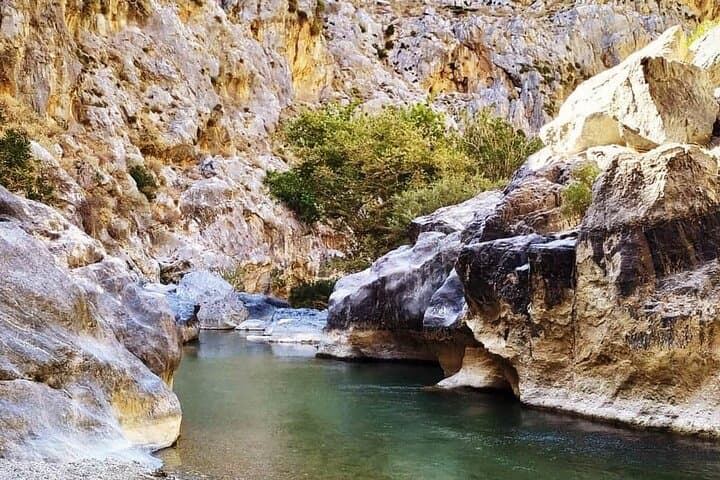
You hit the first step and the river answers—cool, clear water sliding past your calf, then knee, then thigh as the gorge narrows and its walls lean in. Sun slices down in blades; shadows stripe the riverbed. Boulders sit like ancient furniture, mossed and scuffed, forcing you to move laterally, to look for footholds and a deeper line that will take you past a short cascade. Somewhere ahead a palm trees’ canopy projects into blue sea light—Preveli’s palm beach, improbable and theatrical, waiting like a reward.
This is the lower half of Kourtaliotiko Gorge, the part guides mean when they say “river trekking.” It’s half hike, half puzzle, and all geology and water-play: scrambling over boulders, sidestepping little waterfalls, and threading through a channel that centuries have carved into Cretan limestone. The trip finishes at Preveli, where the Kourtaliotiko River loosens into a sheltered bay and one of Europe’s rare native palm forests—an almost cinematic collision of mountain runoff and Mediterranean coast.
The gorge itself is a product of time and tectonics. Rainfall runs off the White Mountains to the north, and during flash seasons the torrent gouges the canyon deeper; in summer those flows shrink to a series of pools and trickles that make the lower section a technical playground. The name Kourtaliotiko is local color—some say it echoes the bell-like clatter of wind and water in the clefts, others nod to older oral traditions about the canyon’s rumbling acoustics.
Culturally, the endpoint is as vivid as the route. Preveli’s palm grove (Phoenix theophrasti) is a botanical relic—one of the few naturally occurring stands of palm in Europe. Nearby, the historic Preveli Monastery has been part of the landscape for centuries, offering a quiet counterpoint to the more physical business of river trekking. Local tavernas serve fresh fish, grilled vegetables and the raki you’ll appreciate after five hours of moving through limestone and sun.
Why do this trip? It’s an antidote to the car-and-beach day that many visitors to Crete expect. River trekking turns movement into a series of small, immediate problems—where to put your foot, how to angle around the current, when to stop and jump into a pool. There’s a lightness to it, too: the water dares you into play, and the record of the landscape makes each scramble feel like a short, clean victory.
Practicalities: the activity runs about five hours and covers the second, more technical part of the gorge. You’ll be negotiating large boulders and short cascades, moving in and out of water; sturdy shoes with good drainage and a confident sense of balance will make the day. Guides lead the way, set safety lines when necessary, and ferry knowledge—where to find smooth stepping stones, which pools hold safe depth for an impulsive swim, how to read the channel after rainfall. For the official trip listing and to book with local operators, see this river trekking experience.
Timing matters. Late spring and early fall are the sweet spots: water is present but not dangerous, the temperatures are comfortable, and the palms are green and vivid. Mid-summer brings heat on the exposed trail sections but also excellent swimming; winter and early spring can mean higher flows and slippery stone, which changes the route from playful to serious.
Safety notes: this is not a casual stroll. The lower gorge is designed to be a little demanding—expect some route-finding and short, exposed scrambles. Bring layers for wetter microclimates in the canyon, and protect electronics in dry bags. Hydrate before you start and plan on finishing the trip at Preveli beach, where you can rinse and recover in sea air and shade.
In the end it’s a rite of passage of a certain kind of travel: half outdoor confidence, half curiosity. You’ll find rock-slicked challenges, a palm forest that feels improbably tropical on a Mediterranean island, and the uncomplicated joy of moving through water until the sea appears and the gorge opens like a door. If you want a day that hands you both technical movement and cinematic payoff, this one is hard to beat. For more practical details and to connect with local guides who know the river, check out this river trekking at Kourtaliotiko Gorge and Preveli palm beach adventure.
[Linking the experience directly to local operators helps protect the places you visit—the guides know where to step, how to preserve fragile micro-habitats, and when to reroute the group to avoid sensitive pools. See the local expert listing for bookings and seasonal notes.]
Trail wisdom
Small choices, better day.
Wear river shoes or old trail runners
Shoes with good grip and drainage protect your feet on wet rock and make boulder-scrambling safer.
Bring a small dry bag
Protect your phone, camera and a warm layer—short swims and splashes are part of the route.
Start mid-morning
Begin after dawn to avoid afternoon heat on exposed trail segments, but not so early that pools are cold.
Listen to the guide and move deliberately
The lower gorge requires occasional route-finding; follow local instructions for safety around cascades.
Local knowledge
Read the place, not just the route.
Watch for native species including Audible kingfishers and wagtails near the river, Occasional Mediterranean tortoise on nearby trails.
Keep an eye out for wildlife during the transition between areas and habitats. Respect distance guidelines.
The palm grove and river corridor are sensitive habitats—stick to guided paths, avoid trampling seedlings, and pack out all trash to protect Phoenix theophrasti.
Follow the guide's instructions on size limits, ethical handling, and leave-no-trace practices.
A small cave pool halfway through the lower gorge where locals stop for a cool dip. A sea-side taverna near Preveli where fishermen grill the day’s catch
Locally recommended viewpoints and quiet spots known best to local operators.
Preveli Monastery and its surroundings played roles in local resistance during Ottoman times and WWII, and the palm grove has been a landmark for centuries.
Maritime roots and regional tradition shape the waterways and working coasts.
Seasonal guide
Four versions of the same landscape.
Spring
Best forWildflower scenery · Moderate water flow · Comfortable hiking temperatures
ChallengesHigher winter runoff early in season · Cooler pool temperatures
Late spring offers flow through the gorge and mild temperatures—great for river trekking before the summer crowds.
Summer
Best forSwimming at Preveli · Warmer weather · Long daylight hours
ChallengesStrong sun on exposed sections · Reduced river flow in drought years
Summer is prime for beach finish and swimming; expect low river flow and hot sun on dry stretches.
Fall
Best forFewer crowds · Refreshing water after hot summer · Colorful light for photography
ChallengesUnpredictable early rains · Shorter daylight hours
Early fall balances warm sea temperatures with cool mornings—good shoulder-season conditions.
Winter
Best forLush gorge after rains · Wild storm-watching from safe vantage points
ChallengesHigh flows and slippery rock · Limited operator availability
Winter brings heavy flows and dramatic conditions; trips are usually only for experienced groups and guides.
Operator details
What the booking data adds.
Included
- ✓English speaking certificated guide
- ✓we offer walking sticks and helmets, for your better safety.
- ✓All Fees and Taxes
- ✓Transfer is offered from the ending point of the activity back to the starting point. Transfer from your place to the meeting point is not available, only upon request.
Not included
- —Transfer from your place to the meeting point is not offered, only upon request with extra cost.
- —Meals
Good to know
- ✓Infants and small children can ride in a pram or stroller
- ✓Public transportation options are available nearby
- ✓Infants are required to sit on an adult’s lap
- ✓Not recommended for travelers with spinal injuries
- ✓Not recommended for pregnant travelers
- ✓Travelers should have at least a moderate level of physical fitness
Pack with intention
What to bring.
Good to know
Common questions.
The guided activity runs about five hours and covers the lower, more technical section of Kourtaliotiko Gorge, finishing at Preveli beach.
Plan the edges
The details that make the day easier.
Preveli’s palm forest is home to Phoenix theophrasti, one of Europe’s only native palm species and a protected botanical relic.
After the trek, head to a seaside taverna at Preveli or nearby Plakias for grilled fish, dakos (Cretan barley rusk salad), and local raki—simple, fresh food that pairs well with salt and effort. If you prefer a beer, small bars in nearby villages serve local craft labels alongside classic Greek pours.
- Closest airports
- Heraklion (HER) or Chania (CHQ); driving from Rethymno ~45 minutes to the trail access points; cell service is intermittent in the gorge; no permits required but book through a licensed operator for safety and local knowledge.
This river corridor supports fragile habitats and a rare palm grove—travelers should avoid disturbing vegetation, stay on guided routes, and carry out all waste to protect the ecosystem.
Explore by topic
Follow the threads.
Keep exploring
Make the story part of the trip.
 Related story
Less than two hours from Nairobi, Kereita Forest pairs hands-on canopy adventure with quiet montane trails and a sobering colonial history—perfect for families, teams, and curious travelers seeking a full-day pulse of nature.
Set out from Bass Harbor for a private, customizable day on Blue Hill Bay — lighthouses, puffins, seals, and the chance to feel Acadia from the water. Small groups, local captains, unforgettable views.
In four hours you can move from shaded canyon ferns to wind-scoured coastal ridgelines, guided by someone who knows where the light—and the hidden views—live. This private half-day hike on the Monterey Peninsula or Big Sur is compact, curated, and perfect for travelers who want depth without a multiday commitment.