
What the day feels like
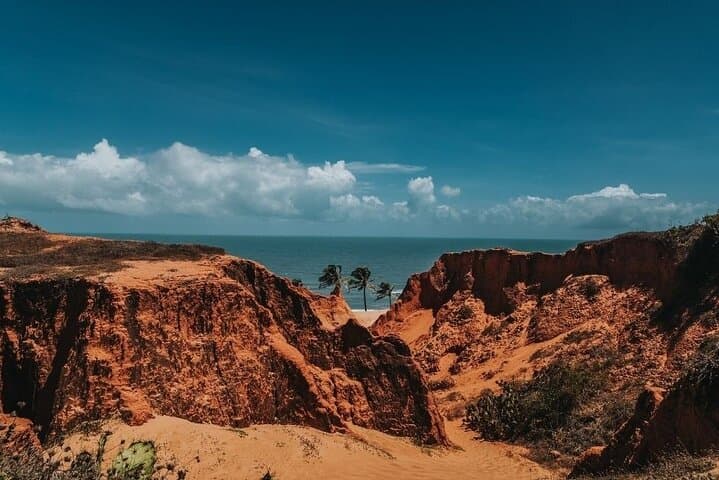
You step off the minivan and the ocean greets you before the beach does: a warm, salt-scented wind that seems to nudge your shoulders forward. On this full-day loop from Fortaleza the coast unfolds like a flipbook—each page a different color and character. Morning light carves the honey-and-rust falésias at Morro Branco; midday, freshwater trickles through the caves at Praia das Fontes; late afternoon, the winds and wide sky at Canoa Quebrada tilt the world into theater. This is not a slow pilgrimage; it’s a well-paced coastal crash course in Ceará’s east-side moods.
The trip is popular for a reason: in about eleven hours you move from sculpted cliffs and labyrinthine sand canyons to clear tide pools and a cliffside village that likes to dance on the edge of the horizon. Along the way you learn why these places are staples in Brazilian travel lore—filmmakers and soap-opera producers have long favored the dramatic falésias at Morro Branco for their cinematic lines—yet you also see everyday life: fishermen mending nets at dawn, vendors shaping tapioca on portable griddles, and dunes that seem to breathe as wind pushes and pulls at them.
Geology and coastal history are part of the day's texture. The colorful cliffs near Beberibe are layers of sand, clay and iron oxides—named falésias—that erosion carves into ribs, caves and narrow corridors. Where freshwater springs meet the sea at Praia das Fontes, the surf and rivulets have created a miniature karst of sandstone and sinkholes. Canoa Quebrada, once a modest fishing settlement, evolved into a wind-swept beach village with a small commercial strip known locally as 'Broadway'—rings of restaurants, craft stalls and bars that come alive at sunset.
Culture here is salt-tinged and unpretentious. Local guides are often born and raised in the area; they’ll point out family-run restaurants where the day’s catch is grilled over charcoal and explain how seasonal winds shape not just the dunes but the livelihoods that depend on them. The tour is practical: transport, a knowledgeable guide, and time for short walks and swims at each stop. That convenience is why it’s a hit with travelers who want to compress an entire coastal arc into a single, efficient day without feeling rushed.
If you go: pace yourself. Wear sturdy sandals or low trail shoes for the falésia labyrinth (sand moves underfoot and steps can be steep), pack reef-safe sunscreen, and keep a refillable water bottle. Mornings are best for cliff walks: the sun hasn’t yet stripped the color from the rocks, and trails are cooler. Praia das Fontes offers a chance to cool down in tide-carved pools—move carefully over wet rock—and Canoa Quebrada’s late-afternoon winds invite a slow stroll along the sand followed by a cold beer on the village 'Broadway'.
Photography is unavoidable. The best frames happen mid-morning at Morro Branco when the cliffs glow; for Praia das Fontes, use a polarizer for deeper blues in the pools; in Canoa Quebrada, silhouette the crescent-moon formation on the cliffs at golden hour. Bring a small dry bag for your phone and camera—the spray gets in anywhere.
Practicalities: the full day runs roughly 11–12 hours with hotel pickup and drop-off in Fortaleza, so expect an early start and a return by evening. The tour is family-friendly—kids tend to be mesmerized by the sand caves and the chance to run on wide Atlantic beaches—but check accessibility if you or someone in your group has limited mobility; the falésias involve uneven footing and steps.
For advance planning, read up and compare options, and if you want local perspective, this guided loop is a useful reference: <a href="https://app.advcollective.com/local-experts/three-beaches-in-one-day-morro-branco-praia-das-fontes-canoa-quebrada">Three Beaches in One Day: Morro Branco, Praia das Fontes & Canoa Quebrada</a>. That page links guides and timing details that match what you’ll see on the road.
Why go beyond the postcards? Because this tour compresses the coast’s variety into a single, digestible stretch of time—perfect for travelers based in Fortaleza who want to taste different beach cultures without the logistics of overnight moves. It’s also ideal for photographers, families and anyone who responds to a landscape that alternates between intimate (sand corridors) and expansive (Canoa’s sky). Bring curiosity, bring good shoes, and let the coast do the rest: the sea will nudge you forward and the cliffs will dare you to look around the next bend.
Trail wisdom
Small choices, better day.
Start early
Morning light preserves the color of the falésias and keeps temperatures comfortable for cliff walks.
Wear grippy shoes
Sand and wet rock require stable footwear—light trail shoes or sturdy sandals with a good sole work best.
Bring cash
Small vendors, beach bars and parking attendants often accept cash only—carry small notes for snacks and tips.
Protect your electronics
Use a small dry bag or ziplock to keep phones and cameras safe from spray and sand.
Local knowledge
Read the place, not just the route.
Watch for native species including brown pelicans and frigatebirds, ghost crabs and tidal pool fish.
Keep an eye out for wildlife during the transition between areas and habitats. Respect distance guidelines.
Dune stabilization projects and local regulations protect fragile vegetation—stay on marked paths, avoid removing sand or shells, and support local businesses.
Follow the guide's instructions on size limits, ethical handling, and leave-no-trace practices.
Labirinto das Falésias at Morro Branco—narrow sand corridors away from the main viewpoint. Sunset viewpoint just off Canoa Quebrada’s 'Broadway' for unobstructed cliff silhouettes
Locally recommended viewpoints and quiet spots known best to local operators.
The falésias and nearby beaches have long been fishing grounds; Canoa Quebrada transitioned from a quiet fishing village into a notable tourism spot in the late 20th century.
Maritime roots and regional tradition shape the waterways and working coasts.
Seasonal guide
Four versions of the same landscape.
Spring
Best forfewer crowds · clear light for photography · moderate temperatures
Challengesoccasional rain showers · variable winds
Spring (September–November) brings stable, dry weather and good light—ideal for photography and beach walks.
Summer
Best forhot sun · warm sea swims · long daylight hours
Challengesstrong midday heat · crowds during holidays
Summer is hot and lively; plan early starts and midday shade to avoid peak heat.
Fall
Best forcalmer seas · windy afternoons for kitesurfing · fewer tourists
Challengessporadic rain · strong coastal breezes
Fall keeps warm temperatures but can be windier—great for dramatic skies and wind sports.
Winter
Best fordry conditions · stable skies · comfortable hiking temps
Challengesseasonal trade winds · cooler evenings
Local winter (June–August) is dry and pleasant—one of the most reliable times for clear coastal days.
Operator details
What the booking data adds.
Included
- ✓Air-conditioned vehicle
Not included
- —Lunch
- —Snacks
Good to know
- ✓Infants are required to sit on an adult’s lap
- ✓Suitable for all physical fitness levels
Pack with intention
What to bring.
Good to know
Common questions.
Most departures include hotel pickup and drop-off in Fortaleza—confirm your pickup time when booking.
Plan the edges
The details that make the day easier.
The colorful cliffs (falésias) near Morro Branco are sedimentary layers of sand and clay whose erosion has created the cliff labyrinths used as settings in Brazilian films and television.
After the beach, grab a moqueca-style seafood lunch at a family-run restaurant near the sand, then head to Canoa Quebrada’s 'Broadway' for caipirinhas, local crafts and live music—perfect for stretching into the evening.
- Closest airport
- Pinto Martins – Fortaleza (FOR); Typical drive: Fortaleza to Morro Branco ~1.5–2 hours, to Canoa Quebrada ~2.5–3 hours total along the route; Cell service: good near towns, intermittent between stops; Permits: none required for day tours.
The falésias and dunes are fragile—stick to trails, avoid collecting shells or sand, and support local guides and eateries to keep the region economically and ecologically healthy.
Explore by topic
Follow the threads.
Keep exploring
Make the story part of the trip.
 Related story
Less than two hours from Nairobi, Kereita Forest pairs hands-on canopy adventure with quiet montane trails and a sobering colonial history—perfect for families, teams, and curious travelers seeking a full-day pulse of nature.
Set out from Bass Harbor for a private, customizable day on Blue Hill Bay — lighthouses, puffins, seals, and the chance to feel Acadia from the water. Small groups, local captains, unforgettable views.
In four hours you can move from shaded canyon ferns to wind-scoured coastal ridgelines, guided by someone who knows where the light—and the hidden views—live. This private half-day hike on the Monterey Peninsula or Big Sur is compact, curated, and perfect for travelers who want depth without a multiday commitment.