
What the day feels like
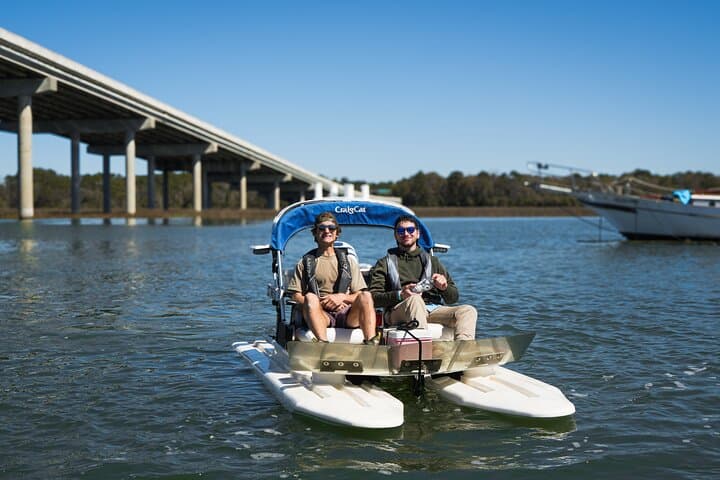
The motor snorts twice, then the little creek cat slides from shadow into the last light. Marsh grass glows like a copper wave; a heron, long and patient, tilts its head as if checking whether you belong in this narrow world. You steer—two people per boat, throttle responsive like a go-kart—and the inlet opens to a corridor of sky. On the right, the Harbour Town Lighthouse stands in silhouette; ahead, a pod of Atlantic bottlenose dolphins arcs, obliging the sunset with a practiced choreography.
This is the tempo of an evening on Hilton Head—the hush of salt air punctuated by motor hum, the tidal creeks daring you to come closer. The guided 2-hour Sunset Creek Cat Tour puts you in the driver’s seat of a nimble 30HP boat and hands you a short, sharp education in Lowcountry waterways. It’s not a passive cruise; it’s a mixture of playful speed and attentive wildlife watching, threaded with local stories and ecological context from a guide who reads the tides like a map.
Geology and history in the Lowcountry are layered like the shoreline itself. Hilton Head is a barrier island that rose and shifted across millennia as sea levels and sediments moved. Sea Pines, where the Harbour Town Lighthouse anchors the island’s cultural image, began transformation into a planned resort in the 1950s and 60s; the lighthouse—completed in 1969—became an instant focal point for visitors and locals alike. From the water, you see the island the way mariners have for centuries: a place of navigable creeks, oyster bars, and tucked-away coves where the land leans back and lets the sea have its say.
Culture here is salt-scrubbed and food-forward. Lowcountry cuisine—think shrimp, she-crab soup, and Lowcountry boil—threads through the community. On a warm evening after the tour, local joints at Shelter Cove or the Sea Pines Village offer cold beers and seafood platters that taste of the same brine you just rode through. For a direct booking and local logistics, see this guided tour listing: <a href="https://app.advcollective.com/local-experts/hilton-head-sunset-creek-cat-tour-2-hour-guided-dolphin-harbour-town-cruise">Hilton Head Sunset Creek Cat Tour</a>.
Wildlife is the draw, but it’s more than photo ops. Guides explain how seagrass beds and oyster reefs underpin the marsh’s productivity and why dolphins hunt the channels that ferry baitfish. You’ll learn to read birds as weather reports—gulls and terns on windier nights, egrets and herons in the shallows—and you’ll be asked to keep distance from sealife that’s doing its own work. This relationship is reciprocal: the island’s value as a wildlife corridor depends on steady stewardship from residents and visitors alike.
Practically: the tour is two hours long, each boat fits two people, and you pilot your own craft under guide supervision. Expect a blend of adrenaline and quiet observation. The boats perform best in protected waterways and creeks; the guide plots a path that prioritizes wildlife opportunities and sunsets over speed runs in open water. Price starts from the listed rate of $159, with instant confirmation and free cancellation on many bookings, making it flexible for vacation schedules.
If you’re preparing for this particular evening, think layers over flash. Coastal weather cools quickly after sunset; a wind shell and a light insulating layer are more useful than a heavy jacket. Footwear should be non-marking and secure—boats provide stability, but boarding can be slippery. Bring a small dry bag for your phone and camera; a polarized lens makes waterborne photos pop and reduces glare during golden-hour shooting. Guides will brief novices on throttle control—most first-timers find the Creek Cat intuitive, but respect the reactive steering and throttle responsiveness.
Timing matters. Arrive early to get fitted for life jackets and a short safety orientation; the guide will also outline the evening’s likely route depending on tides and wildlife reports. If your goal is dolphin sightings, plan for calm conditions when dolphins are most active in the inlet; if you want dramatic color, aim for an evening with scattered clouds to catch the sun’s rays. For booking and start-time specifics, the tour page is a direct resource: <a href="https://app.advcollective.com/local-experts/hilton-head-sunset-creek-cat-tour-2-hour-guided-dolphin-harbour-town-cruise">book the Sunset Creek Cat Tour</a>.
This experience sits at the intersection of skill and serendipity. You’ll come for the novelty of driving a nimble craft through saltwater creeks, stay for those unplanned encounters when a dolphin pod threads the wake or a clump of ibis lifts like embroidered confetti. It’s accessible—no solo boating certification required—while giving you just enough agency to feel like an active participant rather than a passenger.
If you leave with mud on your shoes and salt in your hair, you’ve done it right. Anchor your evening with a post-tour meal—fresh-caught shrimp or a cold local brew—and watch the island lights blink awake. The tour is a wedge of time that compresses natural history, local color, and that uncomplicated pleasure of being outdoors at the edge of land and sea.
For travelers who want a compact, memorable taste of Hilton Head’s ecology, community, and sunset drama, piloting a Creek Cat at dusk is hard to beat. Bring curiosity, a camera, and the patience to let the Lowcountry’s quieter moments reveal themselves. Then, throttle up and go find the light.
Trail wisdom
Small choices, better day.
Arrive Early
Get to the marina 20–30 minutes before departure for safety orientation and life jacket fitting.
Dress in Layers
Evenings cool quickly—bring a windproof layer and a light insulating top.
Protect Gear
Use a small dry bag and a tether for phones and cameras to avoid water damage.
Mind Wildlife Distance
Let dolphins and shorebirds lead the encounter—keep respectful distance and don’t feed animals.
Local knowledge
Read the place, not just the route.
Watch for native species including Atlantic Bottlenose Dolphin, Great Blue Heron.
Keep an eye out for wildlife during the transition between areas and habitats. Respect distance guidelines.
The island protects crucial seagrass beds and oyster reefs—avoid anchoring on sensitive habitats and follow local wildlife viewing guidelines.
Follow the guide's instructions on size limits, ethical handling, and leave-no-trace practices.
Shelter Cove Park boardwalk for post-tour sunsets. Smaller creeks on the island’s south side where shorebird concentrations gather
Locally recommended viewpoints and quiet spots known best to local operators.
Sea Pines development in the 1960s reshaped Hilton Head as a resort destination; the Harbour Town Lighthouse (completed 1969) is a cultural landmark.
Maritime roots and regional tradition shape the waterways and working coasts.
Seasonal guide
Four versions of the same landscape.
Spring
Best forDolphin viewing · Wildflower and bird migrations
ChallengesUnpredictable showers · Cooler nights
Spring brings active marine life and pleasant temperatures—pack a light rain layer and enjoy longer twilight.
Summer
Best forLonger daylight · Warm water access
ChallengesHeat, humidity, and thunderstorms
Summer evenings are warm and alive but thunderstorm risk rises—watch forecasts and bring sun protection.
Fall
Best forCalmer seas · Pleasant temperatures
ChallengesHurricane season tail risks early in fall
Fall offers crisp evenings and reliable sunsets; late-season hurricanes can occasionally disrupt schedules.
Winter
Best forQuieter marinas · Migratory birds
ChallengesCool nights and windchill · Shorter days
Winter tours are quieter with strong birding potential—bring warm layers and a windproof jacket.
Operator details
What the booking data adds.
Included
- ✓Life Jacket for each Participant
- ✓30 HP Motorized Creek Cat
- ✓Bottled water
- ✓Views of Hilton Head, Harbourtown & Daufuskie Island from the Water
- ✓2 Hour Guided Tour
- ✓Chances to spot Atlantic Bottled Nose Dolphin along the tour
Not included
- —Gratuities
Good to know
- ✓Not recommended for travelers with spinal injuries
- ✓Not recommended for pregnant travelers
- ✓Not recommended for travelers with poor cardiovascular health
- ✓Suitable for all physical fitness levels
- ✓Drivers must be 21 years old + with a VALID Drivers License to drive
- ✓Passengers must be 5 years old +
- ✓Maximum Weight Limit of 250lbs per passenger
- ✓Please arrive 20 minutes prior to your scheduled departure time.
Pack with intention
What to bring.
Good to know
Common questions.
No prior experience is required; guides provide a safety briefing and basic instruction—boats are responsive but intuitive for first-timers.
Plan the edges
The details that make the day easier.
The Harbour Town Lighthouse was completed in 1969 as part of Sea Pines and is a recognizable symbol of Hilton Head’s resort-era development.
After the tour, head to Shelter Cove or Sea Pines Village for Lowcountry classics—she-crab soup, steamed shrimp, and a cold local beer. If you want a relaxed scene, try a waterfront patio where the conversation runs long and the oysters come fresh.
- Closest airport
- Savannah
- Hilton Head International (SAV) ~45–60 min drive; Typical departure
- local marina in Hilton Head Island; Driving distance from nearest town: within island limits; Cell service: generally good on main routes, limited deep in marsh creeks; Permits: none required for tour bookings.
Do not feed or attempt to touch wildlife; stay in designated channels to avoid seagrass and oyster beds, and pack out all trash to protect fragile marsh ecosystems.
Explore by topic
Follow the threads.
Keep exploring
Make the story part of the trip.
 Related story
Less than two hours from Nairobi, Kereita Forest pairs hands-on canopy adventure with quiet montane trails and a sobering colonial history—perfect for families, teams, and curious travelers seeking a full-day pulse of nature.
Set out from Bass Harbor for a private, customizable day on Blue Hill Bay — lighthouses, puffins, seals, and the chance to feel Acadia from the water. Small groups, local captains, unforgettable views.
In four hours you can move from shaded canyon ferns to wind-scoured coastal ridgelines, guided by someone who knows where the light—and the hidden views—live. This private half-day hike on the Monterey Peninsula or Big Sur is compact, curated, and perfect for travelers who want depth without a multiday commitment.