
What the day feels like
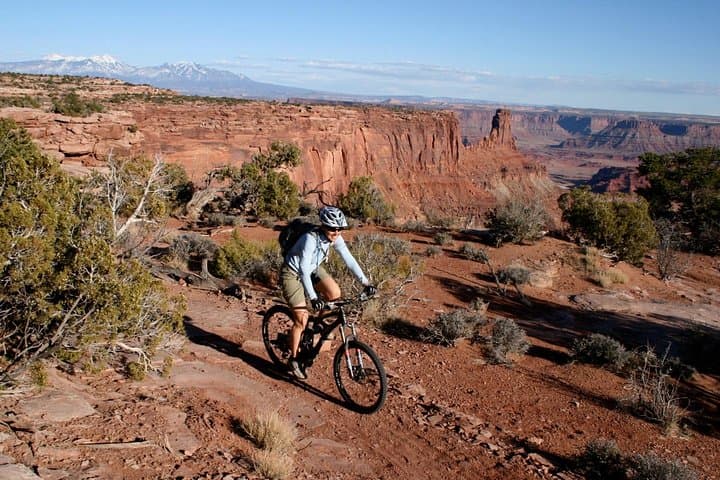
At the edge of the mesa, the world drops away. The Colorado River coils far below, a green ribbon pressing against rust-red walls before slipping out of sight. Ravens ride thermals like they own the air. The rim trail threads the cliffline, a narrow invitation cut through juniper and slickrock. Your tires hum, then whisper, then bite as the desert surface changes its mind under you—sand to stone to hardpack—each texture asking a slightly different question of your balance. This is Dead Horse Point State Park, 6,000 feet up and 45 minutes from Moab, where intermediate riders find their rhythm on rolling singletrack with world-class views at nearly every turn.
A guided ride here balances the wild with the structured. Your guide sets the pace—steady, unhurried—letting the landscape do most of the talking. On the Intrepid Trail System, a network designed with flow in mind, the terrain plays coach. Slickrock beckons you to trust your tires; banked turns nudge you to look ahead; the rim itself reminds you to keep your wits at the ready. It’s not about riding the edge so much as riding with it, letting the mesa’s cadence set your own.
Drop a foot to dab and the trail forgives you. Thread a turn and it rewards you with a straight shot of horizon. The route commonly clocks in around 10 miles—give or take depending on fitness and appetite—enough to feel immersed without being wrung out. The air is thin but clean, juniper-scented and sunwarmed. Out on the point, the wind often carries a quiet urgency. It moves you along even when you want to linger.
Dead Horse Point is a study in geologic patience. The wingate cliffs and kayenta ledges shoulder the sky, stacked by time and sheared by water. Erosion carved this high peninsula like a knife whittling down to the handle. Those long, flat shelves are what make the riding approachable; those vertical miles dropping to the river are what make it unforgettable. You ride through a desert botany lesson—blackbrush, cliffrose, Mormon tea—while crypto-biotic soil, the living crust that holds this place together, politely insists you stay on the trail. It’s the quiet authority in the room.
History here is layered too. Ute and Paiute peoples have long moved through canyon country, reading shade, water, and stone with indigenous fluency. Cowboys later used this narrow neck of land to corral wild mustangs, giving the park its striking name. Hollywood noticed the drama—scenes from Thelma & Louise rolled cameras on these vistas—yet what sticks is less cinematic and more personal: the moment you round a bend and the entire basin opens up, Canyonlands painted in ochres and indigos, and your ride becomes a moving overlook.
A guided intermediate tour removes guesswork without smoothing out the thrill. You’ll get a dialed mountain bike and helmet, snacks for the mid-ride lull, and park entry handled. Expect 4 to 5 hours door-to-door, with 2 to 3 hours in the saddle. This is a ride for those who know what singletrack feels like—comfortable with shifting on the fly, braking with finesse, and keeping traction over rock. If you’ve spent weekends on local trails and can manage short punchy climbs and modest exposure, you’ll be right at home. And if you’re newer to desert riding, the guide’s pointers on scanning for lines and trusting the rubber over slickrock will click quickly.
The best strategy is simple: start early. Light skims the rim at dawn, pouring across the river meanders and stacking shadows into perfect relief. You’ll meet cooler temps and quieter trails. By mid-morning, the desert starts to speak in heat. Hydration isn’t a suggestion here—it’s a ritual. Two liters on your back is a baseline, three if the forecast leans hot. Sunscreen earns its keep; a lightweight sun hoodie makes friends with the wind. The mesa can be breezy, and a compact layer goes a long way when clouds slide in.
On the trail, the flow builds. Raven Roll warms the legs, then Great Pyramid lifts you toward the good stuff—vast windows into Canyonlands, the Shafer Basin cut deep and intricate. Big Chief carries a bit more spice, and short connectors give the guide room to tailor the day. You’ll find moments of speed, a few tastefully placed rock steps, and plenty of places to stop and look. The views are not a background here; they’re an active participant, nudging you to breathe, to be present, to notice.
By the time the loop closes, your legs are pleasantly worked, your cheeks dusted red, your camera full. The mesa keeps its secrets, but it lets you borrow the perspective for a morning. Back at the trailhead, riders trade quiet grins. The river keeps pushing forward; so do you.
Practical takeaways: Expect moderate mileage with short, punchy climbs and a handful of rock features well within reach for intermediate skills. Surfaces change often—solid sandstone offers Ferrari-level traction when dry; sandy stretches demand a light hand and steady cadence. Exposure is real in places but avoidable with smart line choices and a guide’s eye. Spring and fall deliver the best riding temperatures. Summer rides lean early to beat the heat. Winter rides can be crisp and beautifully quiet, with occasional snow frosting the rim and changing the mood of the ride entirely.
In Moab, you’re spoiled for choice, but Dead Horse Point stands apart for how approachable and aesthetic it is. It’s a ride that meets you where you are and nudges you closer to the rider you want to be, the one who looks up, rides smooth, and lets the desert do some of the talking.
Trail wisdom
Small choices, better day.
Hydrate Aggressively
Carry at least 2 liters of water (3 in summer). Sip often—desert dehydration sneaks up fast at 6,000 feet.
Trust the Slickrock
Sandstone offers excellent traction when dry. Keep your weight centered, look ahead, and let your tires bite.
Mind the Rim
There’s exposure in places. Stay on signed singletrack, dismount if unsure, and avoid stepping on fragile soil crusts.
Start Early
Morning light is fantastic and temperatures are cooler, especially in summer. You’ll also have fewer riders on trail.
Local knowledge
Read the place, not just the route.
Watch for native species including Common raven, Desert collared lizard.
Keep an eye out for wildlife during the transition between areas and habitats. Respect distance guidelines.
Stay on signed trails to protect cryptobiotic soil; pack out all trash and avoid riding wet, muddy sections to prevent erosion.
Follow the guide's instructions on size limits, ethical handling, and leave-no-trace practices.
Great Pyramid Overlook spur for a quiet, wide-angle view into Canyonlands. Meander Overlook for sunset light on the Colorado River’s big bends
Locally recommended viewpoints and quiet spots known best to local operators.
Cowboys once used the narrow neck of the mesa to corral wild mustangs, inspiring the park’s name; the area also lies within ancestral lands of Ute and Paiute peoples.
Maritime roots and regional tradition shape the waterways and working coasts.
Seasonal guide
Four versions of the same landscape.
Spring
Best forCool temperatures · Wildflower pops · Prime traction
ChallengesWindy afternoons · Variable spring storms
Spring is peak riding season with comfortable temps and stable trail conditions; pack a wind layer for gusts.
Summer
Best forEarly sunrise sessions · Long daylight hours
ChallengesHigh heat by midday · Intense sun exposure
Ride at dawn to beat the heat; bring 3 liters of water, sun protection, and consider a lightweight sun hoodie.
Fall
Best forStable weather · Golden light · Comfortable temps
ChallengesShorter days · Occasional storms
Fall mirrors spring with cooler days and tacky trails; sunsets can be spectacular from the overlooks.
Winter
Best forQuiet trails · Crisp views
ChallengesIcy patches · Cold winds on the rim
When dry, winter riding can be excellent. Check conditions; bring warm layers and be cautious on shaded corners.
Pack with intention
What to bring.
Good to know
Common questions.
They’re intermediate-friendly with rolling singletrack, short rock steps, and some exposure near the rim. A guide will tailor the route to match group ability.
Plan the edges
The details that make the day easier.
The final scene of the 1991 film Thelma & Louise was filmed at Dead Horse Point, which stood in for the Grand Canyon. The mesa sits about 2,000 feet above the Colorado River.
Refuel in Moab with breakfast burritos at Love Muffin, post-ride pints at Moab Brewery, or wood-fired pies at Antica Forma. Stroll Center Street for local art, gear shops, and live music on weekends.
- Closest airports
- Canyonlands Field (CNY, 18 miles from Moab) or Grand Junction (GJT, ~110 miles). Trailhead: Dead Horse Point State Park Visitor Center area, ~32 miles
- 45 minutes from Moab. Cell service
- Spotty to fair on the mesa. Permits: State park entry required (typically included with guided tours).
This fragile high-desert environment depends on living soil crusts—stay on trail, avoid muddy riding, and pack out everything. Reuse bottles, minimize vehicle idling at the trailhead, and respect wildlife viewing distances.
Explore by topic
Follow the threads.
Keep exploring
Make the story part of the trip.
In four hours you can move from shaded canyon ferns to wind-scoured coastal ridgelines, guided by someone who knows where the light—and the hidden views—live. This private half-day hike on the Monterey Peninsula or Big Sur is compact, curated, and perfect for travelers who want depth without a multiday commitment.
 Related story
Beneath a sky of shifting light, Skaftafell’s ice reads like a map of time. This three-hour guided glacier hike mixes technical instruction with geology and culture: compact, safe, and unforgettable.
 Related story
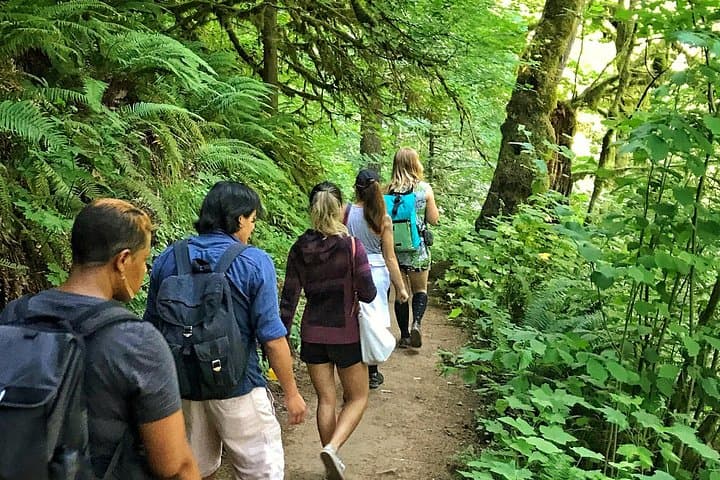
Lose the city for a few hours without leaving it: this 5-mile, 900-foot-gain Forest Park loop threads old-growth pockets, city viewpoints, and cultural landmarks for a compact taste of Portland’s wild side. Expect moss, roots, and stories.