
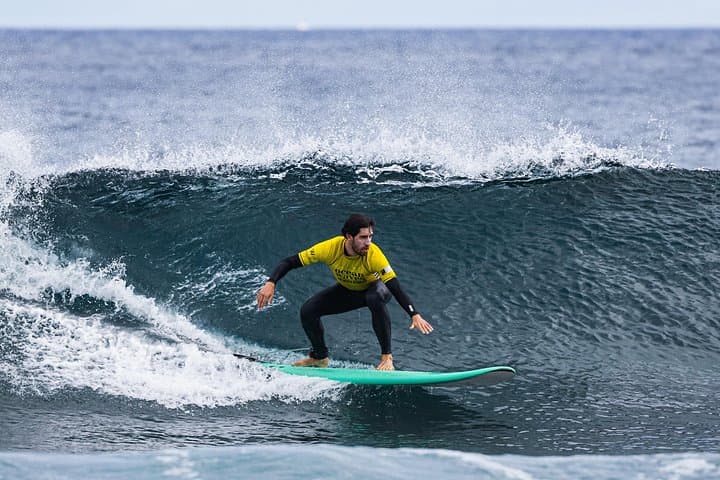
What the day feels like
By the time the minibus eases off the main road and the ocean opens up, the Atlantic has already made its case. A low, volcanic cliff bends the horizon, and beyond it the sea is a restless blueprint of swell lines—long, clean, and patient. For a few minutes you stand with other beginners and watch them: a patchwork of ages and nationalities, all figuring out how the same ocean that carved these cliffs can also be coaxed into graceful shoulders you can ride. Your instructor gestures toward a sandy break and the surfboard in his hands, and the lesson begins.
São Miguel won’t pretend it’s Hawaii—its rock is darker, its winds sharper—but it does offer a brand of Atlantic surfing that’s rare in Europe: consistent winter and autumn swells, uncrowded beach breaks, and a volcanic coastline that gives every session a dramatic backdrop. Lessons here are less about showboating and more about translating raw ocean power into something approachable. Your instructor breaks down wave selection, paddle mechanics and timing with the same efficiency you’d expect in a good climbing clinic: pragmatic, precise, and aimed at getting you standing quickly.
The island’s geology is central to the experience. São Miguel, the largest of the nine Azores islands, is the product of repeated underwater eruptions. Basalt formations shape its beaches, creating coves and points where waves wrap and reform. The contrast between black sand and teal water is not just beautiful; it’s functional—the contours of the seabed shape the swell in predictable ways, which is why lessons are often held at beach breaks like Santa Bárbara or Monte Verde where waves peel cleanly.
Culturally, São Miguel moves at an island pace that favors hospitality. Ponta Delgada, the main town, is where you’ll gather before and after lessons—cafés brim with coffee and local pastries, while surf shops and small guide services offer friendly, practical advice. The Azoreans’ relationship with the sea is ancient and utilitarian: fishing traditions sit alongside modern tourism, and you’ll notice local surfers on the lineup who’ve read the ocean longer than many guidebooks.
A surf lesson here is more than technique; it’s an introduction to the Atlantic’s temperament. Instructors emphasize respect—learn how currents work, how to manage a wipeout, and how to read the horizon for sets. The Atlantic is given personality: it tempts, it reorganizes, it tests balance. For beginners the instructors provide soft-top boards and neoprene suits (the water stays cool even in summer), and lessons typically begin on the sand, where you practice pop-ups and learn board control before heading into waist- to chest-deep water.
Why take a lesson here instead of somewhere more famous? Two reasons: the combination of quality waves and minimal crowds, and the island setting. After a morning of surf you can drive to a thermal pool at Terra Nostra Park, sample tuna steaks in a seaside tasca, or chase a late-afternoon light across Sete Cidades’ twin lakes. The day feels complete—a physical, elemental morning balanced by geothermal calm or regional seafood in the evening.
Practicalities matter. Lessons run about two hours, which is enough time to progress from first paddle to catching a few small waves under guided supervision. Groups stay small; instructors keep an eye on each student and place everyone on equipment suited to their size and strength. The recommended swell window for learners is generally smaller, with calmer days making the gentler, more frequent waves that promote learning.
If you’re planning this trip, timing and preparation will improve your experience. Book lessons that start in the mid-morning to catch steady winds before the afternoon thermal onshore breeze kicks in. Bring a water bottle and a snack—surfing is deceptively tiring. Footwear for the walk to the beach and a warm layer for afterward matter; the sea takes warmth away faster than you expect. Most lessons include wetsuit and board, but confirm in advance if rentals are included.
For experienced surfers, São Miguel also offers fun, punchier sessions on exposed points, and a few local guides can show you the island’s more serious breaks—but for most visitors, a lesson is the best way to meet the Atlantic here. When you stand up for the first time—knees slightly unstable, face set with concentration—you’ll feel the sea yield beneath you, then push you forward. The experience is immediate and honest: a short learning curve, a long-lasting reward.
By dusk, the island’s volcanic profile frames the sky with a hard silhouette while the Atlantic continues its slow rehearsal. The lessons teach you a slice of ocean literacy: how currents shift, when to conserve energy, how the swell’s mood can change in an hour. São Miguel offers a gentle, skillful initiation—the kind of place where the sea invites you to try, nudges you toward competence, and then lets you go back for more. Whether you’re a nervous novice or a competent board handler looking to swap crowded lineups for volcanic solitude, the island’s surf is practical, generous, and quietly compelling.
Trail wisdom
Small choices, better day.
Book mid-morning sessions
Winds are typically lighter before the afternoon thermal, giving cleaner waves and calmer water for beginners.
Confirm gear inclusion
Most operators provide wetsuits and soft-top boards—double-check so you don’t arrive without a suit in cool water.
Hydrate and snack beforehand
Paddling and pop-ups use different muscles—bring water and a light snack to maintain energy during the two-hour lesson.
Listen to ocean-briefing
Pay close attention to safety and rip-current instructions; local currents can be strong and changeable.
Local knowledge
Read the place, not just the route.
Watch for native species including Common dolphins, Seabirds such as Cory’s shearwater.
Keep an eye out for wildlife during the transition between areas and habitats. Respect distance guidelines.
The Azores maintain marine protected areas and encourage reef-safe sunscreen, responsible anchoring, and minimal disturbance to shorelines to preserve fragile marine habitats.
Follow the guide's instructions on size limits, ethical handling, and leave-no-trace practices.
Santa Bárbara east bay for gentler learner waves and long sandy stretch. Pico da Pedra viewpoint for quick post-surf panoramas over typical surf beaches
Locally recommended viewpoints and quiet spots known best to local operators.
São Miguel’s landscape was formed by volcanic activity over millions of years; the island’s fishing and whaling heritage shaped local coastal communities.
Maritime roots and regional tradition shape the waterways and working coasts.
Seasonal guide
Four versions of the same landscape.
Spring
Best forMilder swells for learning · Fewer tourists
ChallengesVariable weather · Cooler water temperatures
Spring offers manageable surf and quieter beaches, but pack a thicker wetsuit and be ready for shifting weather.
Summer
Best forWarmer air and water · Calm beginner-friendly days
ChallengesOccasional crowded weekends · Onshore afternoon winds
Summer brings the warmest conditions and many lesson-friendly days—book weekends in advance and aim for morning lessons.
Fall
Best forConsistent swell · Fewer crowds than summer
ChallengesOccasional storm swells · Cooler water than summer
Early fall is arguably prime: reliable surf and smaller crowds, but some days will be powerful—follow instructor advice.
Winter
Best forBigger swells for advanced surfers · Dramatic stormy skies
ChallengesStrong currents and cold water · Not suitable for beginners on large days
Winter produces the island’s biggest swells—great for experienced surfers, but beginners should stick to sheltered lesson beaches.
Operator details
What the booking data adds.
Included
- ✓Surf equipment
Good to know
- ✓Public transportation options are available nearby
- ✓Not recommended for travelers with spinal injuries
- ✓Not recommended for pregnant travelers
- ✓Not recommended for travelers with poor cardiovascular health
- ✓Travelers should have a high level of physical fitness
Pack with intention
What to bring.
Good to know
Common questions.
No—lessons are designed for beginners. Instructors start on the sand with pop-up technique and progress into shallow water.
Plan the edges
The details that make the day easier.
The Azores are an autonomous region of Portugal located roughly 1,360 km west of Lisbon; São Miguel also hosts Terra Nostra Park, famous for its geothermal hot springs.
After a session, head to Ponta Delgada for grilled tuna or lapas (limpets) at a seaside tasca, wash it down with a local craft beer or 'vinho de cheiro', and stroll the harbor to watch boats come in—seafood and slow evenings are an island specialty.
- trailhead
- Ponta Delgada (PDL, João Paulo II Airport); Driving distance: 20–40 minutes from Ponta Delgada to most surf beaches; Cell service: generally available near towns and beaches; Permits: none required for lessons.
The Azores encourage low-impact tourism—use reef-safe sunscreen, avoid trampling dune vegetation, and pack out all trash to protect nesting seabirds and intertidal life.
Explore by topic
Follow the threads.
Keep exploring
Make the story part of the trip.
 Related story
Less than two hours from Nairobi, Kereita Forest pairs hands-on canopy adventure with quiet montane trails and a sobering colonial history—perfect for families, teams, and curious travelers seeking a full-day pulse of nature.
Set out from Bass Harbor for a private, customizable day on Blue Hill Bay — lighthouses, puffins, seals, and the chance to feel Acadia from the water. Small groups, local captains, unforgettable views.
In four hours you can move from shaded canyon ferns to wind-scoured coastal ridgelines, guided by someone who knows where the light—and the hidden views—live. This private half-day hike on the Monterey Peninsula or Big Sur is compact, curated, and perfect for travelers who want depth without a multiday commitment.