
What the day feels like
The river starts whispering before you see it. Ferns bead with mist. Punga fronds lean in like curious onlookers. And then the Kaituna finds its voice—quick, bright, and insistent—daring you to match its tempo as it tumbles from Lake Rotoiti through a basalt-walled gorge toward the coast. In this simmering corner of the Bay of Plenty, the river doesn’t just flow; it urges, it nudges, it roars. It asks a simple question: are you coming?
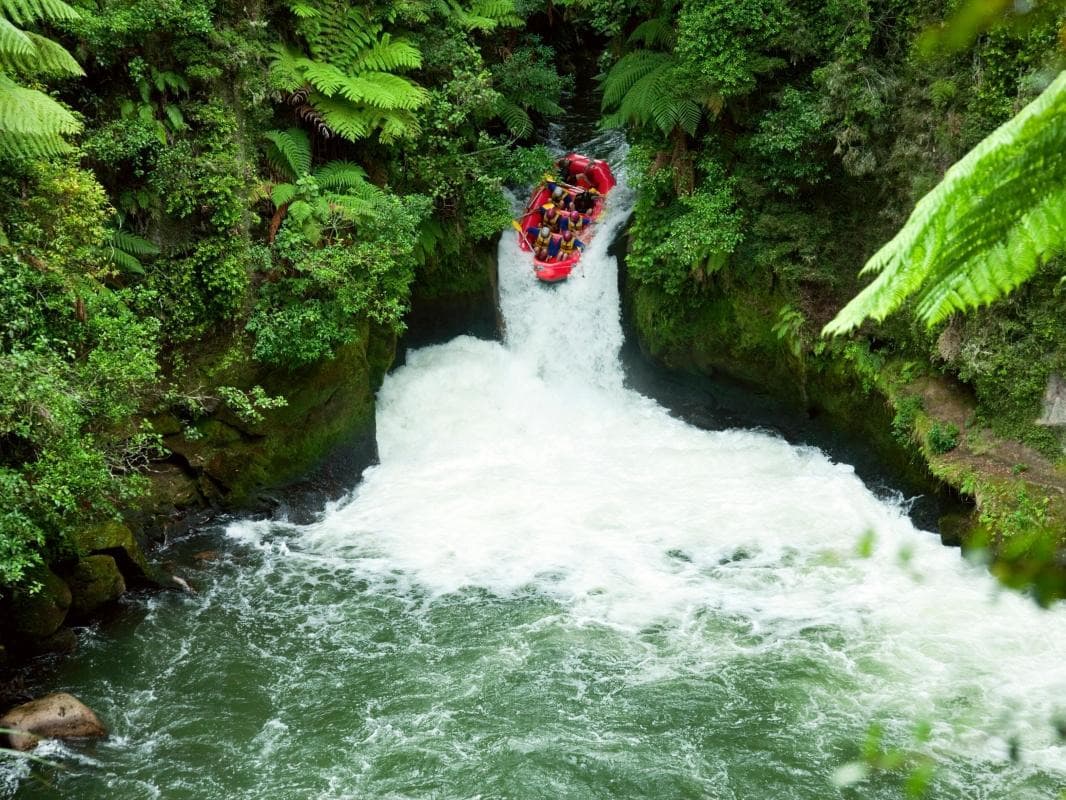
On the Okere section of the Kaituna River, 20 minutes from Rotorua, big water meets deep story. Here, a 2-kilometer stretch stacks rapids like dominos, culminating in Tutea Falls—a 7-meter drop that’s become legend in the paddling world. Guides call commands over the drum of whitewater, and you feel the raft bristle at the lip, the river’s breath holding just long enough to make your own catch. Then you disappear into a curtain of foam, pop back into sunlight, and the gorge—green, polished, alive—folds around you like a grin.
This is why travelers come to the Kaituna River: to dance with moving water in a place that insists you pay attention. You don’t need to be a veteran paddler, either. Local operators have dialed in the flow for first-timers and returners alike. Kaituna Cascades’ White Water Rafting – The Originals is the classic run with the old guard of the river, a guide-owned crew that helped pioneer commercial rafting here. Kaitiaki Adventures’ Rafting Rotorua Kaituna White Water Rafting blends adrenaline with whakapapa—genealogies and stories of place—so you understand why this awa (river) matters as much as how to paddle it. If you want your own craft, the Rotorua Sledging White Water Sledging experience trades paddles for a riverboard and fins. It’s playful, immersive, and closer to the water than you ever imagined—rapids push; you dig back and carve your line. And if heights pull at you, the Okere Falls Zipline Experience strings airy lines across the gorge, gliding you above waterfalls and over native forest while restoring the very landscape beneath with a reforestation project that leaves a tree in your name.
The lore runs deep here. The Kaituna’s name nods to kai (food) and tuna (eel), recalling centuries of harvest by local iwi (tribes). Along the Okere Falls Scenic Reserve track, the river reveals its layered past. The bones of a 1901 hydroelectric station—one of Aotearoa New Zealand’s earliest—still cling to the bank, a reminder that this water has powered more than rafts. A short side path drops to a cool cave bearing the name of Tutea, a local chief whose story threads into the falls that now test modern adventurers. You can walk the loop between viewpoints, watch rafts disappear and reappear under a volley of cheers, and feel how the gorge holds sound as if it, too, wants to be part of the action.
Geology stage-manages the show. Lava flows hardened into narrow canyon walls that focus the river’s energy; ancient collapses created pools and ledges perfect for drops. The gradient is just right—steep enough to thrill, forgiving enough to try again. Most trips spend about 50 minutes on the water with total time of 2–3 hours including safety briefings, gear-up, and shuttle, a rhythm that suits an adventurous morning with a lakeside lunch or an afternoon sprint before a soak in Rotorua’s geothermal baths.
As adventure destinations go, the Kaituna is surprisingly accessible. Many operators offer pickup from central Rotorua. You’ll be fitted with a wetsuit, spray jacket, helmet, and PFD. You’ll learn paddle commands—forward, back, get down—and how to laugh when the river steals your breath. Strong swimmer or not, you’ll be coached through each feature with practiced calm. On sledges, fins become your gear and your language—small flicks turn you across the current; big kicks sprint you into a wave. If you’d rather stay dry, ziplining puts you above the churn where kiekie vines curl and kererū thump from branch to branch, a quieter conversation with the gorge that’s no less thrilling.
Between runs, it’s worth time on the track. The Okere Falls Scenic Reserve is short, shaded, and rich in lookouts. Tutea’s Falls viewpoint is where photographers trade secrets about angles and shutter speeds while the river takes another raft and tests another heartbeat. Keep walking to Trout Pool, the traditional finish for rafting trips and a calm eddy ringed with moss. On warm days, the air smells of wet rock and manuka. On cool mornings, steam drifts like the memory of the lake upstream.
The Kaituna rewards those who plan smart. Summer brings the warmest water and the fullest roster of trip times. Spring runs green and fast after rain, when the river asks a little more and gives a little back. Autumn days are crisp, the gorge lit like stained glass in low sun. Winter is the locals’ secret—fewer crowds and silky flows—with operators providing thicker wetsuits and hot showers to make it comfortable. The river is dam-controlled from Lake Rotoiti, which keeps flows consistent for commercial trips, but weather can still factor—always keep an eye on your operator’s updates.
Back in Rotorua, the day’s buzz settles over dinner and stories. The river’s voice softens to a murmur, but it stays with you—the sense that water has a will, and when you meet it with your own, something shifts. The Kaituna doesn’t just carry you downstream; it pulls you into the present. It reminds you that adventure, at its best, is a conversation—river to paddler, gorge to zipliner, story to traveler—always moving, always alive.
Trail wisdom
Small choices, better day.
Book early for peak times
Summer departures fill fast, especially midday slots. Book morning or late-afternoon runs for softer light, fewer crowds, and cooler temps.
Swim skills matter
For rafting, basic comfort in water is plenty; for white-water sledging, you must be a confident swimmer as you’ll be in the current with fins.
Secure your kit
Bring a snug elastic for glasses or go without; action cams need a proper helmet mount—handhelds get lost in the churn.
Warmth is performance
Even in summer, bring a dry layer for after the river. In winter, operators supply thicker wetsuits—ask for gloves/booties if you run cold.
Local knowledge
Read the place, not just the route.
Watch for native species including Longfin eels (tuna) in deep pools, Kererū and tūī in the riverside bush.
Keep an eye out for wildlife during the transition between areas and habitats. Respect distance guidelines.
Follow Check, Clean, Dry protocols for all freshwater gear to prevent invasive species. Choose operators supporting local restoration—Rotorua Ziplines plants native trees to reforest Ōkere.
Follow the guide's instructions on size limits, ethical handling, and leave-no-trace practices.
Tutea Caves spur track off the Okere Falls Scenic Reserve trail. Trout Pool lookout at the take-out for classic end-of-run photos
Locally recommended viewpoints and quiet spots known best to local operators.
The Okere Falls Power Station began supplying electricity to Rotorua in 1901, and its remains are still visible along the walking track. The river’s name—Kaituna—references traditional Māori eel harvests in these waters.
Maritime roots and regional tradition shape the waterways and working coasts.
Seasonal guide
Four versions of the same landscape.
Spring
Best forConsistent dam-release flows · Lush green gorge
ChallengesCooler water after rain · Changeable weather
Expect lively, reliable flows and fresh, green scenery. Pack an extra warm layer for after the trip.
Summer
Best forWarmest water · Longest daylight
ChallengesPeak crowds · Midday heat and glare
Prime rafting and sledging season with multiple departures daily; book early and target morning or golden-hour runs.
Fall
Best forClear skies and crisp air · Glowing forest light
ChallengesShortening days · Cool evenings
A photogenic shoulder season with stable flows and fewer people—bring a cozy layer for after the river.
Winter
Best forQuiet trips · Silky cold-water flows
ChallengesChilly air temps · Limited departure times
Operators provide thicker wetsuits and hot showers; plan for shorter days and enjoy a locals-only vibe.
Pack with intention
What to bring.
Good to know
Common questions.
Yes. The Okere section is guided and well-managed, with a thorough safety briefing. Many first-timers run it; Tutea Falls is optional at the guide’s discretion based on conditions.
Plan the edges
The details that make the day easier.
Tutea Falls on the Kaituna River—at approximately 7 meters (22 feet)—is widely regarded as the highest commercially rafted waterfall in the world.
After paddling, grab a flat white and seasonal bites at Okere Falls Store, a local hub for hungry rafters. Back in Rotorua, explore Te Arawa culture through kapa haka performances and sample contemporary Māori kai—rewena bread, smoked fish, and hāngī-inspired plates—around town.
- Location
- Okere Falls, 20 minutes from Rotorua. Time on water: ~50 minutes; total trip: 2–3 hours. Minimum age varies by operator and activity (check in advance). Included: wetsuit, PFD, helmet, guides, transport. Meet: operator base or central Rotorua pickup.
Stay on formed tracks, pack out everything, and follow Check, Clean, Dry protocols for freshwater gear. Support outfitters investing in the awa—some trips fund native reforestation and pest control in the gorge.
Explore by topic
Follow the threads.
Keep exploring
Make the story part of the trip.
 Related story
Less than two hours from Nairobi, Kereita Forest pairs hands-on canopy adventure with quiet montane trails and a sobering colonial history—perfect for families, teams, and curious travelers seeking a full-day pulse of nature.
Set out from Bass Harbor for a private, customizable day on Blue Hill Bay — lighthouses, puffins, seals, and the chance to feel Acadia from the water. Small groups, local captains, unforgettable views.
In four hours you can move from shaded canyon ferns to wind-scoured coastal ridgelines, guided by someone who knows where the light—and the hidden views—live. This private half-day hike on the Monterey Peninsula or Big Sur is compact, curated, and perfect for travelers who want depth without a multiday commitment.