
What the day feels like
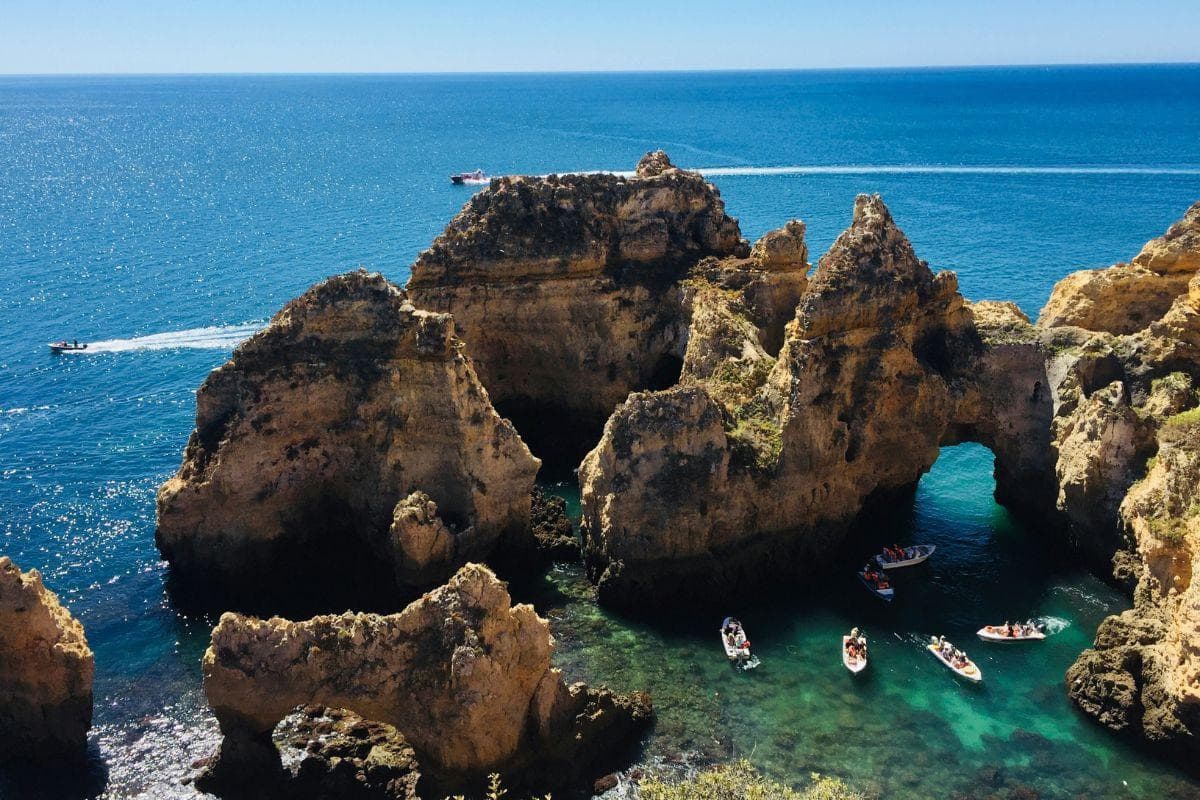
The cliff edge smells of salt and stone. You step past a cluster of tourists and the path opens to an amphitheater of ochre spires—towering limestone stacks and honeycomb arches stitched by tide and time. At first light the sea is a sheet of glass that mirrors the honey tones of the rock; by afternoon it is a restless turquoise that dares you to come closer. From the lookout points above, the grottoes of Ponta da Piedade in Lagos look like a miniature city of natural architecture: tunnels, vaulted caverns, and narrow corridors carved into the Algarve's coast. From the deck of a small boat, those same formations reveal their other face—the cathedrals and corridors that swallow sound and frame shafts of sunlight.
Ponta da Piedade's drama is geological and maritime. The cliffs are primarily limestone and harder conglomerates sculpted over hundreds of thousands of years by Atlantic swell and seasonal rains. That slow work created arches and sea caves—features with local names you’ll hear on every cruise: the Siamese Twins, the Arc of Triumph, the Corridor, the Cathedral, even the Kitchen and the Living Room. Human history here is layered on top: Lagos itself was a major port during Portugal’s Age of Discovery in the 15th century, and the coastline’s hazards and harbors shaped the fortunes of sailors and townspeople alike.
A boat tour is the natural way to meet Ponta da Piedade. Small private charters hug the rock to let you peer into cave mouths and pass under honeycombed arches. There are grotto excursions that tour the famous interiors, coastal cruises that combine swims at hidden coves, sunset sails that scrub the day with gold, and luxury yacht runs that add champagne and padded loungers to the view. All of them compress the best parts of the Algarve—dramatic cliffs, sheltered coves like Dona Ana and Pinhão, and beaches accessible only by sea—into two or three-hour experiences that are equal parts geology lesson and sensory treat.
Out on the water, nature takes on personality. Waves push insistently through narrow passages; currents thread between stacks like a conveyor belt of blue. Seabirds patrol the cliff faces with measured wingbeats; dolphins sometimes accompany the boat with playful arcs. The rocks themselves seem mischievous—one formation looks like a sleeping elephant, another like an amphitheater audience frozen mid-applause. Guides point out shapes with affectionate names, but the best moment is when the boat slips into a cave and sunlight pours through a hole in the ceiling like a spotlight on a stage.
Practicalities: timing and how to make the most of your visit. Sunrise and early morning trips are quiet and soft; the light is cooler and the sea often calmer, which is ideal if you want clear reflections in the water and fewer other boats. Sunset cruises turn the cliffs into a backlit silhouette that glows copper and purple, a favorite for photographers and couples. Midday cruises offer the best chance for a swim at a secluded beach if you’re craving salt and sand—many tours include stops for a dip.
What to expect on the water: most grotto tours run one to three hours and depart from Lagos marina. Boats vary from rigid-hulled tenders that can slip into tight caves to larger yachts that emphasize comfort and a longer coastline run. Wear non-marking shoes if you're boarding a yacht that requests it; bring sunscreen, a light wind layer and a dry bag for phone and camera. If you're prone to seasickness, take precautions—early morning calm helps, and ginger or medication can make a big difference.
There are small choices that matter: a private boat will let you set the rhythm—linger in a cave, time a swim, or seek a quiet cove—whereas group tours offer a budget-friendly snapshot of the coastline. If you're intent on photography, aim for golden hour or blue hour, and consider a sunrise yacht if you want soft light with fewer crowds. For families or older travelers, the more stable larger boats are a wise pick; for adventurous types who want to squeeze into narrow grottoes, a smaller craft is the ticket.
Local culture threads through the trip. Lagos is a working town as much as it is a tourist hub—fishing boats still move through the harbor at dawn and the town's waterfront restaurants serve cataplana and grilled fish that reward an active morning on the water. Many local operators are family-run and know the coastline intimately; ask questions about the formations and history—guides love to explain names, tides, and seasonal wildlife.
Conservation is part of the experience. The area is ecologically sensitive—seagrass meadows and breeding seabird colonies can be disturbed by careless anchoring. Choose operators that follow local regulations, avoid touching fragile rock surfaces, and keep a respectful distance from wildlife. Sustainable practices preserve both the dramatic views and the quieter moments that make a visit to Ponta da Piedade feel essential.
At the cliff rail at dusk, with gulls settling and the last light sliding off the limestone, the coastline feels both vast and intimate. Ponta da Piedade is a place that invites movement—down stone steps to a small beach, across a boat deck into a cave, out into a horizon where the next headland is only a silhouette. It’s an adventure that’s easy to plan, hard to forget, and infinitely worth the small effort it takes to get there.
Trail wisdom
Small choices, better day.
Book early mornings for calm water
If you want still seas and soft light for photos, choose the earliest departures when winds are usually lowest.
Bring non-marking shoes
Yacht operators often require white-soled shoes; they protect the vessel and provide better footing during boarding.
Protect your camera from spray
Use a small dry bag or weather-sealed case—spray can ruin electronics even on short trips.
Respect wildlife distances
Avoid approaching or feeding dolphins and keep noise low near seabird nesting areas to reduce disturbance.
Local knowledge
Read the place, not just the route.
Watch for native species including Common dolphins (Delphinus delphis), Mediterranean gulls and cormorants.
Keep an eye out for wildlife during the transition between areas and habitats. Respect distance guidelines.
Choose operators that follow local anchoring rules and avoid driving through seagrass beds; responsible tour practices help protect marine habitats and nesting birds.
Follow the guide's instructions on size limits, ethical handling, and leave-no-trace practices.
Walk the cliff path west toward Praia do Canavial for fewer visitors and quiet viewpoints. Board a small morning dinghy to enter narrow grottoes that larger vessels can’t reach
Locally recommended viewpoints and quiet spots known best to local operators.
Lagos has roots in Portugal's Age of Discovery; the town and its harbor were launching points for 15th-century expeditions that reshaped global routes.
Maritime roots and regional tradition shape the waterways and working coasts.
Seasonal guide
Four versions of the same landscape.
Spring
Best forWildflower-cliff views · Calmer seas · Fewer crowds
ChallengesUnpredictable spring storms · Cooler water temperatures
Spring brings wildflowers to the cliff tops and milder visitor numbers; seas can still be changeable, so pick morning slots for calmer conditions.
Summer
Best forSwimming and snorkeling · Long daylight hours · Warm sea temperatures
ChallengesPeak crowds · Higher prices and full bookings
Summer is ideal for swims and full-day cruises, but book ahead and plan midweek departures to avoid the busiest windows.
Fall
Best forGolden light for photography · Warmer water from summer · Fewer tourists
ChallengesOccasional storms later in season · Shorter daylight
Late summer into early fall often combines warm water and softer light with thinning crowds—one of the best times for balanced conditions.
Winter
Best forDramatic storm-watching · Lower prices · Quiet viewpoints
ChallengesRough seas, many operators reduce service · Cool temperatures
Winter offers dramatic skies and near-empty lookouts but check cancellations and choose only experienced operators when seas are rough.
Pack with intention
What to bring.
Good to know
Common questions.
Most grotto and coastal tours range from 1 to 3 hours; luxury yacht or private full-coast experiences can last longer—up to a half or full day.
Plan the edges
The details that make the day easier.
Lagos and the surrounding coast were important during Portugal's Age of Discovery in the 15th century; the area’s maritime heritage helped make it a key departure point for early voyages.
Lagos pairs sea-carved scenery with a tight-knit fishing-town vibe—sample cataplana or grilled sardines at a waterfront tasca after your cruise and shop for pottery at the local market.
- Departure
- Lagos Marina; Typical duration: 1–3 hours; Cost: varies by size and inclusions; Book: advance in high season; Accessibility: cliff viewpoints easy, cave interiors by boat only.
Support licensed local operators, avoid single-use plastics on board, and maintain distance from wildlife; these small choices keep the coast healthy for future visitors.
Explore by topic
Follow the threads.
Keep exploring
Make the story part of the trip.
 Related story
Less than two hours from Nairobi, Kereita Forest pairs hands-on canopy adventure with quiet montane trails and a sobering colonial history—perfect for families, teams, and curious travelers seeking a full-day pulse of nature.
Set out from Bass Harbor for a private, customizable day on Blue Hill Bay — lighthouses, puffins, seals, and the chance to feel Acadia from the water. Small groups, local captains, unforgettable views.
In four hours you can move from shaded canyon ferns to wind-scoured coastal ridgelines, guided by someone who knows where the light—and the hidden views—live. This private half-day hike on the Monterey Peninsula or Big Sur is compact, curated, and perfect for travelers who want depth without a multiday commitment.