
What the day feels like
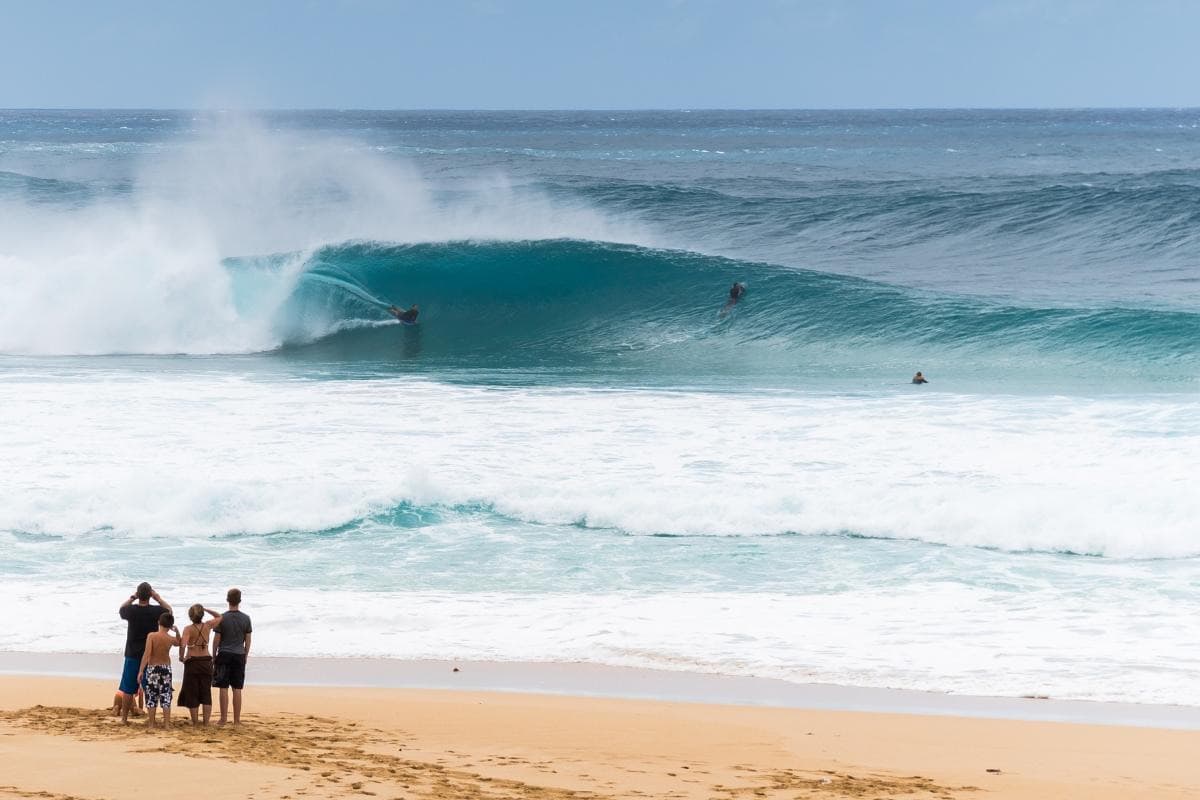
If you arrive before dawn at Ehukai Beach Park, the world still tastes like salt and coffee. The first light strips color from the surf and a hush settles over the sand — not silence, exactly, but a patient, anticipatory hush. Toward the horizon a line forms: a slow, living wall of water that rears and folds and then, with a thief's precision, hollows into a near-perfect tube. From shore the wave looks indifferent, dangerous, and then beautiful all at once. This is Banzai Pipeline, the North Shore artifact that both humbles and hypnotizes surfers and spectators alike.
Pipeline is theatrical in the simplest sense. It stages nature’s most exacting trick: when swell, wind, and tide align, the waves break over a shallow, jagged reef and throw up vertical walls that peel into cylinders of foam and sky. Surfers chase them. Photographers wait with long lenses. Locals watch with a mixture of pride and wary reverence — the break demands skill, respect, and humility. In winter, when Pacific storms conspire to create giants, Pipeline becomes a testing ground for the best big-wave riders in the world. During calmer months, the reef still tosses tight, playful barrels that reward precision.
Geology and history are part of the show. The reef that births Pipeline is ancient basalt — a knuckled armor of lava that once flowed and cooled, now sculpted by sea and season. That shallow foundation is what makes the waves so steep and fast; there’s nowhere for the swell to dissipate. Culturally, Pipeline sits at the heart of Hawaii’s modern surf story. Professional contests like the Pipe Masters and the Triple Crown have sealed its reputation, but the site is also a place of local memory: families who’ve watched the same lineups for generations, kamaaina who know the reef’s moods, and surf shacks in nearby Haleiwa that still smell of grilled shrimp and sunscreen.
Practically, Pipeline is a viewing experience as much as a surfing experience. Most visitors come to watch rather than ride. A short walk from the parking lot dumps you onto a sandy bench with a clear sightline to the break. On any given winter morning, you might be shoulder-to-shoulder with photographers, old-timers with folding chairs, or tourists who have driven the North Shore on a circle island tour. The relative ease of access is part of its magnetism: several operators run full-day Grand Circle Island tours that stop at Pipeline, while private North Shore tours tailor time here so you can linger through the golden hour. For a more cinematic perspective, helicopter flyovers trace the coastline and reveal the reef's geometry from above — a reminder of how small humans are against these patterns of swell.
Yet Pipeline is unforgiving. The shallow reef, the heavy shore break, and powerful currents combine into a place where only experienced surfers should enter the water. For photographers and onlookers, the hazards are different but real: sneaker waves can catch you, reef cuts heal slowly, and crowded parking can test your patience. The best viewing etiquette is simple: keep off the reef, obey posted signs, maintain a respectful distance from competitors and locals, and never disturb a surfer in the lineup.
If you’re planning a visit, timing changes everything. Winter months, November through February, bring the big swells and the global surf calendar; that’s when Pipeline earns its mythic reputation. For safer, more human-scale waves, aim for late spring through early fall, when the swell is smaller and the North Shore relaxes into a quieter rhythm. Sunrise and mid-afternoon both offer different moods: dawn is about anticipation and cool light; late afternoon gives backlit tubes and the glow of a day spent on the sand.
Beyond standing and watching, make a day of the North Shore. Many island tours that include Pipeline also visit Haleiwa Town, the Dole Plantation, Waimea Bay, and food stops where garlic shrimp trucks and shave-ice stands anchor local life. If you want to shape a more private experience, a custom North Shore tour can combine a scenic stop at Pipeline with a snorkel at a calm bay, a visit to local galleries, and time to eat where the locals do.
Packing and preparedness are straightforward but essential: a pair of binoculars, a camera with a telephoto lens, reef-safe sunscreen, and sturdy sandals will make the experience better and safer. If you hope to enter the water anywhere on the North Shore, bring reef shoes, a strong swim ability, and the humility to know when the ocean is beyond you.
On the cultural side, show aloha. Pipeline is part of a living place. Support local businesses in Haleiwa, respect private property and beach access points, and remember that competitions and surf culture are rooted in community. When crowds swell during major contests, permit spaces, veteran photographers, and locals may have priority in certain viewing areas.
Banzai Pipeline is not a postcard beach — it’s a performance arena where ocean and reef meet with uncompromising intensity. You come for the spectacle, and you leave with a clearer sense that nature's most exacting landscapes rarely yield themselves casually. Whether you arrive with a camera on your shoulder, a cup of coffee in hand, or a bus full of travelers on a Grand Circle tour, Pipeline rewards those who watch carefully, move respectfully, and carry out what they carry in. The waves will keep coming; the best you can do is be ready to witness them.
Trail wisdom
Small choices, better day.
Bring binoculars
A compact pair will let you watch surfers and read the lineup without getting too close to the reef.
Respect the reef
Never walk on the reef; it's sharp, fragile, and dangerous—use designated beach access points.
Time your visit
Visit at sunrise for calm, dramatic light; winter months offer big waves but require extra caution.
Use reef-safe sunscreen
Protect your skin and the ocean by choosing sunscreens that are mineral-based and labeled reef-safe.
Local knowledge
Read the place, not just the route.
Watch for native species including Hawaiian green sea turtle (honu), Seabirds and occasional spinner dolphins offshore.
Keep an eye out for wildlife during the transition between areas and habitats. Respect distance guidelines.
The reef is ecologically sensitive; visitors should avoid walking on coral, use reef-safe sunscreen, and pack out all trash.
Follow the guide's instructions on size limits, ethical handling, and leave-no-trace practices.
Pupukea tide pools — explore at low tide for calm marine life viewing. Ehukai Pillbox trail — short climb with elevated views of the reef and coastline
Locally recommended viewpoints and quiet spots known best to local operators.
Pipeline rose to global prominence in the mid-20th century as surf competitions grew; today it hosts elite events and remains central to local surf culture.
Maritime roots and regional tradition shape the waterways and working coasts.
Seasonal guide
Four versions of the same landscape.
Spring
Best forSmaller, friendlier waves · Photography in softer light
ChallengesUnpredictable wind shifts · Crowds at popular viewpoints
Spring offers more manageable surf and pleasant weather, making it ideal for casual viewing and photography.
Summer
Best forCalmer ocean conditions · Family-friendly beach stops
ChallengesHot midday sun · Occasional crowded beaches
Summer is quieter at Pipeline, with gentler surf at the reef and lots of nearby snorkeling options.
Fall
Best forTransitional swells · Less crowded mornings
ChallengesStorm-generated swells can arrive quickly · Variable surf quality
Fall transitions toward winter swell; you can see big sets develop while still enjoying moderate days.
Winter
Best forBig-wave spectacle · Professional competitions
ChallengesDangerous surf and strong currents · Large crowds and media presence
Winter brings the heavy Pacific swells that make Pipeline legendary — breathtaking but only for experienced surfers and careful spectators.
Pack with intention
What to bring.
Good to know
Common questions.
Pipeline is a heavy reef break and is not a safe swimming spot for most people; stick to designated swimming beaches and heed posted warnings.
Plan the edges
The details that make the day easier.
Banzai Pipeline hosts elite surf events such as the Pipe Masters and is famed for producing some of the world's most barreling waves because the reef rises abruptly from deep water.
Haleiwa serves as the North Shore’s cultural hub — surf shops, plate-lunch joints, garlic-shrimp trucks, and shave-ice stands combine to form the neighborhood’s low-key, hungry-for-adventure vibe.
- Access
- Ehukai Beach Park off Kamehameha Highway. Parking: limited; arrive early. Best time: winter for big waves, summer for calm viewing. Facilities: basic restrooms at park; food and services in Haleiwa.
Keep a safe distance from the reef, choose reef-safe sunscreen, avoid single-use plastics, and support local businesses to help sustain the island community.
Explore by topic
Follow the threads.
Keep exploring
Make the story part of the trip.
 Related story
Less than two hours from Nairobi, Kereita Forest pairs hands-on canopy adventure with quiet montane trails and a sobering colonial history—perfect for families, teams, and curious travelers seeking a full-day pulse of nature.
Set out from Bass Harbor for a private, customizable day on Blue Hill Bay — lighthouses, puffins, seals, and the chance to feel Acadia from the water. Small groups, local captains, unforgettable views.
In four hours you can move from shaded canyon ferns to wind-scoured coastal ridgelines, guided by someone who knows where the light—and the hidden views—live. This private half-day hike on the Monterey Peninsula or Big Sur is compact, curated, and perfect for travelers who want depth without a multiday commitment.