
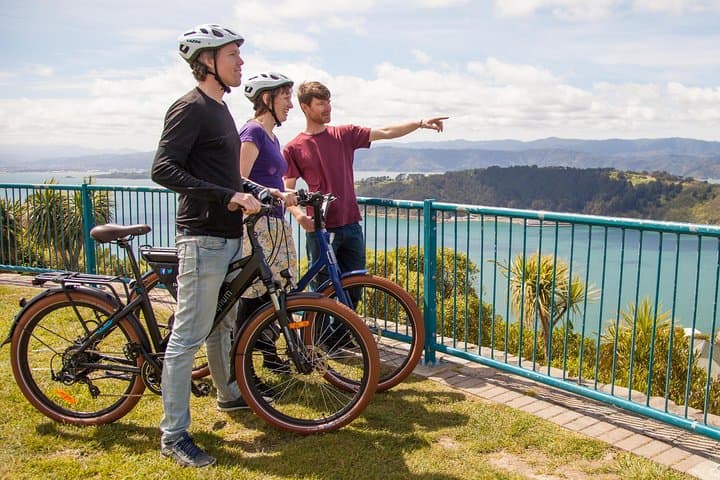
What the day feels like
You round the bend on Queens Wharf and the harbor opens like a slate-blue promise. Salt and the smell of frying fish from a nearby stall mix with diesel from a distant ferry; gulls wheel overhead plotting the easiest scrap. Your guide taps the throttle on a compact, easy-to-use electric bike and the city’s famously gusty personality becomes part of the ride—sometimes pushing you forward, sometimes daring you to lean in. Over the next three to four hours you’ll thread quiet bays, climb gentle headlands for panoramic views, and slip into neighborhoods where Wellington’s culture folds over itself: creative, compact, and proudly maritime.
This is the Wellington Guided eBike Tour—an accessible, locally led shore excursion that gets past the postcard façades to show how the capital hugs its harbor. The route typically covers roughly 15–20 kilometers of paved paths and quiet streets with cumulative elevation that feels more like rolling terrain than a proper climb thanks to the electric assist—expect around 150–300 meters of total ascent depending on the day's routing. If you can ride a bike, you’ll be comfortable here; the electric boost flattens the hills and lets you focus on the views and stories your guide shares.
Geology and history are stitched into the coastline. Wellington sits where a deep, raked harbor meets rocky headlands carved by wind and wave. The city’s waterfront was shaped by seismic uplift and coastal processes—a reminder that every lookout is perched on land with a tectonic backstory. On the ride you’ll pass the Miramar Peninsula’s rounded ridgelines and the sheltered bays that made this harbor a natural anchorage for Māori for centuries before European settlement. Guides often point to the layers of settlement: Māori waka landing points, whaling-era harbors, and the later growth of a compact colonial capital that leans into the water rather than away from it.
Culture shows up in the little things: painted shopfronts along Cuba Street, café patios crowded with neighbors, and craft breweries tucked into former industrial lots. Your guide will pull these threads together, adding context—a local who knows where the best flat white is served and which viewpoint makes for the cleanest photos. If you want to explore after the ride, hit up the lively Cuba precinct for casual eats, or stroll to a nearby brewery for a Wellington-made pale ale.
Why this excursion? For visiting cruise passengers and short-stay travelers, it’s the most efficient way to see many of Wellington’s signature scenes without sweating the hills. It’s social—small groups, a guide—and it’s paced for discovery: stops at panoramic lookouts, a seaside village coffee break, and narrative pit-stops that explain who shaped the city and why. Helmets and basic instruction are provided; the bikes’ throttle and pedal-assist widen the pool of riders who can comfortably join.
Practicalities: the tour runs three to four hours and is suitable for most riders who have basic cycling competence. Plan for wind: bring a good shell, sunglasses that seal to your face, and closed-toe shoes. Because the route stays near paved paths and city streets, it’s low on technical demand but high on sensory payoff—harbor views, salt-scrubbed headlands, and the urban rhythms of a compact capital.
If you’re a photographer, the best light is early morning and late afternoon—golden hours that play across the water and the city’s corrugated roofs. If you want to avoid crowds, request a departure that misses the main cruise-ship swell and you’ll have lookouts to yourself.
Safety and sustainability are part of the experience. Guides brief riders, fit helmets, and keep group size manageable so traffic interactions stay calm. The company emphasizes leaving no trace along marine edges and encourages staying on designated paths to protect shoreline vegetation and nesting birds. In short: this is a low-impact way to move through an urban coastal landscape.
For anyone considering the ride, it’s the kind of urban adventure that feels like an outdoor day trip and a cultural primer rolled into one. To learn more details or to book, check the local experts page that outlines the exact route and shore-excursion logistics: <a href="https://app.advcollective.com/local-experts/wellington-ebike-shore-excursion-guided-waterfront-miramar-tour">Wellington eBike shore excursion</a>. That link will get you the on-the-ground context you need—exact meeting points, current availability, and seasonal adjustments.
On the practical side, aim to arrive with a plan for after the tour. A late lunch along the waterfront or a short walk to Te Papa (Wellington’s national museum) is a natural follow-up. And if you’re sailing away, this tour’s shore-excursion pace gives you a real taste of the harbor in a single, well-curated morning.
The ride is not about high-performance cycling; it’s an invitation to slow down, use technology to flatten barriers, and discover how a windy city built itself around water. You’ll leave with salt on your jacket, a list of cafés to revisit, and a clearer sense of why Wellington feels like a harbor town first and a capital second.
Trail wisdom
Small choices, better day.
Dress for the Wind
Bring a lightweight, windproof shell and layered clothing; Wellington’s gusts can change the perceived temperature quickly.
Use the Assist
Let the eBike do the work—use pedal-assist on climbs to conserve energy for sightseeing and photos.
Secure Loose Items
Wear sunglasses with a strap and keep phone and camera in zip pockets—salt breeze and sudden gusts are common.
Arrive Punctually
Tours are timed to cruise-ship schedules; arrive early to allow for check-in and gear fitting.
Local knowledge
Read the place, not just the route.
Watch for native species including Silver gulls, Pāteke (brown teal) and occasional seals in the harbor.
Keep an eye out for wildlife during the transition between areas and habitats. Respect distance guidelines.
Tours encourage staying on designated paths to protect shoreline vegetation and seabird nesting areas—pack out all rubbish and avoid disturbing wildlife.
Follow the guide's instructions on size limits, ethical handling, and leave-no-trace practices.
Scenic lookout on the Miramar Peninsula with expansive harbor views. Quiet café lanes on Cuba Street for post-ride coffee and people-watching
Locally recommended viewpoints and quiet spots known best to local operators.
Māori have navigated Wellington Harbour for centuries; the city later expanded as a whaling and trading port before becoming New Zealand’s capital in 1865.
Maritime roots and regional tradition shape the waterways and working coasts.
Seasonal guide
Four versions of the same landscape.
Spring
Best forWildflower blooms · Milder winds · Fewer crowds
ChallengesUnpredictable showers · Occasional chilly mornings
Spring brings crisp air and flowering coastal scrub—pack a light waterproof and layers for variable conditions.
Summer
Best forWarm weather · Long daylight · Calm sea views
ChallengesStronger sun · Higher visitor numbers
Summer is ideal for clear harbor vistas and late rides; bring sun protection and hydrate often.
Fall
Best forRich late-afternoon light · Cooler temperatures · Crisp skies
ChallengesIncreasing winds · Shortening days
Autumn offers beautiful light for photos and more comfortable riding temperatures—have a windproof layer handy.
Winter
Best forFewer tourists · Dramatic stormscapes · Cozy café stops
ChallengesCold gusts · Higher chance of rain · Rougher sea spray
Winter rides are brisk and atmospheric; expect extra wind and pack warm, waterproof clothing.
Operator details
What the booking data adds.
Included
- ✓Group tour
- ✓Professional guide
- ✓Use of bicycle and helmet
- ✓Bicycle gloves or jacket if required
- ✓Local taxes
- ✓Tea, Coffee or Ice Cream at Cafe
Not included
- —Food at cafe
Good to know
- ✓Public transportation options are available nearby
- ✓Not recommended for travelers with poor cardiovascular health
- ✓Travelers should have at least a moderate level of physical fitness
- ✓A minimum of 2 people per booking is required
- ✓Minimum age is 13 years
- ✓Please dress appropriately. Bring an extra layer in case or wind
- ✓Riders must advise height if under 59 inches (150cm)
- ✓Remember to bring sunscreen in summer
- ✓Riders must be able to ride a bicycle on the road
- ✓Moderate fitness advised
- ✓Bring own water bottle if able
Pack with intention
What to bring.
Good to know
Common questions.
No—basic cycling skills are sufficient. Guides provide instruction and helmets are supplied before departure.
Plan the edges
The details that make the day easier.
Wellington is often cited as one of the world’s windiest cities—its location on Cook Strait funnels strong winds that shape the harbor and the city’s architectural character.
After the ride, head to Cuba Street for an eclectic mix of eateries—try a classic New Zealand fish and chips by the waterfront or sample locally brewed beer at a nearby taproom; for dessert, stop at a specialist gelateria or a baker for a flat white and lemon curd tart.
- trailhead
- Wellington International Airport (WLG)
- Wellington Waterfront (Quay St). Driving distance from airport
- ~20 minutes (20 km). Cell service: Good around the waterfront; patchy on exposed headlands. Permits: No special permits for the tour; helmets provided.
This tour follows established urban and coastal paths—please stay on tracks, avoid feeding wildlife, and carry out all waste to protect shoreline habitats.
Explore by topic
Follow the threads.
Keep exploring
Make the story part of the trip.
 Related story
Less than two hours from Nairobi, Kereita Forest pairs hands-on canopy adventure with quiet montane trails and a sobering colonial history—perfect for families, teams, and curious travelers seeking a full-day pulse of nature.
Set out from Bass Harbor for a private, customizable day on Blue Hill Bay — lighthouses, puffins, seals, and the chance to feel Acadia from the water. Small groups, local captains, unforgettable views.
In four hours you can move from shaded canyon ferns to wind-scoured coastal ridgelines, guided by someone who knows where the light—and the hidden views—live. This private half-day hike on the Monterey Peninsula or Big Sur is compact, curated, and perfect for travelers who want depth without a multiday commitment.