
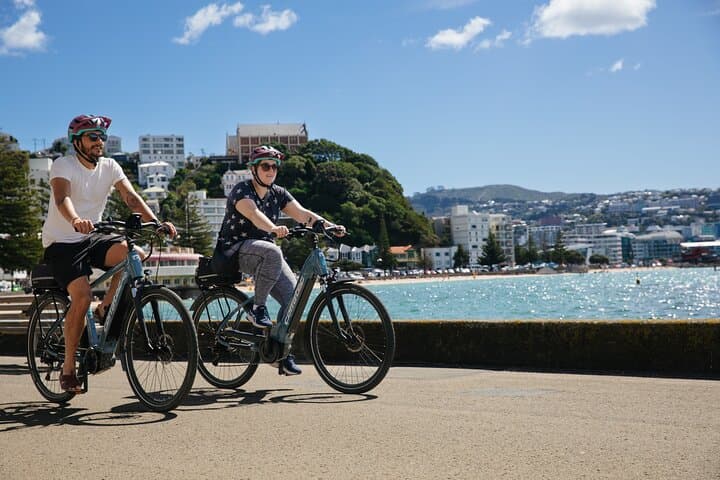
What the day feels like
You clip the helmet, test the throttle with a practiced thumb, and the city eases beneath you: a low electric hum, the harbor glinting like a cut coin, and the breeze off Cook Strait daring you to go farther. Wellington has a reputation—windy, yes, but also compact, muscular, and absurdly interesting. On a self-guided eBike tour, the city rearranges itself into a day’s worth of micro-adventures: art-lined streets, quiet bays, a hilltop lookout with a 360-degree claim on the harbor, and pockets of urban ecology that feel improbably wild for a capital city.
This is not a race. The point is to use the motor when you need it and to savor the small increments of place that only cycling reveals: the salt and diesel tang in the air by the ferry terminals, a clutch of kayaks bobbing at Oriental Bay, and the unexpected hush that drops over the tracks near Zealandia, Wellington’s predator-free ecosanctuary. The eBike flattens the city’s inclines just enough to encourage curiosity—want to check out Weta Workshop, then swing by Te Papa, detour through the Botanic Garden by the Cable Car, and finish with a beer in Cuba Street? You can. If you can ride a bike, you can ride one of these.
Wellington’s geography explains its personality. Built around a shallow, twisting harbor and hemmed in by urban ridgelines—Mount Victoria to the east, the hills of the southern suburbs to the south—the city has always been a place of thresholds. Early Māori waka travelled these waters and later European settlers used the harbor as a conduit for trade. The waterfront promenade grew from working docks into a public place over the 20th century; today it stitches together museums, parks, cafés and cycleways. Geologically, the area is young and active—note the pronounced ridgelines and steep, short climbs that are flattened considerably by an ebike’s boost.
Culturally, Wellington is refreshingly compact and access-rich. Museums like Te Papa invite short, deep dives into New Zealand’s natural and cultural story, while workshops and craft breweries in Te Aro celebrate the city’s creative side. Zealandia—an urban sanctuary that has reintroduced native birds like the tūī and kākā—is a short pedal from the waterfront and a reminder that conservation here isn’t theoretical.
Practicalities matter: this self-guided option runs from a brisk 2-hour half-day loop to a flexible full-day rental (up to 24 hours). The price starts at about $50 USD for the shorter hire, with higher tier options for longer use. Bikes come with helmets, a lock, a cycle map, and basic riding instructions. That map highlights routes, points of interest and recommended coffee stops—because Wellingtoners take caffeine seriously.
How to ride it well: pick a morning or late-afternoon start to avoid peak wind gusts and the worst of mid-day crowds on footpaths. If you want the classic vista, include Mount Victoria Lookout on your loop—it's a short push, about 196 meters to the summit, but the e-assist makes the climb conversational. For wildlife and quiet, loop past Zealandia and the edge of the Botanic Garden. For seaside scenery, pedal through Oriental Bay and along the waterfront past Frank Kitts Park and the marina.
Battery management is less mystifying than you’d think. With moderate use, an eBike will cover the critical urban distances of Wellington comfortably on a half-day hire; reserve battery for the climbs and strong headwinds. The maps included identify charging points and recommend lunch stops; still, carry a phone battery pack if you plan a full-day meander. Helmets are included and mandatory—take the fit seriously; a shifting helmet ruins a good photo.
Safety and etiquette are straightforward: use cycle lanes where provided, yield to pedestrians, and lock the bike whenever you leave it (locks are supplied). Cell service is reliable around the central city, which helps for navigation, but Zealandia’s valley can be patchy. If you’re new to eBikes, take five minutes on a quiet street to get comfortable with throttle response and regenerative braking before setting off into traffic.
Why travelers should try this: Wellington rewards curiosity, and the eBike extends your curiosity radius without demanding Lycra or a high level of fitness. The experience is flexible—perfect for couples who want a romantic loop, families who need a push up hills, or solo travelers wanting to stitch together a personal tour of museums, views, and local eateries. With instant booking confirmation and free cancellation, it’s an easy add-on to a Wellington itinerary.
A few honest notes: the city’s wind can be decisive—on exposed headlands, you’ll notice it. Also, some of the older waterfront surfaces are shared with pedestrians, so expect slow-moving zones. But these are trade-offs for a city that collects disparate pleasures into a very rideable circuit.
When you return the bike—lock clicked, helmet returned, map folded—there’s a civilized abundance of reward. Cuba Street serves up coffee and eclectic bites; the waterfront offers seafood shacks and sweeping harbor views. In Wellington, getting there on an eBike feels like the right speed: not too fast to miss the details, not so slow that you’re exerting unnecessarily. It’s urban travel with a small motor and a large sense of possibility.
Trail wisdom
Small choices, better day.
Test the e-assist
Spend five minutes in a quiet area to get comfortable with throttle and braking—eBikes accelerate differently than regular bikes.
Mind the wind
Wellington’s gusts can double effort on exposed sections—save battery power for climbs and blustery headwinds.
Lock and leave
Use the provided lock whenever you stop—cafés and attractions are easy to pop into but locks are essential.
Respect shared paths
Yield to pedestrians, signal overtakes, and keep a moderate speed on busy waterfront promenades.
Local knowledge
Read the place, not just the route.
Watch for native species including Tūī, Kākā.
Keep an eye out for wildlife during the transition between areas and habitats. Respect distance guidelines.
Zealandia is a pioneering urban ecosanctuary—stay on designated paths and respect wildlife; eBikes offer low-carbon mobility when used responsibly.
Follow the guide's instructions on size limits, ethical handling, and leave-no-trace practices.
Mount Victoria Lookout early-morning viewpoint for city and harbor light. Quiet stretch of track near Zealandia where native birds are often seen
Locally recommended viewpoints and quiet spots known best to local operators.
Wellington grew from Māori settlements and later colonial port development; the waterfront evolved from industrial wharves to a publicly accessible cultural spine.
Maritime roots and regional tradition shape the waterways and working coasts.
Seasonal guide
Four versions of the same landscape.
Spring
Best forWildflower blooms in the Botanic Garden · Milder temperatures for longer rides
ChallengesUnpredictable showers · Occasional gusty days
Spring brings flowering gardens and fewer tourists—pack a light rain shell and expect variable wind.
Summer
Best forLong daylight for full-day loops · Comfortable harbor swimming/respite spots
ChallengesStronger UV and occasional busy weekends · Hotter surfaces and busy cafés
Summer is the most comfortable season for long rides; start early to avoid peak sun and crowds.
Fall
Best forCrisp air and clear harbor views · Autumn colors in parks
ChallengesShortening daylight · Cooler mornings
Fall provides stable weather and great light for photography—bring layers for cool mornings.
Winter
Best forQuieter streets and fewer tourists · Moody harbor and storm-watching from sheltered spots
ChallengesColder temperatures and frequent rain · Windier conditions
Winter rides are possible but pack warm, waterproof layers and plan for shorter excursions.
Operator details
What the booking data adds.
Included
- ✓Wellington City Cycle Map
- ✓Local Tips and Insights
- ✓Self-Guided bike tour
- ✓Use of bicycle, helmet and lock
- ✓Storage of Luggage when Riding
- ✓Hi Vis available
Not included
- —Water
- —Optional Gel Seat Cover
- —Optional mobile phone holder
Good to know
- ✓Specialized infant seats are available
- ✓Service animals allowed
- ✓Public transportation options are available nearby
- ✓Infants and small children can ride in a pram or stroller
- ✓Travelers should have at least a moderate level of physical fitness
- ✓Must be able to ride a regular bike
- ✓Bike manufacturer has a weight limit of 330 lbs (150 kilograms)
- ✓Children (13 -17 Years) must be accompanied by an adult
- ✓Credit Card must be presented as bond
- ✓Heights must be advised if less than 5 foot (152 centimeters)
- ✓Select a full-day or 2-day option
Pack with intention
What to bring.
Good to know
Common questions.
No advanced skills are required—basic bike handling and the ability to balance are enough; staff will show you how the e-assist works.
Plan the edges
The details that make the day easier.
Wellington is the southernmost capital city in the world, and its compact harbor front makes it uniquely rideable.
After your ride, head to Cuba Street for coffee and flat whites, try seafood on the waterfront, and sample local craft beer in Te Aro—Wellington’s compact layout means excellent food and drink options are minutes from the cycle paths.
- Closest airport
- Wellington Airport (WLG); Driving distance to central waterfront: ~8 km
- 20–30 minutes; Bike pickup
- central Wellington waterfront hire shop (details provided at booking); Cell service: generally good in central city, patchy near reservoir valleys; Permits: none required for public cycleways.
Use bike lanes, avoid riding on pedestrian-only boardwalks, and pack out any trash—eBikes reduce emissions versus car trips and support low-impact urban exploration.
Explore by topic
Follow the threads.
Keep exploring
Make the story part of the trip.
 Related story
Less than two hours from Nairobi, Kereita Forest pairs hands-on canopy adventure with quiet montane trails and a sobering colonial history—perfect for families, teams, and curious travelers seeking a full-day pulse of nature.
Set out from Bass Harbor for a private, customizable day on Blue Hill Bay — lighthouses, puffins, seals, and the chance to feel Acadia from the water. Small groups, local captains, unforgettable views.
In four hours you can move from shaded canyon ferns to wind-scoured coastal ridgelines, guided by someone who knows where the light—and the hidden views—live. This private half-day hike on the Monterey Peninsula or Big Sur is compact, curated, and perfect for travelers who want depth without a multiday commitment.