
What the day feels like
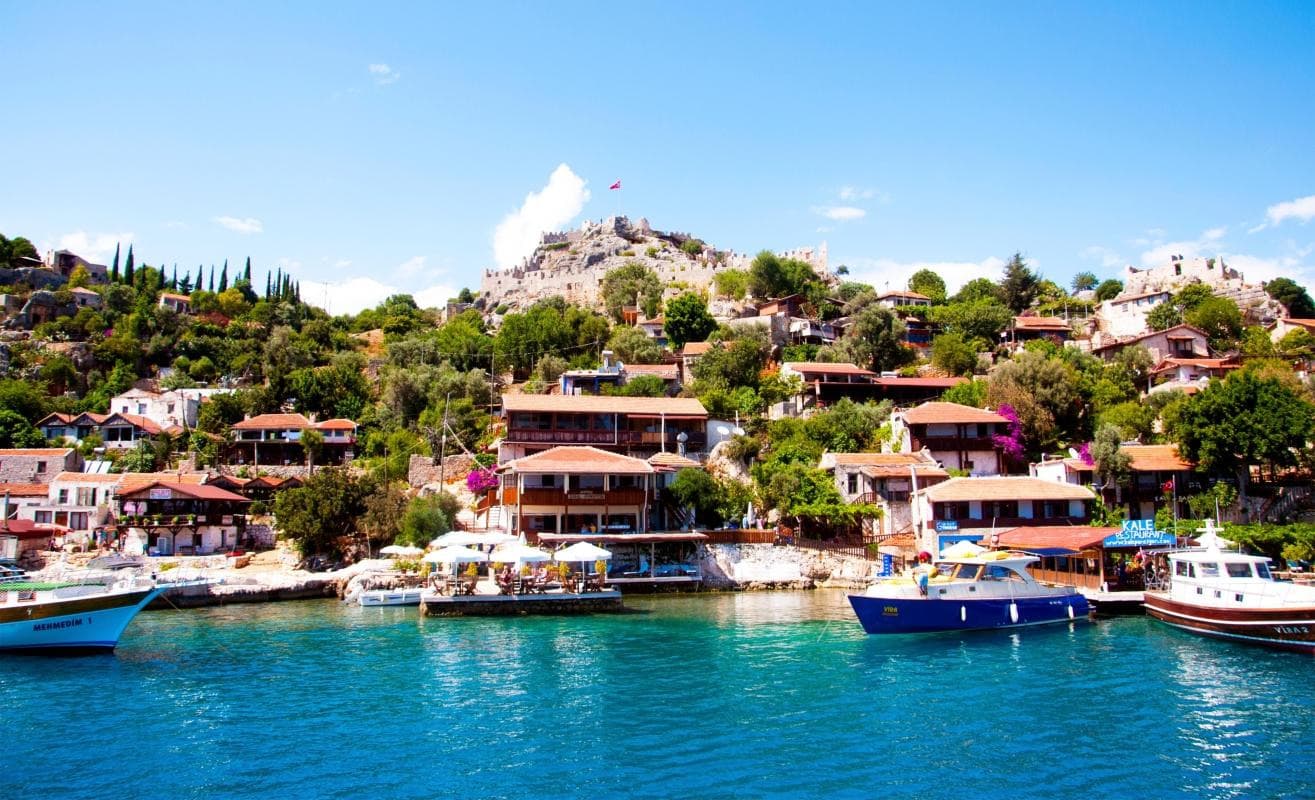
The sea is glass when you push off at Üçağız, a harbor of whitewashed pensions and fishing skiffs tethered like patient horses. The paddle dips, the water answers, and the Mediterranean begins to tell its story—clear, insistent, and older than any map. Ahead, Kaleköy (Simena) rises from the blue like a memory made of stone: a hilltop castle, a scatter of Lycian sarcophagi, and a tangle of stone lanes draped in bougainvillea. There are no roads here. The village greets you by water or not at all.
This approach feels right because Kaleköy is, in many ways, defined by the edge where sea and history touch. A few strokes past the harbor and the past is almost unnervingly visible. Marble blocks lie just beneath the surface, the ghostly lines of stairs descend into coral light, and half a sarcophagus stands in the shallows as if it chose the sea for company. The currents nudge you forward. The coastline, broken by coves and islets, keeps secrets and then casually reveals them: a submerged quay here, an ancient wall there. You are paddling across the Sunken City of Kekova, a protected archaeological zone created by earthquakes that lowered parts of the coastline in antiquity. The water is so clear it removes the distance between imagination and fact.
By the time you nose into Kaleköy’s small pier, the village is already at work. Women lay out trays of thyme and sage to dry. A fisherman, elbows deep in nets, whistles to a cat who pretends not to hear. The castle looks down with the unruffled gaze of something that has seen empires pass. You leave your kayak or step off the boat, and the village takes over. Narrow paths thread uphill between stone houses. Lemon trees lean into the lanes. Hand-painted signs point toward homemade dondurma and gözleme. It smells like salt and oregano.
The climb to the castle is short, steep, and worth every step. The stones are smooth, the sun is direct, and the wind—when it shows up—arrives like an old friend with news. At the top, the payoff opens in every direction: the indigo spread of Kekova Sound, the chessboard of islets and coves, the outlines of ancient foundations in the water below. There’s a tiny theater carved into the bedrock, a 300-seat marvel that feels both intimate and audacious. Lycian hands made it; centuries later, the Knights of St. John reinforced the hill with a small fortress to control the coast. Here, history doesn’t sit behind glass. It shares the view and asks for care.
Kaleköy’s appeal rests in that balance of immersion and restraint. You can kayak from Üçağız in an hour or two, gliding over the Sunken City with a guide who threads the legal channels—no swimming directly over the ruins; that’s protected water and for good reason. You can come by small wooden gulet from Kaş, landing for an unhurried wander through lanes shaded by grapevines. Either way, Kaleköy feels like a place that resists speed. The village doesn’t rush. The sea decides the day’s tempo.
Adventure here routes through simple choices. Go early or late to dodge the fiercest heat and the mid-day flotilla of day boats. Wear shoes you can climb in; the castle steps are uneven and sunbaked. Bring cash for the modest castle entrance and a scoop of carob ice cream. Build in time to swim at one of the nearby coves where bathing is allowed—water that turns the body buoyant and the mind quiet. The breeze picks up in the afternoon; if you’re paddling, plan your return with the wind’s habit in mind.
Practicalities thread the romance. Kaş, the base for many travelers, sits about 45 minutes by road from Üçağız, where most kayak tours and boat trips depart. The village of Kaleköy has no ATMs, and cell service fades as reliably as the daylight behind the castle. In summer, the sun doesn’t ask—it insists. Long sleeves with UPF, a hat with a brim, reef-safe sunscreen, and two liters of water per person keep the day enjoyable. Respect the archaeological zone: do not anchor on seagrass, don’t climb on sarcophagi, and leave even the smallest shard of amphora where you found it. This is a living village layered on a site that belongs to everyone and to time itself.
And yet, Kaleköy isn’t a museum. It’s a place where daily life animates the ruins. The call to prayer drifts across the bay at dusk. Goats write their own paths between olive trees. Fishermen return with the day’s catch and turn it into dinner at simple waterfront cafes. The castle cools to a warm stone bench and the first stars press through the dark. If you came by kayak, the paddle home in twilight can feel like a benediction—the sea smoothing out, the coves deepening into shadow, the village behind you glowing in small constellations of light.
What draws travelers here isn’t a single must-do, but a layered experience: human-powered exploration across a transparent sea, an approachable hike to a view that gives context to everything, and a village that has learned to host without performing. Kaleköy rewards intention. Choose your window, pack light but smart, and let the coastline set the pace. You’ll leave with salt on your skin, history under your feet, and a map in your head that’s more personal than paper.
Trail wisdom
Small choices, better day.
Aim for Early or Late
Launch at sunrise or after 3 p.m. for cooler temps, calmer water, and fewer day boats at the pier.
Bring Cash in Small Bills
The castle requires a small entry fee and most village stands are cash-only; there are no ATMs in Kaleköy.
Respect the Protected Zone
No swimming directly over the Sunken City; paddle with a licensed guide and avoid anchoring on seagrass.
Grip for the Castle Steps
Wear grippy sandals or light hikers—stone steps can be slick and hot by midday.
Local knowledge
Read the place, not just the route.
Watch for native species including Loggerhead sea turtles (Caretta caretta), Mediterranean shags and coastal gulls.
Keep an eye out for wildlife during the transition between areas and habitats. Respect distance guidelines.
Kekova is a Specially Protected Area. Do not anchor on seagrass, avoid touching or removing artifacts, and use reef-safe sunscreen to protect marine life.
Follow the guide's instructions on size limits, ethical handling, and leave-no-trace practices.
The tiny rock-cut theater inside the castle—one of Anatolia’s smallest. A quiet swim cove west of the village, outside the protected zone—ask a local for directions
Locally recommended viewpoints and quiet spots known best to local operators.
Simena was a Lycian settlement later fortified in medieval times; the present castle sits atop older foundations and overlooks a 300-seat rock-cut theater.
Maritime roots and regional tradition shape the waterways and working coasts.
Seasonal guide
Four versions of the same landscape.
Spring
Best forKayaking in mild weather · Wildflowers and clear visibility
ChallengesOccasional windy fronts · Unsettled showers
March–May brings temperate days, bright water clarity, and thinner crowds—ideal for half-day paddles and unhurried castle climbs.
Summer
Best forWarm swimming · Long daylight
ChallengesHigh heat and UV · Busier coves and boat traffic
June–September is peak season. Start early, hydrate, and use sun protection; reserve guided trips ahead.
Fall
Best forWarm seas with fewer crowds · Golden light for photography
ChallengesShorter days · Occasional late meltemi winds
September–November offers glassy mornings and lingering swim temps. It’s a sweet spot for paddlers and families.
Winter
Best forQuiet lanes and solitude · Cultural exploring without heat
ChallengesCool water and winds · Some services closed
December–February is tranquil. Kayaking is possible on stable weather days; dress warm and check forecasts.
Pack with intention
What to bring.
Good to know
Common questions.
Most visitors paddle by sea kayak from Üçağız or join a small boat from Kaş or Üçağız. The village has no road access.
Plan the edges
The details that make the day easier.
Kekova was designated a Specially Protected Area in 1990 to safeguard its submerged ruins, and Kaleköy’s hilltop holds one of Anatolia’s smallest ancient theaters—about 300 seats carved directly into the rock.
Celebrate the paddle with homemade thyme or carob ice cream on the lane below the castle, then linger at a waterfront meyhane in Üçağız for grilled octopus, seasonal bluefish, and a simple tomato–cucumber salad splashed with local olive oil. Back in Kaş, cap the night at a rooftop terrace with a cold ayran or a local lager while the harbor glows.
- Closest airports
- Dalaman (DLM) ~2.5 hrs and Antalya (AYT) ~3 hrs by car. Launch points: Üçağız harbor or Kaş marina for boat tours. Drive time: Kaş to Üçağız ~45 minutes. Cell service: Patchy to fair; expect drops near coves. Permits: No permit needed, but the castle has a small cash entry; guided tours required to paddle over the protected Sunken City.
Kekova’s seagrass meadows are nurseries for fish and sea turtles. Use reef-safe sunscreen, pack out all trash, never stand on ruins, and avoid anchoring on seagrass—choose mooring buoys where provided.
Explore by topic
Follow the threads.
Keep exploring
Make the story part of the trip.
 Related story
Less than two hours from Nairobi, Kereita Forest pairs hands-on canopy adventure with quiet montane trails and a sobering colonial history—perfect for families, teams, and curious travelers seeking a full-day pulse of nature.
Set out from Bass Harbor for a private, customizable day on Blue Hill Bay — lighthouses, puffins, seals, and the chance to feel Acadia from the water. Small groups, local captains, unforgettable views.
In four hours you can move from shaded canyon ferns to wind-scoured coastal ridgelines, guided by someone who knows where the light—and the hidden views—live. This private half-day hike on the Monterey Peninsula or Big Sur is compact, curated, and perfect for travelers who want depth without a multiday commitment.