
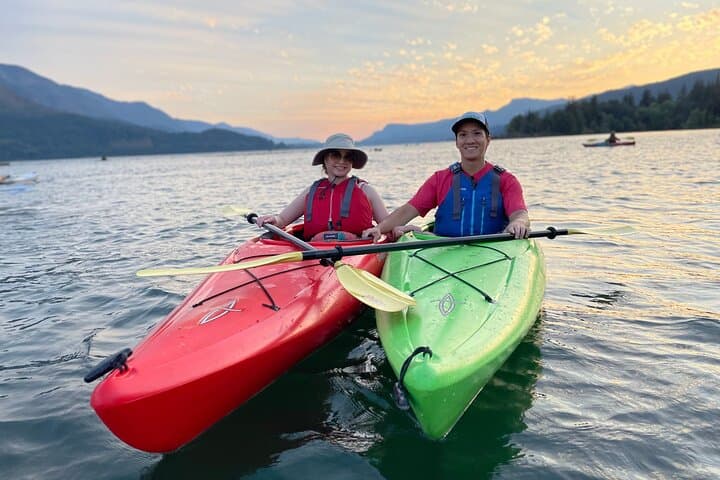
What the day feels like
The sun lowers behind basalt cliffs, and the Columbia River sloughs into a streak of gold. You sit low in a kayak, paddle tip dripping, and the water slides around your hull with an attentive hush. Ospreys wheel above like watchful punctuation marks; a great blue heron, long-necked and indifferent, steps along a rocky shallows and then disappears. For two hours, the Gorge reorients you: the wind that has shaped this canyon for millennia eases, the traffic off the highway becomes a distant hum, and the river dares you to slow down and look closer.
Sunset Kayaking in the Columbia River Gorge with Gorge Paddling Center is a deceptively simple offering — small groups, stable recreational kayaks, and a guide who knows where the eagles roost — but it delivers one of the most complete introductions to this pocket of the Pacific Northwest. The core draw is immediate: a two-hour guided paddle timed to catch the changing light and the moment when the Gorge moves from high-noon glare to a layered, cinematic dusk. The practical rewards are tidy, too — it's family-friendly, accessible to confident beginners, and priced from $75 for a guided outing with gear supplied.
Geology and history are written on the walls here. The Columbia River Gorge is the product of ice-age floods and volcanic fury: columnar basalt cliffs and scoured terraces tell a story of torrents that reshaped the landscape 15,000 years ago. The Gorge has been a transportation corridor for millennia — Native peoples navigated and stewarded these waters long before European explorers arrived — and the river remains a center for both commerce and recreation. In 1986 Congress designated the Columbia River Gorge a National Scenic Area to protect its vistas, cultural sites, and diverse habitats; parts of the river are managed as critical habitat for salmon runs and migratory birds.
This itinerary is intentionally low-impact and high-sensory. Guides point out subtle signatures of the place: the way basalt columns host pockets of wildflowers, the tannin-stained eddies that reveal fish activity, and the summer bonanza of floating blackberries that make a sweet reward for brave hands. Wildlife sightings are regular — bald eagles, osprey, herons and the occasional seal or river otter — and the evening timing increases your odds of seeing birds come into roost.
Practicalities are simple but important. The trip is two hours long and runs as a flatwater paddle on the Columbia's calmer reaches; you should expect gentle currents and light winds most evenings but be prepared for shifting conditions. Guides supply kayaks, PFDs (personal flotation devices), and instruction; come ready to paddle but don’t stress if you’re a novice. The small-group format means individualized attention: guides can help with stroke technique, boat handling, and wildlife identification. For photographers, the sunset light is generous but fleeting; that low angle will reward silhouettes and backlit bird wings, so plan your compositions in advance and keep your camera at the ready.
Timing matters. Summer evenings are warm, often windless, and offer blackberry bushes heavy with fruit for mid-paddle snacking. Shoulder seasons can be quieter and cooler; spring brings migratory birds and swollen rivers, while fall paints the hills in muted golds. The guides are attuned to river microclimates and will pivot launch locations based on wind and water.
Safety and logistics are straightforward. Bring layers: early evening air cools quickly once the sun tips behind the cliffs. Hydrate before you go and bring a small water bottle on the tour in a secure dry bag. Footwear should be secure and quick-drying; sandals with a heel strap or lightweight trail shoes are common choices. If you plan to shoot photos after the sun sets, pack a headlamp or small flashlight for the walk back to the dock.
Why should travelers choose this version of the Gorge? Because it compresses what the region does best into a compact, low-barrier experience: geology, wildlife, human-scale history, and the tactile pleasure of paddling. For families, the timing means kids are frequently calmer on water than on a long drive; for couples, it offers a quiet, cinematic hour to share. For photographers and birders, the light and life converge in ways that feel effortless but are made safe and accessible by knowledgeable guides.
If you go: book early for summer sunsets, arrive 20–30 minutes before launch to sign waivers and receive equipment, and let the guide set the pace. This is not a race; the payoff is in the pauses — a heron frozen on a rock, the bronze shimmer of minnows beneath your hull, the hush as the Gorge takes a breath and holds it.
The tour’s practical details are clear: two hours on the water, instant confirmation available, free cancellation per the operator’s policy, and a per-person price starting at $75. The choice of launch point varies by wind and guide discretion, which is to say you'll be put in the location most likely to deliver a calm, wildlife-rich paddle. Bring patience, a sense of curiosity, and an appetite for blackberries if you’re visiting in midsummer, and this sunset will carve a quiet, vivid memory into your travel ledger.
Trail wisdom
Small choices, better day.
Arrive Early
Plan to arrive 20–30 minutes before launch for gear fitting and a safety briefing.
Dress in Layers
Temperatures can drop quickly after sunset; bring a lightweight insulated layer and a wind shell.
Hydrate and Snack
Bring a water bottle in a dry bag and a small snack — guided tours are active and the mid-paddle blackberry stops are optional treats.
Protect Your Gear
Use a dry bag for phones and cameras; a small leash for your camera or phone is wise for photographers.
Local knowledge
Read the place, not just the route.
Watch for native species including Bald eagle, Great blue heron.
Keep an eye out for wildlife during the transition between areas and habitats. Respect distance guidelines.
The Gorge is managed to protect scenic, cultural, and ecological values; guided groups are encouraged to follow Leave No Trace principles and avoid disturbing nesting birds.
Follow the guide's instructions on size limits, ethical handling, and leave-no-trace practices.
Blackberry flats mid-summer where you can taste wild fruit from the kayak. Quiet coves on the Oregon side ideal for bird watching and sunset silhouettes
Locally recommended viewpoints and quiet spots known best to local operators.
The Columbia River Gorge was home to indigenous peoples for thousands of years and later became a crucial trade and transportation corridor; it was designated a National Scenic Area by Congress in 1986.
Maritime roots and regional tradition shape the waterways and working coasts.
Seasonal guide
Four versions of the same landscape.
Spring
Best forMigratory birdwatching · Cooler paddling conditions
ChallengesHigher water and occasional winds · Unpredictable rain showers
Spring brings active bird migration and greener slopes, but be prepared for cooler evenings and variable water flows.
Summer
Best forCalm sunsets · Blackberry picking
ChallengesBigger crowds on weekends · Late-day wind can pick up occasionally
Summer offers warm evenings and stable weather — the prime season for sunset color and snacking on floating blackberries.
Fall
Best forClear air for photography · Quieter tours
ChallengesShortening daylight · Cooler temperatures after sunset
Fall reduces crowds and sharpens light, making it excellent for photos, though temperatures drop quickly once the sun sets.
Winter
Best forDramatic light on clear days · Solitude
ChallengesColder water and air · Increased chance of storms and strong winds
Winter paddles are quieter and dramatic but require sturdier clothing and a tolerance for brisk conditions; check cancellations in advance.
Pack with intention
What to bring.
Good to know
Common questions.
No; guides provide instruction for beginners, though basic mobility and the ability to sit in a kayak for two hours are required.
Plan the edges
The details that make the day easier.
Congress designated the Columbia River Gorge a National Scenic Area in 1986 to protect its dramatic cliffs, forests, and cultural resources.
After your paddle, head into Hood River for craft beer and riverfront views — local favorites include pFriem Family Brewers and Double Mountain Brewery — or pick up fruit and jams along the Hood River Fruit Loop for a taste of Gorge agriculture.
- Closest airport
- Portland International Airport (PDX) ~1–1.5 hour drive; Typical driving from Hood River to launch: 10–30 minutes; Cell service: generally available near towns but spotty on the water; Permits: None required for guided tours, but park or parking fees may apply.
The Columbia River Gorge contains sensitive habitats and important birding areas — pack out all trash, avoid disturbing shorelines, and use reef-safe sunscreen to protect aquatic life.
Explore by topic
Follow the threads.
Keep exploring
Make the story part of the trip.
 Related story
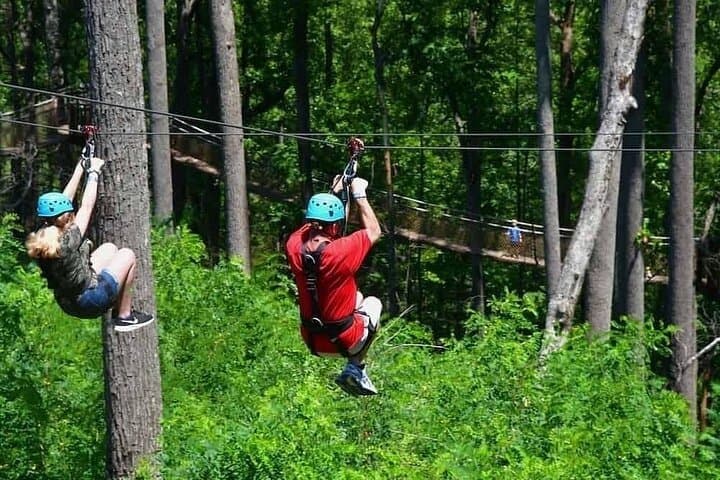
Less than two hours from Nairobi, Kereita Forest pairs hands-on canopy adventure with quiet montane trails and a sobering colonial history—perfect for families, teams, and curious travelers seeking a full-day pulse of nature.
Set out from Bass Harbor for a private, customizable day on Blue Hill Bay — lighthouses, puffins, seals, and the chance to feel Acadia from the water. Small groups, local captains, unforgettable views.
In four hours you can move from shaded canyon ferns to wind-scoured coastal ridgelines, guided by someone who knows where the light—and the hidden views—live. This private half-day hike on the Monterey Peninsula or Big Sur is compact, curated, and perfect for travelers who want depth without a multiday commitment.