
What the day feels like
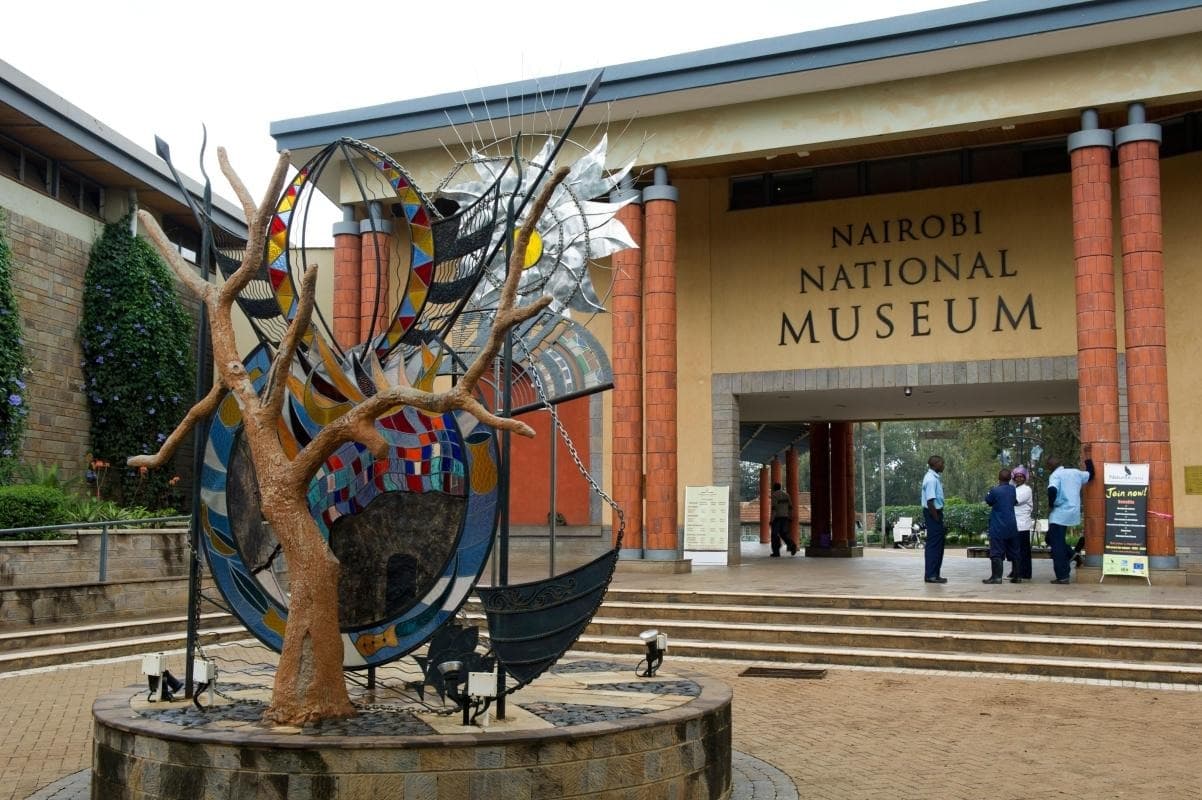
You step off the shaded sidewalk into a sun-washed courtyard where jacaranda blooms spill violet onto the pavement and the city’s pulse softens into the low hum of conversation and distant traffic. The façade of Nairobi National Museum is quietly confident—stone and glass set on Museum Hill, a deliberate perch that looks east toward the Great Rift Valley and west to the high, green rim of the city. Inside, a single path threads through epochs: paleolithic skulls and fossil casts, carved wooden stools from coastal clans, a gallery of contemporary Kenyan art that still smells faintly of paint.
Visiting the museum feels like walking the spine of modern Kenya. Galleries are arranged into four overlapping themes—Nature, Culture, History and Contemporary Art—that capture the country’s stories without flattening them. The Natural History rooms fold geological time into an elegant case: the Rift Valley’s tectonic drama, bones of megafauna, and the paleoanthropological finds that make Kenya central to the human story. It’s not dry science; the fossils have agency here, nudging you to imagine watercourses and savanna, and the people whose survival strategies shaped them.
The museum’s proximity to living conservation projects gives the experience extra momentum. Combine a half-day at the museum with a visit to the nearby Giraffe Centre or a stop at the David Sheldrick Elephant Orphanage, and the themes on display—conservation, cultural continuity, colonial history—snap into three-dimensional clarity. That interplay is why so many of the local tours reference the museum as the centerpiece: options like the Nairobi Airport Layover Tour to Nairobi National Museum or the Nairobi National Museum and Snake Park Guided Tour make it easy to stitch the museum into a compact Nairobi itinerary.
Architecturally modest, the museum gains personality through its collections and its grounds. The botanical garden and small sculpture courtyard provide a breather between galleries; the Snake Park, attached to the museum, offers a different kind of intimacy—crocodiles, terrapins, and a handful of snake species that draw curious, squeamish visitors in equal measure. For travelers who want a cultural crescendo, afternoon combinations that include the Bomas of Kenya cultural dance performances or Karen Blixen Museum sit naturally after a morning immersed in objects and archives.
A short cultural primer matters here: Kenya’s museum collections reflect a long history of trade, migration and colonial encounter. Material culture—beads, dress, musical instruments—maps social lives and trade routes that predate modern borders. Paleontology and archaeology exhibit Kenya’s role in human origins; the Rift Valley is not only a geological scar but a laboratory where bones and artifacts have rewritten textbooks. Later galleries emphasize contemporary arts and the ongoing conversation about identity and globalization in East Africa.
Practicalities are straightforward: allow two to three hours for the core galleries and another hour for the Snake Park; longer if you linger over temporary exhibitions or the museum shop. The auditorium hosts rotating cultural programming—check schedules if your stay aligns with film screenings or talks. Most of the combined city tours that include the museum also add a stop at the Giraffe Centre or Bomas of Kenya, which is an efficient way to experience Nairobi in a day if you’re short on time.
What to expect on the ground: the museum is urban but green, with level paths between exhibits and benches that invite slow reading of labels. Afternoon light from the west makes the Nature halls particularly atmospheric; mornings are cooler and less crowded, and an early start pairs well with airport-layover schedules. Nairobi’s altitude (about 1,700 meters / 5,600 feet) means sun can feel strong and temperatures cool quickly after sunset—bring a light layer.
How to plan it: If your time in Nairobi is constrained, book one of the half-day options such as the Nairobi Airport Layover Tour to Nairobi National Museum or the Nairobi National Museum and Snake Park Guided Tour. For a richer cultural day, choose the Nairobi City Tour, Giraffe, Museum & Bomas Cultural Dance Show, which strings together the museum with conservation sites and a living museum of Kenya’s tribes. If you prefer independent exploration, arrive when the museum opens to avoid tour-group crowds and purchase combined tickets at the desk for the Snake Park.
The emotional arc of visiting the Nairobi National Museum comes from contrast: the hush of curated pasts inside and the vibrant, noisy city just beyond the gates. The objects are not relics in isolation; they sit in conversation with living communities and conservation work across Kenya. For travelers who want context before heading into the parks—or who have a layover and want a single, dense encounter with Kenyan culture and natural history—the museum is a compact, clear-eyed primer.
Simple practical tips will push the day from good to satisfying: arrive early, pair the museum with a Giraffe Centre visit or a Bomas performance, and budget time for the Snake Park. Bring a camera, but more importantly bring curiosity: the museum rewards attention to detail—the graffiti on an old colonial map, the tool marks on a grindstone, the face of a guardian in a carved figure. Those small things turn a visit into a textured sense of place.
Trail wisdom
Small choices, better day.
Visit early
The museum is busiest mid- to late-morning—arrive at opening for cooler temperatures and quieter galleries.
Combine nearby sites
Pair the museum with the Giraffe Centre, David Sheldrick Elephant Orphanage, or Bomas of Kenya for a full-day cultural and conservation loop.
Buy combined tickets
If you plan to visit the adjoining Snake Park, purchase a combined ticket at the museum desk to save time.
Altitude awareness
Nairobi sits at ~1,700m—drink water, wear sunscreen, and bring a light jacket for cooler evenings.
Local knowledge
Read the place, not just the route.
Watch for native species including Rothschild’s giraffe (nearby at Giraffe Centre), African tortoise and Nile crocodile at the Snake Park.
Keep an eye out for wildlife during the transition between areas and habitats. Respect distance guidelines.
The museum partners with local conservation organizations and nearby sanctuaries; visiting supports educational programs and public awareness of wildlife protection.
Follow the guide's instructions on size limits, ethical handling, and leave-no-trace practices.
The museum’s sculpture garden—quiet benches and public art away from crowds. Temporary contemporary exhibitions often showcase local artists and are worth staying for
Locally recommended viewpoints and quiet spots known best to local operators.
Nairobi National Museum curates Kenya’s natural and cultural history, linking paleontological finds from the Rift Valley to living cultural traditions across the country.
Maritime roots and regional tradition shape the waterways and working coasts.
Seasonal guide
Four versions of the same landscape.
Spring
Best forfewer tourists · mild temperatures
Challengesshort rains (March–May) · possible wet sidewalks
Expect sporadic short rains; galleries are sheltered but plan for wet transport. Mornings are pleasant and crowd levels are moderate.
Summer
Best fordry sightseeing · outdoor photography
Challengeshigher tourist numbers · strong daytime sun
June–October are drier months—ideal for pairing the museum with outdoor conservation sites and game drives outside the city.
Fall
Best forcultural events · comfortable temperatures
Challengesintermittent rains in some years · variable air quality
Early fall keeps pleasant weather and can coincide with local cultural programming at the auditorium—check event schedules.
Winter
Best forquieter galleries · clear skyline views
Challengescooler nights · city fog some mornings
Nairobi’s ‘winter’ is mild but evenings are cool—layering is key and the museum is a warm refuge for shorter daylight hours.
Pack with intention
What to bring.
Good to know
Common questions.
Plan 2–3 hours for the main galleries and an additional hour if you want to visit the adjoining Snake Park; combine with nearby sites for a full day.
Plan the edges
The details that make the day easier.
The National Museums of Kenya collections include key paleoanthropological material and exhibits related to the Turkana Boy (KNM-WT 15000), a landmark find in human evolution research.
Pair your visit with local flavors—try a roadside nyama choma (grilled meat), a cup of Kenyan chai, and shop for beaded Utamaduni crafts in nearby markets to take home handcrafted souvenirs.
- Location
- Museum Hill, Nairobi • Typical visit: 2–4 hours • Nearby stops: Giraffe Centre, David Sheldrick, Bomas of Kenya • Best time: early morning • Accessibility: mostly level indoor routes.
Support conservation by visiting adjacent sanctuaries and choosing tour operators that contribute to local wildlife and community programs; the museum promotes educational outreach and sustainable collection care.
Explore by topic
Follow the threads.
Keep exploring
Make the story part of the trip.
Set out from Bass Harbor for a private, customizable day on Blue Hill Bay — lighthouses, puffins, seals, and the chance to feel Acadia from the water. Small groups, local captains, unforgettable views.
In four hours you can move from shaded canyon ferns to wind-scoured coastal ridgelines, guided by someone who knows where the light—and the hidden views—live. This private half-day hike on the Monterey Peninsula or Big Sur is compact, curated, and perfect for travelers who want depth without a multiday commitment.
 Related story
Beneath a sky of shifting light, Skaftafell’s ice reads like a map of time. This three-hour guided glacier hike mixes technical instruction with geology and culture: compact, safe, and unforgettable.