
What the day feels like
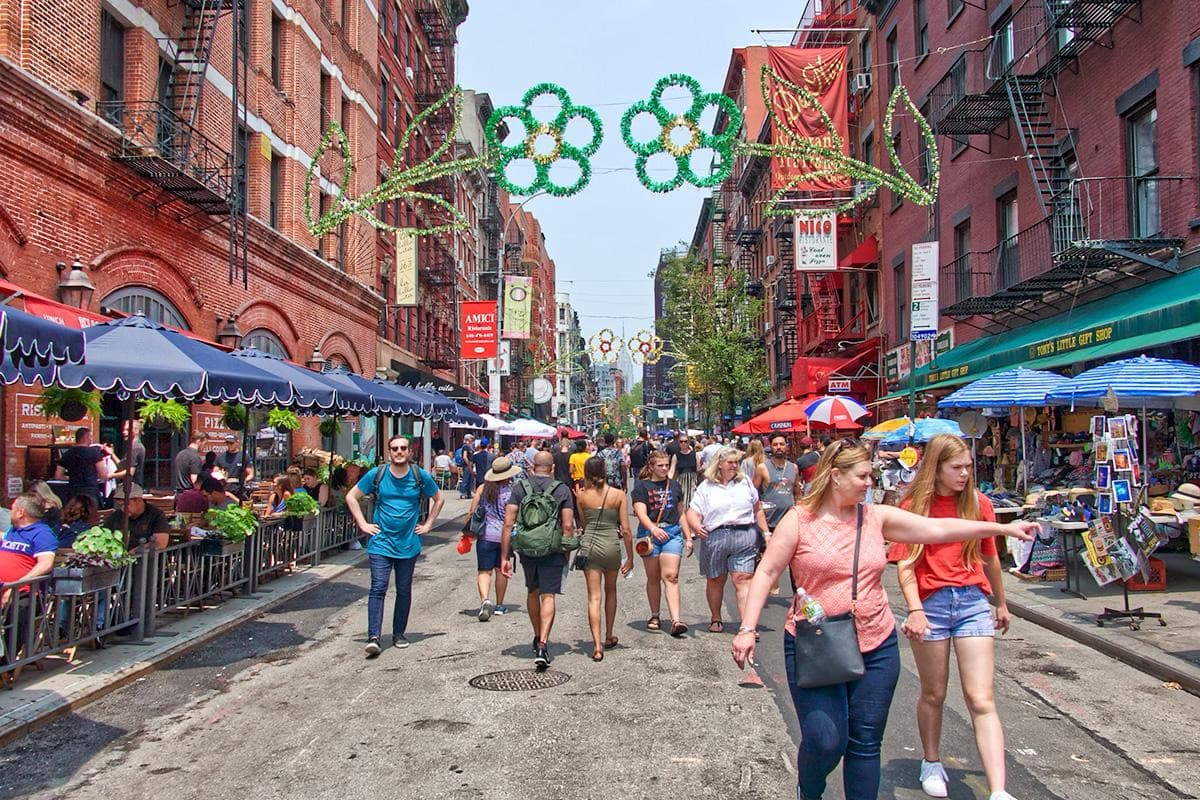
You enter Little Italy the way you enter memory — through senses first. On Mulberry Street, the smell of espresso and baking ricotta threads through morning air; a deli owner flips a metal sign, sending a little clatter that feels like punctuation. Cobblestones remind you to watch your step while storefronts lean together like old neighbors sharing gossip. It’s small — a single sun-warmed block now, a crowded, living postcard — but it contains the layered lives of arrival and reinvention that made New York.
The neighborhood's story is one of migration and proximity. At the turn of the 20th century, waves of Italian immigrants landed in Lower Manhattan and shaped businesses, architecture, and family life. Nearby Five Points and the adjacent Lower East Side were mosaics of different immigrant enclaves; Little Italy grew into a distinct pocket of Catholic processions, bakeries, and social clubs. Today those historic threads survive in snug red-checkered restaurants, century-old bakeries and the annual Feast of San Gennaro — a tradition that stitches the neighborhood to its southern Italian past each September.
Walk it with purpose and you’ll notice the geology of the place: narrow blocks hemmed between SoHo’s cast-iron facades to the west and the unfolding labyrinth of Chinatown to the east. The neighborhood has shrunk as commerce and population patterns shifted, making each remaining storefront feel more precious. Tour guides point out a plaque here, a former speakeasy doorway there; the products on offer — walking tours, food tastings, history-focused walks and prohibition pub crawls — reflect a neighborhood that’s both a living community and a curated visitor experience.
The best way to get inside Little Italy is on foot, and there are several curated ways to do that. A two-hour Italian Food Tour of New York condenses a century of culinary practice into a handful of tastings — cannoli, espresso, an old-school deli sandwich — with stops in bakeries and corner stores that have served the same families for generations. For a broader context, the “3 New York Neighborhoods Semi-Private Tour: SoHo, Chinatown and Little Italy” pairs Mulberry Street with SoHo’s cast-iron grandeur and Chinatown’s bustling markets, giving a compact, three-neighborhood primer on how streets, buildings, and food tell New York’s history.
If you prefer a docent’s sanction, the Little Italy - Official Historic District Tour offers an endorsed narrative threaded with local voices. For a nocturnal spin, the Little Italy Prohibition Pub Crawl walks the neighborhood’s underworld past: speakeasies, bootleggers and the figures — at times the mob stars — who came to define parts of the public imagination. Nighttime here is different: the lights throw long contrasts and the stories feel theatrical, but practical nocturnes — guided pedicab tours or small private night tours — keep the streets navigable and the storytelling tight.
Practicalities are simple but essential. Little Italy’s walkways are short but uneven; sturdy footwear matters more than style. Bring cash; many older bakeries and smaller delis still prefer it. Timing shapes the experience: mornings hum with bakery rituals, afternoons swell with tourists, and early evenings are when restaurants put out their best energy. If you want to witness the neighborhood at its most exuberant, plan for mid-September to catch the Feast of San Gennaro, when the block spills into stalls, music and processions.
Safety and logistics are deliberately low-friction: most tours are 2–3 hours, cover less than two miles of walking, and require only basic mobility. Book popular food and walking tours in advance, especially on weekends and during the festival. If you have mobility constraints, opt for private pedicab or private guided tours that can tailor pacing and stops.
Beyond food and history, Little Italy is a case study in urban preservation and change. The enclave’s footprint has contracted over the decades as Chinatown expanded; what remains is fiercely curated by families and small businesses who still treat the street as much as a hometown as a tourist draw. That tension is worth knowing when you visit: approach with curiosity and respect, support independent shops and be mindful of crowds in narrow streets.
For photographers and people who love a slow walk, Little Italy rewards patience. The best frames are not the big facades but small encounters: a bakery window lined with sfogliatelle, a neon sign over a narrow stair, the eye contact of an old proprietor dusting flour off his counter. Bring a mid-length lens and shoot wide and tight — both perspectives tell the neighborhood’s story.
What Little Italy promises is less a grand vista than an intimate, sensory stroll through places where food is memory, where stories are traded across counters, and where architecture and occupation hold a century of arrivals. Join a food tour to taste the lineage, a walking tour to hear the stories, and a night crawl if you want the darker chapters. Walk slowly — the cobbles, the espresso, the history all demand it — and you’ll leave with something more than a full stomach: a clearer sense of how neighborhoods keep their past alive while making room for the present.
Trail wisdom
Small choices, better day.
Wear supportive shoes
Mulberry Street still has cobblestones and uneven sidewalks — choose footwear with good support to avoid sprains.
Book popular tours ahead
Food tours and historic walks sell out on weekends and during the Feast of San Gennaro in September.
Carry small bills
Many longstanding bakeries and delis prefer cash for quick purchases and tips.
Mind narrow sidewalk etiquette
Streets are compact; step to the side for processions and allow room for locals and deliveries.
Local knowledge
Read the place, not just the route.
Watch for native species including pigeons, house sparrows.
Keep an eye out for wildlife during the transition between areas and habitats. Respect distance guidelines.
Support family-run shops and reduce food-waste by ordering what you’ll eat; use public transit and reusable containers to limit single-use waste.
Follow the guide's instructions on size limits, ethical handling, and leave-no-trace practices.
Small bakeries on Hester and Grand Streets for quiet morning pastries. Sidewalk courtyards and alleys off Mulberry where family-run businesses work behind storefronts
Locally recommended viewpoints and quiet spots known best to local operators.
Little Italy grew from late-19th and early-20th-century Italian immigration and was once a much larger enclave before neighboring Chinatown expanded.
Maritime roots and regional tradition shape the waterways and working coasts.
Seasonal guide
Four versions of the same landscape.
Spring
Best forblooming street trees · lighter crowds on weekdays
Challengesrain showers · cool evenings
Spring softens Lower Manhattan with milder temperatures and fewer festival crowds — good for leisurely walks and bakery hopping.
Summer
Best forlonger evening hours · al fresco dining
Challengesheat and humidity · peak tourist crowds
Summer fills the block with energy and outdoor dining, but expect crowds and warm afternoons — hydrate and plan early starts.
Fall
Best forFeast of San Gennaro · crisp walking weather
Challengeshigh visitor numbers during festivities · limited restaurant seating
Fall is ideal for food and culture, especially mid-September for San Gennaro — book tours and tables in advance.
Winter
Best forcozy red-sauce dinners · quieter streets
Challengescold, occasional snow · reduced outdoor seating
Winter brings quieter sidewalks and hearty meals, but dress warmly for evenings and shorter daylight hours.
Pack with intention
What to bring.
Good to know
Common questions.
Most food tours run 2–3 hours and cover less than two miles, with multiple tastings included.
Plan the edges
The details that make the day easier.
The Feast of San Gennaro, a defining annual event for Little Italy, began in 1926 and celebrates the patron saint of Naples.
Expect espresso counters, red-sauce restaurants, century-old bakeries and family-run delis where recipes are passed down through generations — this is neighborhood food, not haute cuisine.
- Where
- Mulberry St (Lower Manhattan). Getting there: Subway to Canal
- Grand or Spring St. Typical visit
- 2–3 hours. Expect cobblestones, narrow sidewalks, and small storefronts. Language: English
Support independent vendors, bring reusable bottles and bags, and opt for small-group walking tours that minimize impact on local streets.
Explore by topic
Follow the threads.
Keep exploring
Make the story part of the trip.
 Related story
Less than two hours from Nairobi, Kereita Forest pairs hands-on canopy adventure with quiet montane trails and a sobering colonial history—perfect for families, teams, and curious travelers seeking a full-day pulse of nature.
Set out from Bass Harbor for a private, customizable day on Blue Hill Bay — lighthouses, puffins, seals, and the chance to feel Acadia from the water. Small groups, local captains, unforgettable views.
In four hours you can move from shaded canyon ferns to wind-scoured coastal ridgelines, guided by someone who knows where the light—and the hidden views—live. This private half-day hike on the Monterey Peninsula or Big Sur is compact, curated, and perfect for travelers who want depth without a multiday commitment.