
What the day feels like
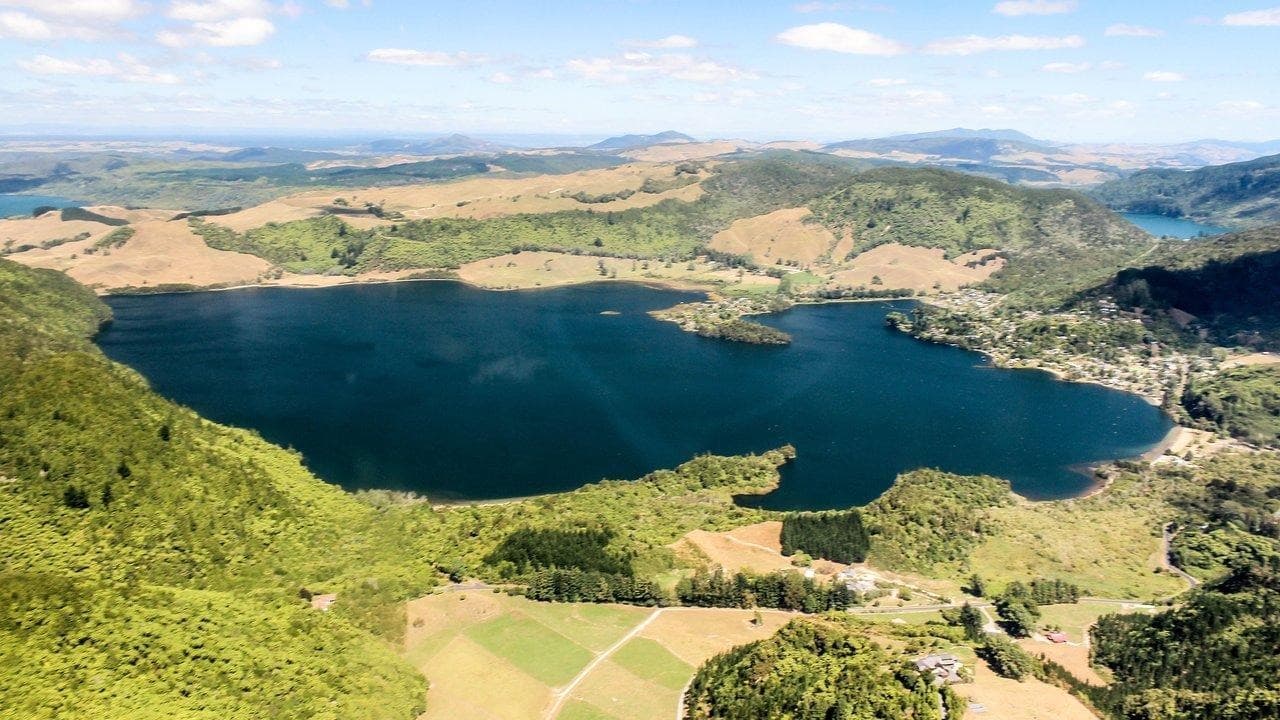
The first paddle stroke parts glass. On Lake Rotoiti at dusk the water answers like a held breath—perfectly still, reflecting the dark silhouette of pine and tangled beech, the last of the day’s light sliding down to the Ohau Channel. A small band of kayakers moves in single file, headlamps dimmed so their reflections don’t steal the sky. Ahead, the shoreline breathes steam: a seam of geothermal heat where natural springs spill warm water into the otherwise crisp lake. Later, after a simple BBQ on volcanic-black sand, the group slips into the water and the cave mouths along the shore turn into pinprick constellations—glowworms—hung like bioluminescent lanterns under a ceiling of limestone.
Lake Rotoiti doesn’t announce itself like a national park marquee. It’s quieter, more intimate than the social hum of central Rotorua. That hush is part of the appeal: this is water that invites exploration, whether you come by kayak, jet boat or on a guided circuit of the Rotorua lakes. Operators run daytime scenic and evening glowworm kayak tours that thread the Ohau Channel and land at Manupirua/ Lake Rotoiti Springs—geothermal pools that are only accessible by water and feel like something conjured for secret-soak enthusiasts.
Geology and culture are braided here. Rotoiti sits in the Taupo Volcanic Zone; its shoreline is a patchwork of rhyolite bluffs, thermal vents and peat-lined bays. Māori have lived on and around these lakes for centuries. The land and waterway network provided food, travel and a cultural landscape woven into whakapapa (genealogy) and tikanga (custom). Today, local iwi and conservation groups collaborate to protect the lake’s clarity and the species that depend on it—koura (freshwater crayfish) still twitch near submerged logs, and native birds call from the surrounding forest.
Getting out on the water is an ideal way to read this landscape. Daytime scenic kayak tours are relaxed—no prior experience required—and guide you through long, reflective paddling stretches with stops for swims and hot-spring soaks. Evening kayak tours switch the soundtrack: the pipe-like call of a tūī, the whisper of paddles, and the sticky-sweet glow of bioluminescence inside caves. For a different tempo, the Katoa Jet Boat ride surges across Lake Rotorua and through the Ohau Channel into Rotoiti, combining adrenaline with a boat landing at Manupirua Hot Springs for a restorative soak. If you prefer to survey more ground, “Explore The Lakes” tours thread Hamurana Springs, Okere Falls and the Blue and Green Lakes into a half-day driver-guided loop that lets you stretch your legs in native forest and photograph striking geologic contrasts.
If your appetite is for speed on white water, the Okere River — the outlet of Lake Rotoiti — stages a different kind of conversation between person and water. White-water sledging here is intimate and physical: you ride the current on a hydrosled, finned feet propelling you through rapids under the guidance of trained operators. It’s a brilliant way to pair the placid hours on the lake with a front-row seat to New Zealand’s raw river energy.
Practicalities are straightforward but worth planning. Kayak trips typically run three to five hours; evening tours add a BBQ and soak and stretch toward four hours. Small-group operations limit paddlers to preserve a quiet, respectful experience at springs and glowworm sites. Expect mid-summer temperatures to keep the paddling pleasant; evenings require a warm midlayer because the lake pulls the heat out of the air quickly. There are no official trails where you’ll be paddling—navigation skills are basic and handled by your guide—but a competent swimmer and basic fitness make the tours easier and more enjoyable.
Safety and stewardship matter here. The springs are fragile ecosystems: avoid soaps or sunscreens that can pollute thermal pools, and follow your guide’s lead when entering protected areas. Keep a respectful distance from nesting birds and report algae blooms or unusual murkiness to local control groups—it helps maintain the lake for everyone.
How to build a day: start with an “Explore The Lakes” half-day tour for context—Hamurana Springs’ crystalline flow and Okere Falls’ native bush set the stage. In the afternoon, join a scenic kayak trip across Rotoiti, finishing at Manupirua for a warm soak. For a single, unforgettable night, book an evening kayak tour with a BBQ: paddling under stars then slipping into geothermal warmth while glowworms light nearby caves feels like a rare, analog magic trick.
Gear and timing: a dry bag, a windproof layer, and good footwear that can get wet will keep you comfortable. If you’re prone to cold, bring a neoprene top or rent a wetsuit from operators. Book well ahead in high season—these small-group departures can fill. If you want fewer crowds, aim for shoulder months (spring or autumn), when the light-softened days and migrating birdlife add another layer to the experience.
Lake Rotoiti’s charm is understated: it asks for patience rather than performance. There are no blockbuster peaks or long alpine approaches here—just water that mirrors the sky, springs that steam like quiet boilers, and nights where cave mouths hold a galaxy of glowworms. For a traveler who prefers a tactile, sensory experience—paddling through a mirror, soaking in a hidden hot pool, standing in a cave lit by living stars—Rotoiti delivers. It’s an invitation to slow down, to listen to water and leave the echo cleaner than you found it.
Trail wisdom
Small choices, better day.
Book evening tours early
Glowworm and hot-spring kayak tours run in small groups and sell out in high season—reserve at least a week ahead.
Bring a dry bag
Protect phone, camera and spare layers from splashes; many operators provide hull-side storage, but a dry bag keeps things truly dry.
Layer for temperature swings
Even summer evenings on the lake get chilly—pack a windproof shell and an insulating midlayer for post-paddle soaks.
Respect thermal features
Avoid lotions or soaps before entering natural hot springs to prevent contamination; follow guides’ instructions at geothermal sites.
Local knowledge
Read the place, not just the route.
Watch for native species including Koura (freshwater crayfish), Tūī and pīwakawaka (fantail) in the shoreline forest.
Keep an eye out for wildlife during the transition between areas and habitats. Respect distance guidelines.
Local trusts and councils run water quality monitoring and pest-control programs; visitors are urged to follow biosecurity steps and avoid introducing weeds or contaminants to the lake.
Follow the guide's instructions on size limits, ethical handling, and leave-no-trace practices.
Manupirua (Lake Rotoiti) Hot Springs—accessible only by water for a secluded soak. Hamurana Springs—crystalline freshwater spring and a short native-forest walk for clear-water swimming
Locally recommended viewpoints and quiet spots known best to local operators.
The Rotorua lakes have been important to local Māori iwi for centuries, used for travel, food gathering and cultural practice; the lakes are woven into local whakapapa and mātauranga (knowledge).
Maritime roots and regional tradition shape the waterways and working coasts.
Seasonal guide
Four versions of the same landscape.
Spring
Best forWildflower displays along the shore · Fewer crowds on evening tours
ChallengesUnpredictable rain · Chilly nights
Spring brings flowering shrubs and warming days—great for quieter paddles, but come prepared for changeable weather.
Summer
Best forWarm paddling and swimming · Having long, light evenings for glowworm tours
ChallengesHigher demand for tours · More midges near still water at dawn/dusk
Summer is peak season: warm water and long days make it ideal for soaking and night paddles, but book early.
Fall
Best forCrisp, clear light for photography · Migratory birdwatching along bays
ChallengesCooling water temperatures · Shorter daylight hours
Autumn offers crisp air and muted colors—perfect for photography and reflective paddles with smaller groups.
Winter
Best forQuiet, private hot-spring soaks · Moody, steam-flecked landscapes
ChallengesCold air and water temperatures · Fewer daily tour departures
Winter is dramatic and intimate—bring robust layers and expect limited tour schedules; the hot pools feel exceptional when the air is cold.
Pack with intention
What to bring.
Good to know
Common questions.
No—most guided daytime and evening kayak tours welcome beginners; guides give safety briefings and basic stroke instruction before launch.
Plan the edges
The details that make the day easier.
Lake Rotoiti connects to Lake Rotorua via the Ohau Channel, and Manupirua (Lake Rotoiti) Hot Springs are only accessible by boat.
The Rotorua region blends Māori cultural centers, geothermal cafés serving locally smoked trout, and lakeside taverns—try a hangi-influenced meal or a simple trout fillet fresh from the lake after a day on the water.
- Nearest hub
- Rotorua (20–40 min drive). Book guided kayak or jet-boat tours in advance. Bring layers and a dry bag; operators provide PFDs and safety gear. Many tours offer hotel pickup.
Choose small-group operators who follow biosecurity cleaning protocols, avoid chemical sunscreen before hot-spring soaks, and carry out all non-biodegradable waste to protect lake health.
Explore by topic
Follow the threads.
Keep exploring
Make the story part of the trip.
 Related story
Less than two hours from Nairobi, Kereita Forest pairs hands-on canopy adventure with quiet montane trails and a sobering colonial history—perfect for families, teams, and curious travelers seeking a full-day pulse of nature.
Set out from Bass Harbor for a private, customizable day on Blue Hill Bay — lighthouses, puffins, seals, and the chance to feel Acadia from the water. Small groups, local captains, unforgettable views.
In four hours you can move from shaded canyon ferns to wind-scoured coastal ridgelines, guided by someone who knows where the light—and the hidden views—live. This private half-day hike on the Monterey Peninsula or Big Sur is compact, curated, and perfect for travelers who want depth without a multiday commitment.