
What the day feels like
The speedboat yawed and then sliced—the Andaman Sea huffing salt and light off the bow—until the low silhouette of islands rose like dark notes on the horizon. You know you’re somewhere special when the ocean changes color before your eyes: from deep indigo to a translucent turquoise, the kind that seems to invite you by name. Koh Haa, the cluster of five small islands south of Ko Lanta, announces itself with a ring of reef and a sheltered blue lagoon that makes even brief visits feel like a minor pilgrimage.
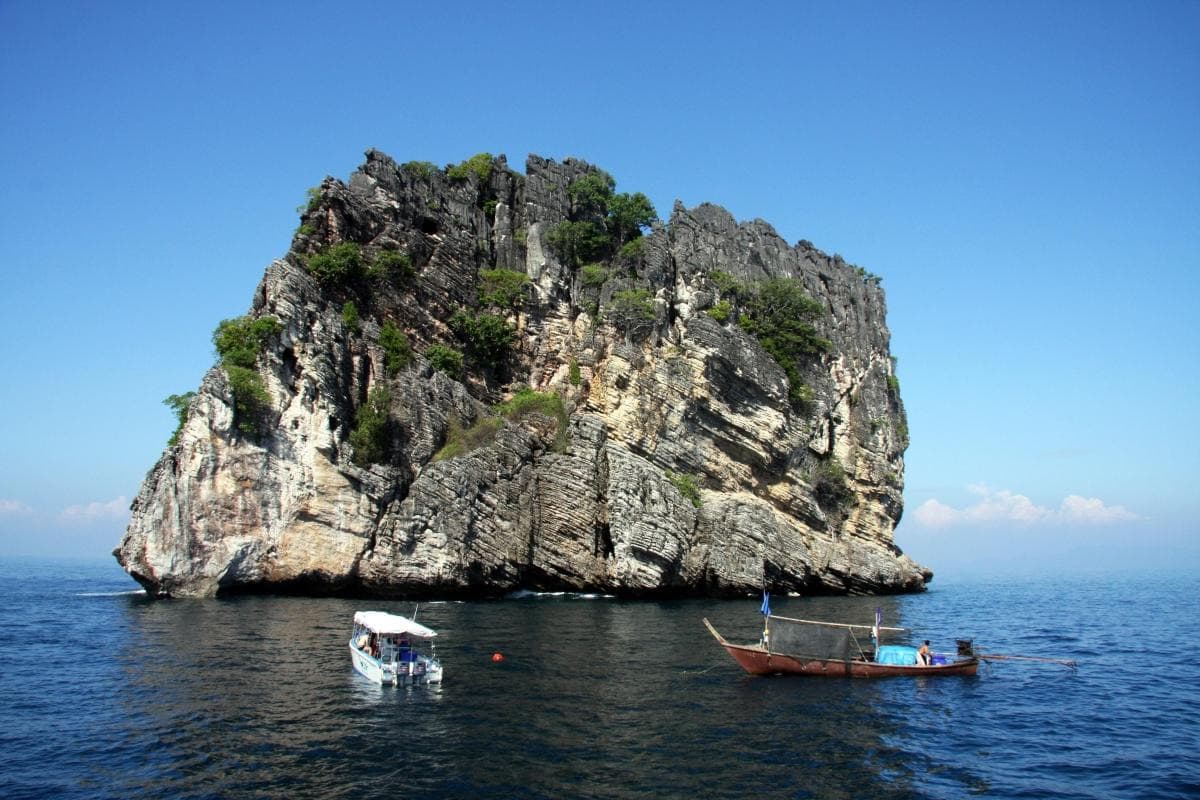
The first step off the boat is an awkward, luminous half-step: water warming up to ankle then knee then waist as a shoal of damselfish parts like an audience. The lagoon at the heart of Koh Haa is where the archipelago shows its quiet magic—reefs draped in soft coral, crowded with neon parrotfish and anemones that sway with a predictable dignity. Reef and limestone meet here in a compact drama: towering karst faces, remnants of ancient seabeds pushed up by tectonic impulses, create sheltered pockets of emerald water and small sandy beaches rimmed by palms.
The islands are a brief, brilliant convergence of geology and biology. Koh Haa is part of Mu Ko Lanta National Park and shares the Andaman Sea’s geology—limestone karsts and low granite reefs—while the marine life is an equally compact attraction: green turtles cruising like deliberate ghosts, cleaner wrasse hungrily tidying reef visitors, and, in season, pelagic visitors like reef sharks and the occasional whale shark slicing the blue beyond. Local guides will tell you about the passages between the islets where currents bring the richest coral and the brightest fish.
Koh Haa’s popularity is owed less to beaches than to water clarity and snorkeling. Day trips from Ko Lanta typically leave early—pickups around 7–8 a.m., a one-hour speedboat ride depending on sea state—and return mid-afternoon. Operators often combine Koh Haa with Koh Rok on full-day itineraries; private charters let you linger longer in the lagoon and seek out quieter coves. Certified divers can arrange multi-dive safaris that push deeper into channels where sea fans and bommies make dramatic vertical gardens.
The human story around Koh Haa is oceanic and understated. Ko Lanta’s coastal communities are small and largely dependent on fisheries and tourism; the islands themselves are uninhabited, known to locals as a seasonal rest stop and a place of abundance. The national park designation helps protect the reefs, and many tour operators here are locally based, combining jobs at sea with a deep, practical knowledge of tides and seasonal winds. There’s a faint Muslim cultural marker on Ko Lanta—mosques, halal eateries, and a warm hospitality that colors the pre- and post-boat hours.
Practicalities matter here: the best months for calm seas and maximum visibility are November through April—peak clarity often arrives January through March. The monsoon (May–October) makes crossings rougher, and operators scale back. Typical day trips include two to three snorkel sites, a beach lunch on Koh Rok or Koh Haa, and equipment: most tours provide masks, fins, snorkels, and life jackets. Marine park fees may be included but check in advance.
A few planning notes to save the day: reef-safe sunscreen is not just etiquette but a simple conservation move—zinc-based sunscreens are friendlier to coral. Bring a lightweight windbreaker for the boat ride; spray and sun can both be unforgiving. If you’re prone to seasickness, ginger tablets and a simple patch the night before will make the difference between a great trip and a short, green memory. For divers, remember the standard surface interval guidance if you plan to free-dive between scuba sessions.
Koh Haa rewards a curiosity that’s equal parts patience and focus. Snorkel slowly along a reef edge and you’ll notice the micro-theater: a school of bar jacks flash like a living silver sheet, a moray eel peers from a crevice, and tiny pipefish hitch a ride in the seagrass. On a quiet day the limestone cliffs feel almost conversational—the wind chiding you to stay awhile, the lagoon nudging you into another swim.
Why go? Koh Haa is a concentrated taste of the Andaman’s best: high visibility snorkeling, accessible day-trip logistics from Ko Lanta, fewer crowds than the better-known Similans, and the option for private charters if you want to sculpt your own horizon. For travelers seeking an active beach day with a marine focus—snorkeling, short dives, and island-hopping—Koh Haa makes a strong case. It isn’t about trophy beaches or nightlife; it’s about water clarity, coral variety, and the understated pulse of island life.
If you go, go with care: follow your guide’s instructions, keep a respectful distance from turtles and reef life, use reef-safe products, and consider supporting a local operator that contributes to the park’s conservation work. The islands are small and the reefs finite; the best way to ensure you can return is to leave them as you found them.
When the boat turns back toward Ko Lanta at day’s end, the islands become silhouettes again, ordinary at a distance. But you come away with the impression of having been somewhere that moves in small, meaningful ways—the lagoon breathing, the coral busy as a city, the sea offering a quiet generosity that demands only sensible stewardship in return.
Trail wisdom
Small choices, better day.
Bring reef-safe sunscreen
Use mineral (zinc-oxide) sunscreen and apply at least 20 minutes before entering the water to protect coral and your skin.
Time your trip for morning calm
Depart early—boats usually leave 7–8 a.m.—for smoother crossings and clearer water during mid-morning snorkels.
Rent or bring a snug mask
A well-fitting snorkel mask reduces leaks and fog; consider bringing your own for the best fit.
Respect marine park rules
Don’t touch coral or feed fish; local guides enforce rules that keep reefs healthy.
Local knowledge
Read the place, not just the route.
Watch for native species including Green sea turtles, Parrotfish and schooling jacks (often visible in lagoon channels).
Keep an eye out for wildlife during the transition between areas and habitats. Respect distance guidelines.
The islands are protected under park regulations—visitors should use reef-safe sunscreen, avoid anchoring on coral, and follow local guide instructions to minimize impact.
Follow the guide's instructions on size limits, ethical handling, and leave-no-trace practices.
The inner lagoon of Koh Haa—calm waters ideal for macro snorkeling. A small, sheltered western cove on Koh Rok used by local fishermen for midday naps
Locally recommended viewpoints and quiet spots known best to local operators.
Koh Haa and nearby islands are part of Mu Ko Lanta National Park; the archipelago has long been used by local fishermen and was later protected to conserve reef ecosystems.
Maritime roots and regional tradition shape the waterways and working coasts.
Seasonal guide
Four versions of the same landscape.
Spring
Best forcalm seas · excellent visibility · whale shark sightings (seasonal)
Challengesincreasing temperatures · occasional afternoon showers
Late spring is transitionary—still good for snorkeling early in the day, but check weather as winds start to pick up toward May.
Summer
Best foroff-season solitude if accessible · lower prices · green season spectacle
Challengesmonsoon rains · rough seas · reduced visibility
Monsoon months (May–October) bring rougher conditions and many operators reduce services; only experienced travelers should attempt crossings.
Fall
Best forwarming seas · fewer crowds · muted early sunshine
Challengesresidual swell · variable visibility
Early fall can still feel the tail of monsoon; by late fall conditions stabilize and tours resume reliably.
Winter
Best forpeak visibility · calm seas · comfortable temperatures
Challengeshigh season crowds · higher prices
November–April is the ideal window: dry weather, calm water, and excellent underwater visibility, with the busiest bookings in Dec–Feb.
Pack with intention
What to bring.
Good to know
Common questions.
Most speedboat day trips take approximately 45–75 minutes one way, depending on the pier of departure and sea conditions.
Plan the edges
The details that make the day easier.
Koh Haa literally means 'five islands' in Thai—these five islets form a lagoon popular for snorkeling and are within Mu Ko Lanta National Park.
Ko Lanta’s coastal culture blends Muslim fishing villages and southern-Thai cuisine—after a day on the water try grilled seafood at Saladan’s dusk market and sample khao yum (southern rice salad) or spicy tom yum.
- Departures
- 7–8 a.m. from Leam Kruad or local piers; Duration: full day (6–9 hours); What’s included: transfers often, snorkel gear, lunch; Fees: marine park entry may apply; Best months: Nov–Apr.
Choose operators that practice reef-safe anchoring, limit group sizes, and educate guests about coral protection; opt for reef-safe sunscreen and avoid touching or standing on coral.
Explore by topic
Follow the threads.
Keep exploring
Make the story part of the trip.
 Related story
Less than two hours from Nairobi, Kereita Forest pairs hands-on canopy adventure with quiet montane trails and a sobering colonial history—perfect for families, teams, and curious travelers seeking a full-day pulse of nature.
Set out from Bass Harbor for a private, customizable day on Blue Hill Bay — lighthouses, puffins, seals, and the chance to feel Acadia from the water. Small groups, local captains, unforgettable views.
In four hours you can move from shaded canyon ferns to wind-scoured coastal ridgelines, guided by someone who knows where the light—and the hidden views—live. This private half-day hike on the Monterey Peninsula or Big Sur is compact, curated, and perfect for travelers who want depth without a multiday commitment.