
What the day feels like
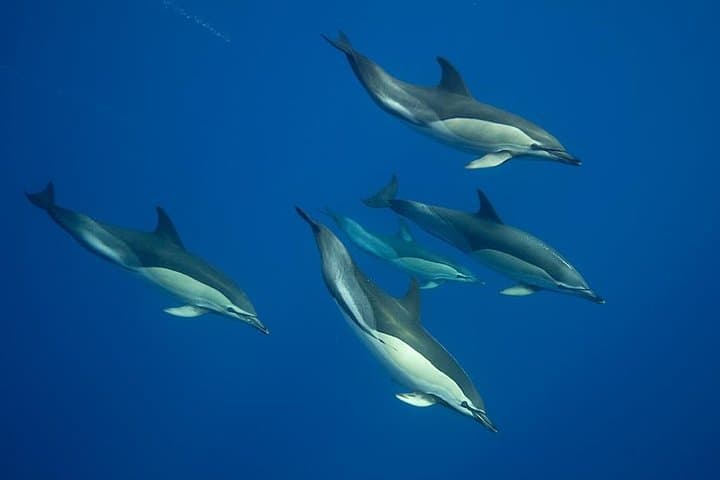
The boat peels away from Ponta Delgada and the island’s slate roofs shrink into a postcard. The harbor exhales a salt-scented breeze; small fishing boats bob like nodding heads. By the time the shoreline is a thin green ribbon, the sea has already changed its mood — a bright, quickening blue that seems to wait for something to arrive. Then the first spray appears, a punctuation mark against the horizon. A dolphin breaks the surface as if testing the air, then another, and soon the water offers a choreography: flashing backs, playful arcs, a pod deciding whether to invite you into its world.
This is not a theme-park encounter. With Picos de Aventura’s biologist-led swims, you go to where dolphins choose to be — and the animals choose whether to join you. For about two and a half hours (150 minutes), small groups glide from boat to sea guided by people who read the animals like open books. The dolphins aren’t tamed; they are curious ambassadors of the Azorean ocean, arriving and leaving on their terms while the crew maintains a low, respectful profile.
There’s a geology lesson beneath this theater. The Azores are volcano-born — an archipelago heaved up where tectonic plates meet — and São Miguel’s underwater shelves and currents create pockets of food that draw cetaceans. Centuries of sailors have known the waters as rich with life; in the 20th century, whaling left its mark, and then the islands pivoted toward protection and science. Today, marine biologists patrol the same channels once used by whalers, using knowledge and regulation to favor observation over exploitation.
Culture matters here, too. The Azorean relationship to the sea is practical and reverent: local fishermen still mend nets while conservation-minded operators build livelihoods on respectful wildlife encounters. Meet a guide and you’ll probably hear about the islands’ shift from whaling to whale-and-dolphin watching — an arc that transformed both the local economy and how visitors witness ocean life.
On the water the drama is immediate and sensorial. Waves gesture and the current tests you; a pod of common dolphins may dart “like silver coins” (as guides often say), while bottlenose dolphins might linger at the edge of the boat’s wake, inspecting gloved hands and snorkel masks. The biologists keep the script simple: keep your distance when asked, move slowly, remove bright jewelry, and let the animals set the pace. When a dolphin decides to swim near, the moment is shockingly intimate — a dark eye, a rapid breath, a tilt of body that says, with no human words needed, I see you.
Practicality is woven into the experience. Tours run about 150 minutes; bookable online for around $180 per person; small-group limits and instant confirmation make it easy to plan. Operators typically launch from Ponta Delgada harbor (check your confirmation for the exact meeting point), and the boat ride into prime dolphin territory is part of the day: listen to the biologist’s briefings on behavior, safety, and how to move in the water so the animals aren’t stressed.
For the traveler: be honest about your swimming ability. You don’t need to be an ocean athlete, but you should be comfortable in open water and able to follow snorkeling directions. Wetsuits are commonly provided because Atlantic water off São Miguel can feel cool even in summer; ask before you go if gear is included. Expect a mixture of motion — gentle ocean swell punctuated by quick, thrilling chases — and bring whatever steadying measures you need if you’re prone to seasickness.
Timing matters. Summer offers the warmest seas and longest daylight; shoulder seasons can mean fewer boats and quieter coves. The Azores’ weather is famously changeable — a tidy calendar plan can be rearranged around calmer seas for better chances at calm, respectful dolphin interactions.
Safety and sustainability are non-negotiable. Good operators maintain distance when dolphins show stress signals, limit swimmers in the water, and never chase, feed, or pursue the animals. The best experiences are also the quietest ones: less talking, less splashing, and more watching. Bring reef-safe sunscreen and a willingness to follow the guide’s lead.
Why make the trip? Because these swims are brief but clarifying: you feel the scale of open ocean, the intelligence of a pod that swims faster than your breath, and the human responsibility that comes with proximity. It’s a day that pairs science and wonder without commodifying the animals — and it’s an experience that shifts how you see both dolphins and the sea.
If you go, plan for some local time afterward. Ponta Delgada rewards with tidy cafes, fresh limpets and grilled fish, and warm conversations about where the dolphins went next. Respect the ocean here and it will give you a moment of genuine connection — one that’s as real as it is rare.
Trail wisdom
Small choices, better day.
Book a morning departure
Sea conditions tend to be calmer at first light, improving your chances of a close and peaceful dolphin encounter.
Confirm gear inclusion
Ask whether wetsuits, masks, and snorkels are provided — many operators include them but policies vary.
Bring reef-safe sunscreen
Protect your skin and marine life by choosing products that don’t contain oxybenzone or octinoxate.
Manage seasickness proactively
If you get motion sick, take medication before boarding and choose a seat near the center of the boat.
Local knowledge
Read the place, not just the route.
Watch for native species including Common dolphin (Delphinus delphis), Bottlenose dolphin (Tursiops truncatus).
Keep an eye out for wildlife during the transition between areas and habitats. Respect distance guidelines.
Operators follow Azorean guidelines for marine mammal encounters, limiting swimmer numbers, maintaining respectful distances, and supporting local research programs.
Follow the guide's instructions on size limits, ethical handling, and leave-no-trace practices.
Ponta da Ferraria’s geothermal seawater pools for a post-swim soak. Vila Franca Islet — a marine reserve and calm snorkeling spot when weather is mild
Locally recommended viewpoints and quiet spots known best to local operators.
São Miguel’s maritime history includes centuries of fishing and, in the 20th century, whaling; the islands now champion observation and research over hunting.
Maritime roots and regional tradition shape the waterways and working coasts.
Seasonal guide
Four versions of the same landscape.
Spring
Best forFewer crowds · Active marine life · Cooler air temperatures
ChallengesChoppy seas some days · Variable weather
Spring brings active feeding as the ocean wakes; expect cooler water and a higher chance of unsettled weather.
Summer
Best forWarmest sea temperatures · Long daylight hours · Best visibility for snorkeling
ChallengesHigher tourist numbers · Occasional algal blooms
Summer is the most reliable season for comfortable swims and clear water, though it’s also the busiest.
Fall
Best forCalmer seas · Shoulder-season solitude · Good sightings
ChallengesShorter days · Unpredictable storms late in season
Fall can offer calm waters and fewer boats, improving the quality of interactions when the weather cooperates.
Winter
Best forFewer tours · Intense marine activity at times
ChallengesCold water · Rough seas and cancellations more likely
Winter is the least predictable time—spectacular on calm days but prone to rough seas and schedule changes.
Operator details
What the booking data adds.
Included
- ✓Professional guide
- ✓Use of Snorkelling equipment
Not included
- —Food and drinks
- —Hotel pickup
- —Hotel drop-off
Good to know
- ✓Not recommended for pregnant travelers
- ✓Not recommended for travelers with spinal injuries
- ✓Public transportation options are available nearby
- ✓Travelers should have at least a moderate level of physical fitness
- ✓Guests must be able to swim unassisted in order to join the tour
Pack with intention
What to bring.
Good to know
Common questions.
No—these are wild dolphins in their natural environment; the animals choose whether to interact and the crew follows strict non-intrusive protocols.
Plan the edges
The details that make the day easier.
The Azores sit near the triple junction of the North American, Eurasian and African tectonic plates — a geologic crossroads that created the islands and rich marine habitats.
After a swim, head back to Ponta Delgada for grilled limpets (lapas), fresh fish, and a glass of local Azorean wine or beer. Try a pineapple dessert—São Miguel is famous for its small greenhouses-grown pineapples.
- Closest airport
- João Paulo II Airport (PDL). Typical launch: Ponta Delgada harbor, ~10–30 minutes drive from central hotels. Cell service: generally available near shore but may drop at sea. Permits: none for tourists, but operators follow regional wildlife codes.
This experience supports low-impact wildlife viewing: follow crew instructions, avoid feeding or touching animals, use reef-safe sunscreen, and consider operators that fund local research or conservation.
Explore by topic
Follow the threads.
Keep exploring
Make the story part of the trip.
 Related story
Less than two hours from Nairobi, Kereita Forest pairs hands-on canopy adventure with quiet montane trails and a sobering colonial history—perfect for families, teams, and curious travelers seeking a full-day pulse of nature.
Set out from Bass Harbor for a private, customizable day on Blue Hill Bay — lighthouses, puffins, seals, and the chance to feel Acadia from the water. Small groups, local captains, unforgettable views.
In four hours you can move from shaded canyon ferns to wind-scoured coastal ridgelines, guided by someone who knows where the light—and the hidden views—live. This private half-day hike on the Monterey Peninsula or Big Sur is compact, curated, and perfect for travelers who want depth without a multiday commitment.