
What the day feels like
You arrive in the foothills an hour outside Prague with the city’s tempo fading into fields and a hush that feels deliberate. The bus lets you off on a narrow lane where limestone teeth rise from the grass, and the tour guide—soft-voiced, enthusiastic—pulls a fleece from his pack and gestures toward a low dark mouth set into the hillside. This is Koněpruské jeskyně, the largest cave system in Bohemia, a place where rock remembers water and time.
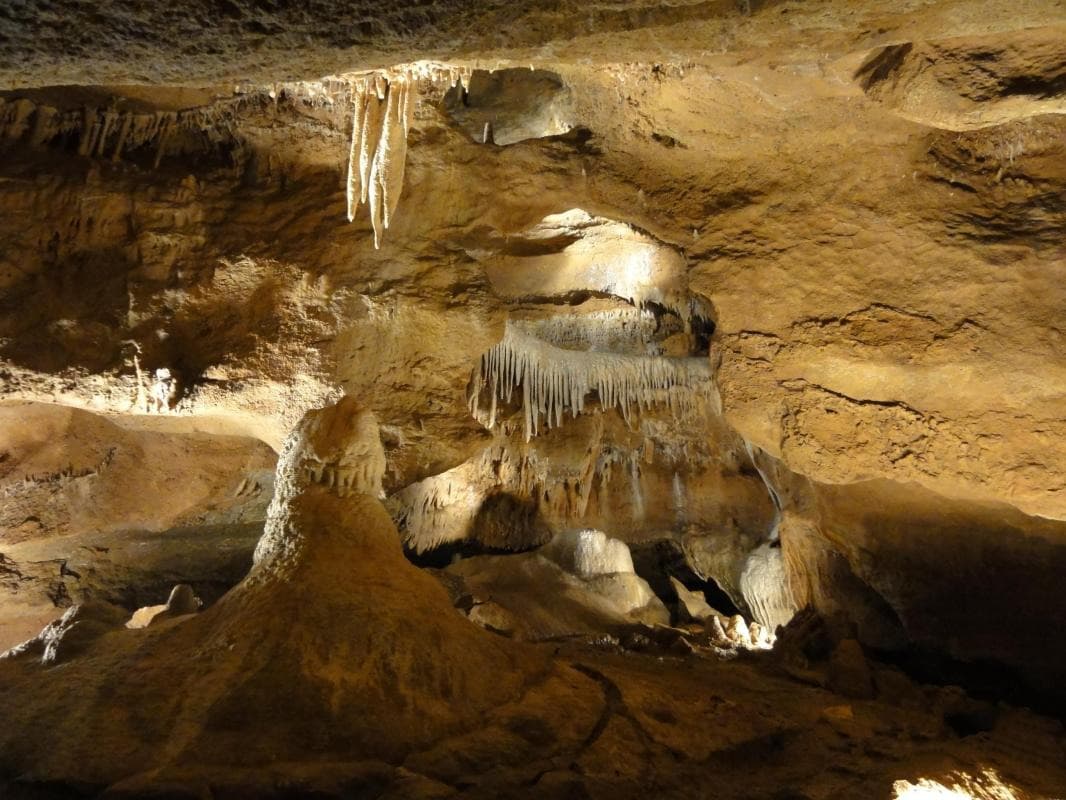
The descent into Koneprusy is immediate and intimate. Lighting is subtle and deliberate: pools of amber accentuate curtains of calcite and long, slender stalactites that drip with the patient geometry of centuries. The guide's lamp catches on mineral globes and flowstone sheets; every texture reads like an old map of subterranean weather. There’s a tactile hush here—a world that resists haste—and the group steps in cadence with the cave’s slow narrative. The temperature drops, not drastically, but enough to remind you to keep your jacket zipped. Your shoes find traction on damp flagstones and carved steps; at times the passage squeezes as if the earth is making room for one more person to pass through its story.
After the cave circuit—roughly a one-hour guided loop that winds through show galleries and past prominent speleothems—there's a modern visitor center to reorient you. Exhibits compactly stitch geology to local human history: fossils that predate humanity, maps of the maze beneath the ridge, and an explanation of how these Devonian limestones dissolved and re-formed through millennia of subterranean weathering. The kiosk serves coffee, and the cafeteria is a small consolation that does not try to overexplain the quiet you leave behind.
This day trip pairs subterranean drama with above-ground Czech history. The second act is Karlštejn Castle, a Gothic keep founded in the 14th century by Charles IV to house crown jewels and royal documents. Stand in the castle courtyard and the sense of purpose is palpable—the stonework, the chapel’s frescoes, the steep cobbled approaches. The contrast between cool, hush-filled caves and a castle that once pulsed with courtly ritual makes the itinerary satisfyingly cinematic.
Geologically, Koněpruské jeskyně sits in the Koněprusy Hills—an undulating limestone landscape carved during the Devonian and later remodeled by erosional forces. Caves like these are not merely voids but archives: flowstones record changing water chemistry; collapsed chambers tell of roof failures and new passages. The area’s human story is just as layered. People have used the rock shelters and karst plateaus for centuries. In modern times the site became a public attraction with a visitor center and curated tour routes that both welcome exploration and set clear boundaries to protect delicate formations.
Practical context matters here. The cave is best experienced on a guided tour (language options are common but confirm when you book), and the show route is compact but includes stairs and narrow passages, so it isn’t wheelchair-accessible. Temperatures inside hold around single digits Celsius—bring a warm layer—and the floor can be slippery where the cave breathes moisture. Outside, trails through the limestone hills are a patchwork of easy walks and steeper viewpoints; Velká Amerika Quarry—often a photo stop on this route—is a dramatic, blue-green flooded pit that contrasts brutally with the intimate cave interiors.
The typical guided day trip from Prague bundles door-to-door logistics: coach transport, the Koneprusy guided tour, Karlštejn entry, a lunch stop at a traditional restaurant, and a photo halt at Velká Amerika. If you prefer to move at your own pace, car access is straightforward from Prague via the D5 corridor, and local trains to Beroun give you options to craft a more independent itinerary.
For the pragmatic adventurer: wear sturdy, closed-toe footwear, pack a warm midlayer, and bring a small daypack with water and a camera. Inside the cave, lighting is controlled so a compact, high-ISO camera, a fast lens, and a stabilizing technique (elbows tucked, slow breaths between frames) will get the best shots; tripods may not be permitted on group tours. Respect the rules—no touching formations, stay on the path, and follow the guide. These measures keep the delicate mineral sculptures intact for the next visitor.
Why go? The pair of Koněpruské jeskyně and Karlštejn compresses two different flavors of Bohemia into a single, punchy day: the subterranean, geological patience of caves and the vertical, human drama of a medieval castle. It’s a trip for those who want to feel the earth’s slow work beneath their feet and then look up to a skyline punctuated by turrets and fortified walls. It’s accessible enough for casual travelers yet substantive enough to satisfy anyone interested in geology, history, or well-paced exploration.
If you have a full day to spend out of Prague, this takes some of the logistical guesswork out of the picture while leaving room for quiet discovery. Bring curiosity, modest footwear, and a tolerance for cool damp air. The caves will take your breath in a different way than the castle will, and both will slow your steps into a truer outdoor rhythm—the one where landscapes, human and natural, keep you listening.
Trail wisdom
Small choices, better day.
Bring a warm layer
Cave temperatures hover around single digits Celsius—pack a fleece or light jacket even on warm days.
Sturdy footwear required
Trails inside and outside the cave include wet stone steps and uneven limestone paths—wear grippy, closed-toe shoes.
Book a guided slot
Tours run on set schedules and can fill in high season—reserve in advance to avoid missing the cave circuit.
Respect the formations
Don’t touch speleothems or stray from marked paths—oils from skin damage fragile mineral growths.
Local knowledge
Read the place, not just the route.
Watch for native species including bats (in the cave, typically roosting species), roe deer on the limestone hills.
Keep an eye out for wildlife during the transition between areas and habitats. Respect distance guidelines.
The site is managed with strict visitor paths and rules to protect fragile formations—stay on designated routes and avoid touching speleothems to prevent oil damage.
Follow the guide's instructions on size limits, ethical handling, and leave-no-trace practices.
Velká Amerika Quarry—an imposing flooded limestone pit and excellent sunset photo stop. Small trails on the Koněprusy Hills that reveal fossil-rich outcrops and quiet viewpoints
Locally recommended viewpoints and quiet spots known best to local operators.
Koněpruské jeskyně is the largest cave system in Bohemia; the nearby Karlštejn Castle was founded in the 14th century by Charles IV as a secure place for royal treasures.
Maritime roots and regional tradition shape the waterways and working coasts.
Seasonal guide
Four versions of the same landscape.
Spring
Best forwildflowers on the karst hills · milder crowds at Karlštejn
Challengesmuddy trails after rains · variable temperatures
Spring brings fresh green on the limestone slopes and cooler air—expect some muddy patches but smaller tour groups than summer.
Summer
Best forlonger daylight for exploring · combining photo stops like Velká Amerika
Challengesbigger crowds · hotter surface temperatures (but cool caves)
High season offers frequent guided tours and warm trail weather; book ahead and arrive early to avoid the largest groups.
Fall
Best forautumn color on the hills · quiet after summer rush
Challengesshorter daylight · cooler surface temperatures
Fall is an ideal balance of pleasant trail conditions and thinning crowds; the cave offers a steady, warming respite.
Winter
Best fordramatic frosts on the quarry rim · fewer tourists
Challengesicy access roads · reduced services and shorter opening hours
Winter’s low footfall makes for solitude, but check opening times and road conditions—the cave itself remains a cool but stable environment.
Pack with intention
What to bring.
Good to know
Common questions.
The guided show route through Koněpruské jeskyně typically takes about 45–60 minutes, depending on group size and language.
Plan the edges
The details that make the day easier.
Koněpruské jeskyně is the largest cave system in Bohemia and contains extensive calcite formations formed in Devonian limestone—its passages reveal a long history of subterranean erosion.
Pair the trip with a meal at a nearby village restaurant serving traditional Czech fare—goulash, dumplings, and local beer add a warm, hearty close to an outdoors day.
- From Prague
- 60–90 minute transfer by coach; guided cave loop ~45–60 minutes; Karlštejn visit 60–90 minutes; moderate walking and stairs; bring layers and good footwear.
Stay on marked trails, avoid flash photography on delicate formations, and support local operators who fund cave conservation and visitor-education programs.
Explore by topic
Follow the threads.
Keep exploring
Make the story part of the trip.
 Related story
Less than two hours from Nairobi, Kereita Forest pairs hands-on canopy adventure with quiet montane trails and a sobering colonial history—perfect for families, teams, and curious travelers seeking a full-day pulse of nature.
Set out from Bass Harbor for a private, customizable day on Blue Hill Bay — lighthouses, puffins, seals, and the chance to feel Acadia from the water. Small groups, local captains, unforgettable views.
In four hours you can move from shaded canyon ferns to wind-scoured coastal ridgelines, guided by someone who knows where the light—and the hidden views—live. This private half-day hike on the Monterey Peninsula or Big Sur is compact, curated, and perfect for travelers who want depth without a multiday commitment.