
What the day feels like
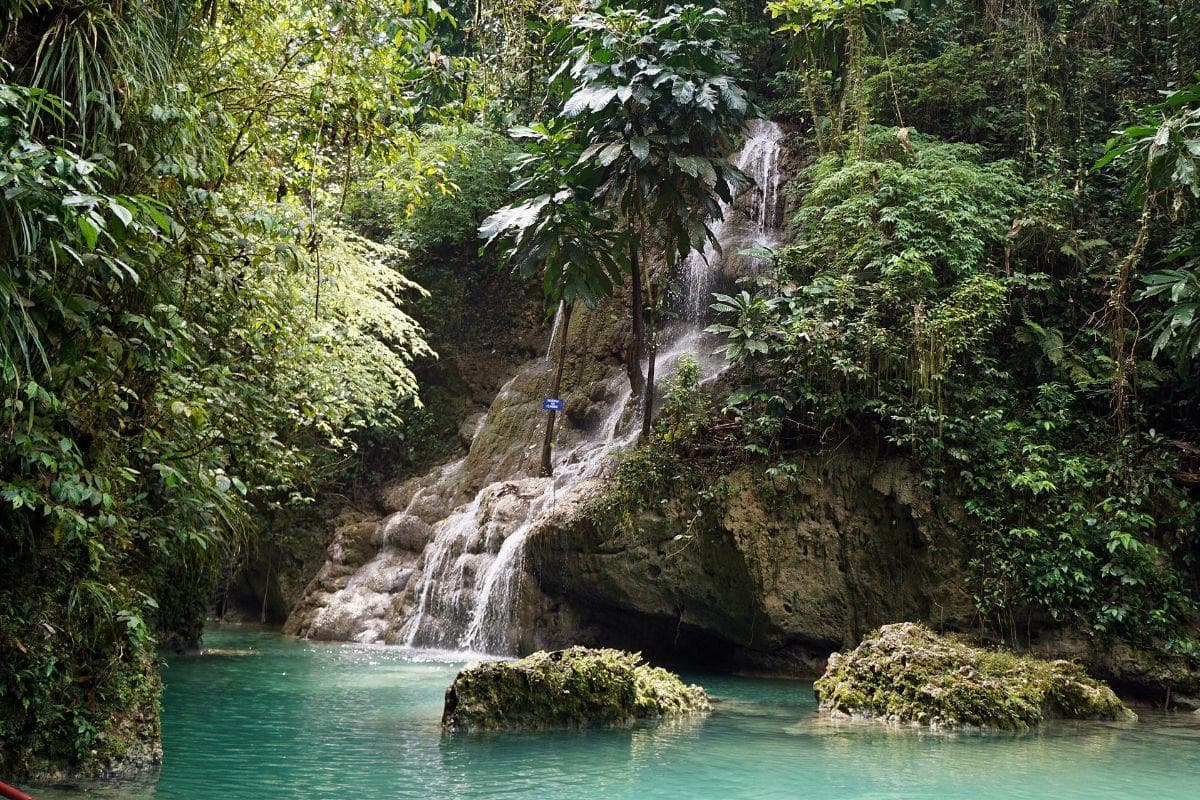
You push through a low curtain of fern and the forest exhales. The sound shifts from bird calls and distant surf to a clean, single note—the waterfall—like someone holding a bell under water. Somerset Falls does not announce itself with a wide, cinematic plunge; it invites you into intimacy. The trail narrows, stone steps damp with moss, and the canopy closes in so light becomes a green watercolor. Then the falls appear, a vertical seam pouring into a shallow emerald pool, and tucked behind it—an improbable grotto that asks you to go in.
Somerset Falls sits in Portland parish, a stretch of Jamaica where mountains meet a jagged coastline and where the Blue Mountains spill down into turquoise coves. The falls are part of a cultivated garden and river system that locals have tended for generations, and through a short, sheltered approach the site manages to feel both cared-for and wild. Visiting is less about a single dramatic view than a series of tactile moments: the taste of mineral-chilled water, the scrape of pebbles beneath bare feet, the cooler air inside the cave where the fall thunders like a private storm.
Geologically the Portland coastline and its inland gullies are the product of hard limestone and volcanic uplifts, cut by tropical rains that concentrate into cataracts and plunge pools. Somerset’s small cliff is an expression of that process on human scale—a vertical handhold where the highland streams meet the island’s eastern escarpment. Historically, Portland developed more slowly than other parishes; its isolation kept a strong connection to fishing, small-scale farming, and community-based tourism. Local guides today still operate on those relationships, offering privately run tours that route visitors through Blue Lagoon, Boston Beach, and the waterfalls tucked inland.
This is the sort of place that benefits from a guide. Several small operators run half-day and full-day tours (see Amanda’s 876 Adventures and other local providers) that fold Somerset into a loop with Blue Lagoon’s deep secret waters and Boston Beach’s surf-and-jerk culture. A guided visit is practical: guides know the safest approach to the grotto, coordinate the small boats or rafts used to enter the cave when water levels rise, and can place you at the calmest time of day for photographs or a private swim.
The experience is unpretentious. The trail to Somerset is short—think 10–20 minutes of stone steps and packed soil rather than a wilderness slog—and there is little elevation gain. The water temperature is pleasantly cool even in the heat of midday, and shallow shelves make for easy wading. Still, common-sense precautions matter: currents can tighten after heavy rain, rocks are slick, and the cave’s ceiling requires a careful duck on the approach.
Practical rhythm: arrive early to avoid the mid-afternoon surge and the sun’s harshest angle. Plan Somerset as a half-day when paired with Blue Lagoon and Boston Beach; many operators will combine all three, letting you swim in a mineral-rich lagoon, taste fresh jerk at a community cookout, then rinse off under the waterfall. Pack a dry bag, wear water shoes, and leave soap and sunscreen out of the river. Sustainably minded operators will emphasize local vendors—this is where your tour dollar circulates through a small community, not an impersonal resort.
For photographers and quiet travelers, the grotto is the reward. The waterfall acts like a natural curtain: step behind it and the world truncates to the sound of falling water and a filtered green light. Use a wide-angle lens and a neutral-density filter for long-exposure blur, or a fast prime to pull close portraits without distracting background detail. Inside the cave, balance the exposure for the bright curtain and the shadowed interior by metering off midtones, or bracket to preserve highlight detail.
Safety and access are straightforward but earnest. Guides or attendants will usually provide life vests for less confident swimmers; children and non-swimmers should be supervised closely. If the river is swollen after rain, operators may limit cave access or advise waiting until water levels drop. Respect posted rules and the local stewards who maintain the path and gardens: they keep this small ecosystem healthy.
Why go? Somerset Falls is not a postcard waterfall you’ll find printed in a thousand travel brochures; it’s the kind of site that rewards slowing down. It pairs well with Portland’s other offerings—the legendary Blue Lagoon, a mineral-deep bowl of water famous for its depth and clarity, and Boston Beach, where surf-friendly waves meet some of the island’s most authentic jerk cuisine. Together, these stops reveal a Portland that is tactile and social: a place where the sea, the mountain, and human hospitality intersect.
If you leave anything behind, leave soap and single-use plastics. The river’s chemistry and the small community that shares it depend on respectful visitors. In return, expect a concise, memorable adventure: a short walk, a cool swim, a cave to slip into, and the kind of local rhythm that makes travel feel less like ticking boxes and more like being invited into someone’s backyard—only this backyard happens to have a waterfall for a guest bath.
Somerset is for people who like their adventures compact and sensory: accessible to casual travelers, yet satisfying to outdoor enthusiasts who appreciate geology, breath-stealing shade, and the particular hush of a cave behind a fall. Plan it as part of a Portland day tour, bring common-sense gear, and let the water do the convincing.
Trail wisdom
Small choices, better day.
Wear water shoes
The approach and pool are rocky and often slippery; closed-toe water shoes protect feet and improve traction.
Bring a dry bag
Protect electronics and dry clothes—many guides ferry belongings by small raft or place them in shaded areas while you swim.
Skip soap in the river
Avoid shampoos and soaps that damage the river’s chemistry; rinse with fresh water after leaving the site.
Go early or late
Visit mid-morning or late afternoon for softer light, fewer crowds, and calmer water conditions in the grotto.
Local knowledge
Read the place, not just the route.
Watch for native species including Jamaican tody, Hummingbirds.
Keep an eye out for wildlife during the transition between areas and habitats. Respect distance guidelines.
Operators encourage leaving no trace, using reef-safe products, and supporting local vendors—small tourism dollars help maintain trails and water quality.
Follow the guide's instructions on size limits, ethical handling, and leave-no-trace practices.
Blue Lagoon—an iconic, deep turquoise pool often combined with Somerset on day tours. Frenchman's Cove—a nearby sheltered beach with a freshwater stream that meets the sea
Locally recommended viewpoints and quiet spots known best to local operators.
Portland’s isolation preserved a strong community culture; small family-run attractions like Somerset grew from private gardens and local stewardship rather than large-scale resort development.
Maritime roots and regional tradition shape the waterways and working coasts.
Seasonal guide
Four versions of the same landscape.
Spring
Best forLush foliage · Mild water temperatures
ChallengesOccasional showers · Higher river flow after storms
Spring brings bright green growth and comfortable swims, but watch forecasts—heavy rain can raise flows and limit grotto access.
Summer
Best forWarm air and long days · Combining beach and waterfall visits
ChallengesHot midday sun · Higher humidity and brief tropical storms
Summer is ideal for pairing Somerset with Boston Beach and Blue Lagoon, though plan around midday heat and check weather for squalls.
Fall
Best forFewer visitors · Rich late-season vegetation
ChallengesHurricane season peaks early fall · Possibility of unsettled weather
Fall can be quieter and very green—avoid heavy-weather windows during hurricane season and follow local advisories.
Winter
Best forDry, stable conditions · Peak visitor season for Jamaica
ChallengesHigher visitor numbers · Advance bookings recommended
Winter (December–April) offers the most reliable weather and calm waters—arrive early to beat the busiest hours.
Pack with intention
What to bring.
Good to know
Common questions.
A guide is not strictly required for the short trail, but local guides enhance safety for cave access, coordinate small raft entries, and provide cultural context.
Plan the edges
The details that make the day easier.
Nearby Blue Lagoon—often paired with Somerset on local tours—is described locally as reaching depths near 180 feet, giving it a dramatic drop to clear blue waters.
Portland’s taste is literal: Boston Jerk spots serve lobster, fish, and spicy sides cooked over pimento wood; small guesthouses and family-run eateries offer reggae, fresh seafood, and a slower, community-first welcome.
Respect the freshwater system—avoid soaps, use reef-safe sunscreen, and support local guides and vendors to ensure tourism benefits the community and the watershed.
Explore by topic
Follow the threads.
Keep exploring
Make the story part of the trip.
 Related story
Less than two hours from Nairobi, Kereita Forest pairs hands-on canopy adventure with quiet montane trails and a sobering colonial history—perfect for families, teams, and curious travelers seeking a full-day pulse of nature.
Set out from Bass Harbor for a private, customizable day on Blue Hill Bay — lighthouses, puffins, seals, and the chance to feel Acadia from the water. Small groups, local captains, unforgettable views.
In four hours you can move from shaded canyon ferns to wind-scoured coastal ridgelines, guided by someone who knows where the light—and the hidden views—live. This private half-day hike on the Monterey Peninsula or Big Sur is compact, curated, and perfect for travelers who want depth without a multiday commitment.