
What the day feels like
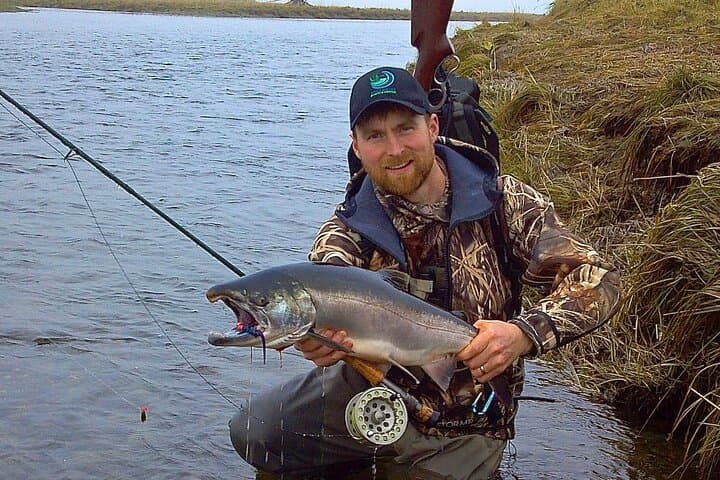
You step off the skiff and the forest takes the conversation. The trees don’t whisper here so much as assert—a dense, cedar-and-hemlock chorus that edges the stream with a green that feels too saturated to be real. The guide—born and raised within earshot of these rivers—checks your line with the kind of practiced calm that makes the whole thing feel inevitable: a cast, a drift, a tug. For four hours in Game Creek and the streams around Icy Strait Point, you’re part of an old rhythm: fish, tide, and the long patience of the Tongass.
This is not glamourized sportfishing. It’s practical, intimate, and local. The guides on this trip are longtime Hoonah residents who live “off the grid” on Chichagof Island and have spent their lives reading currents, reading salmon runs, and reading the shoreline. Their knowledge turns a short outing into a primer on coastal Alaska—where to wait for a slack tide, how the creek’s pools hold fish after rain, which riffles are worth a second cast. They teach without lecturing; they get you into fish, then teach you why it happened.
Geology here is patient and blunt. Glacially carved valleys funnel water from high ridgelines into tight, oxygen-rich streams. Those streams run into Icy Strait, a jagged ribbon of saltwater that dares you to keep up with the tides. The Tongass National Forest—the largest national forest in the United States—shields these waterways and gives them the cool, shaded conditions salmon prefer. Tlingit culture is threaded through this place: Hoonah (the closest town) is a small Tlingit community with deep connections to both river and sea, and the guides are part of that living story.
Wildlife shows up with alarming regularity. Bald eagles perch on snags above the pools, eyeing every silver flash. If the tide lines up, the nearby channels can bring humpback whales into the scene, their broad backs accentuating the horizon like punctuation. Onshore, brown and black bears patrol the estuaries during peak runs—another reason guides emphasize situational awareness and respectful distance.
Practically speaking, the trip is a compact, efficient way to experience coastal Alaska. It’s a four-hour guided outing—ideal for cruise ship passengers with a tight shore-window or for backroad travelers based in Hoonah. The outfit provides local expertise and usually gear guidance, while also running small groups to cut down on crowding. Expect to target salmon and trout; the learning curve is short, and the payoff is immediate when a 12–20 pound silver salmon kisses the surface and pulls.
Why go? Because this is one of those short trips that feels larger than its duration. You’ll learn to read water and weather, meet people who live and breathe the place, and have the practical satisfaction of a successful catch. And because few things in travel refine you more quickly than standing in a cold creek with a rod in your hand and real possibility on the line.
From a planning standpoint: the trip runs about four hours, costs from $400 per person with minimal extra charges, and includes instant confirmation and a free-cancellation window. Expect to meet near Icy Strait Point or the Hoonah shoreline; getting to this part of Chichagof Island usually means flying or boathopping from Juneau or arriving via the cruise-ship pier at Icy Strait. Bring layers and prepare for weather that can flip from sun to drizzle in 15 minutes. A valid Alaska sport fishing license is typically required for guests—your operator will confirm whether they provide licenses or whether you must purchase one in advance.
On the water you’ll want lightweight, water-resistant layers, non-slip footwear (wading boots if you intend to step into the stream), polarized sunglasses for visibility, and a camera that can survive damp conditions. Guides will share practical nuances—how to mend a line to reduce drag, the moment to set the hook, and the etiquette around keep-or-release decisions.
Conservation is part of the dialogue here, not an afterthought. The Tongass’ old-growth forests and salmon systems are both ecologically vital and fragile; local guides practice catch-and-release where appropriate, advocate for barbless hooks to reduce injury to fish you do release, and reinforce the importance of leaving stream banks clean.
If you go mid-summer, you’ll see the rivers at their busiest and the longest daylight hours; late spring and early fall have their own rewards—fewer people, colder water, and different seasonal species. Whatever time you choose, this is a day that asks you to slow down and take instruction from the place itself: follow the current, respect the wildlife, and let the guides show you how to read the river like a local.
Trail wisdom
Small choices, better day.
Get the right license
Purchase an Alaska sport fishing license in advance unless your operator confirms they provide one—rules vary by trip and species.
Dress in layers
Expect wind, drizzle, and cool spray—pack a waterproof shell and mid-layer for warmth.
Bring polarized lenses
Polarized sunglasses reduce surface glare and help you spot fish and underwater structure.
Prepare for wildlife etiquette
Follow guide instructions around bears and eagles—never approach shoreline for a photo unless directed.
Local knowledge
Read the place, not just the route.
Watch for native species including Bald Eagle, Humpback Whale.
Keep an eye out for wildlife during the transition between areas and habitats. Respect distance guidelines.
This is Tongass National Forest country—practice catch-and-release when recommended, use barbless hooks if possible, and pack out all trash to protect salmon habitat.
Follow the guide's instructions on size limits, ethical handling, and leave-no-trace practices.
Quiet upstream pools in Game Creek that require a short walk but hold late-season trout. A low-tide estuary viewpoint where eagles and shorebirds concentrate (best at dawn)
Locally recommended viewpoints and quiet spots known best to local operators.
Hoonah is a Tlingit community with long ties to both river and sea—the local guides’ knowledge is rooted in generations of subsistence and stewardship.
Maritime roots and regional tradition shape the waterways and working coasts.
Seasonal guide
Four versions of the same landscape.
Spring
Best forEarly trout runs · Fewer crowds
ChallengesCold water and air · Unpredictable weather
Spring offers quiet streams and early runs, but expect colder conditions and variable tides—layers and waterproofs are essential.
Summer
Best forPeak salmon runs · Long daylight hours
ChallengesMore visitors · Higher prices in July/August
Summer is prime for salmon and wildlife viewing, with long days and reliably active rivers—book early if you’re on a cruise schedule.
Fall
Best forLate-season fishing · Spectator wildlife viewing
ChallengesShorter daylight · Chillier temps
Fall brings bright colors and intense feeding activity but shorter days and colder water—good for photographers and serious anglers.
Winter
Best forOff-season solitude · Aurora viewing (regional)
ChallengesLimited services · Rough weather
Winter trips are rare and weather-dependent; expect limited operations and potential cancellations during storms.
Pack with intention
What to bring.
Good to know
Common questions.
Yes—most guests need an Alaska sport fishing license; confirm with the operator whether the guide provides it or if you must purchase one in advance.
Plan the edges
The details that make the day easier.
The Tongass National Forest is the largest national forest in the United States, covering roughly 16.7 million acres and protecting vast old-growth temperate rainforest.
After the outing, head into Hoonah for fresh seafood at a waterfront café or to a small local smokehouse for a taste of Alaskan-cured salmon—ask your guide for their favorite spot and support community-run businesses.
- trailhead
- Hoonah (local air
- boat access
- Icy Strait Point is adjacent to Hoonah—short transfers common; Cell service: intermittent to limited; Permits
- passes
- Alaska sport fishing license usually required; Duration: 4 hours; Price: from $400 per person (small extra fees possible).
These streams are part of fragile salmon ecosystems—use catch-and-release when advised, avoid trampling riverbanks, and pack out all waste. Follow guide instructions for wildlife distancing to reduce disturbance.
Explore by topic
Follow the threads.
Keep exploring
Make the story part of the trip.
 Related story
Less than two hours from Nairobi, Kereita Forest pairs hands-on canopy adventure with quiet montane trails and a sobering colonial history—perfect for families, teams, and curious travelers seeking a full-day pulse of nature.
Set out from Bass Harbor for a private, customizable day on Blue Hill Bay — lighthouses, puffins, seals, and the chance to feel Acadia from the water. Small groups, local captains, unforgettable views.
In four hours you can move from shaded canyon ferns to wind-scoured coastal ridgelines, guided by someone who knows where the light—and the hidden views—live. This private half-day hike on the Monterey Peninsula or Big Sur is compact, curated, and perfect for travelers who want depth without a multiday commitment.