
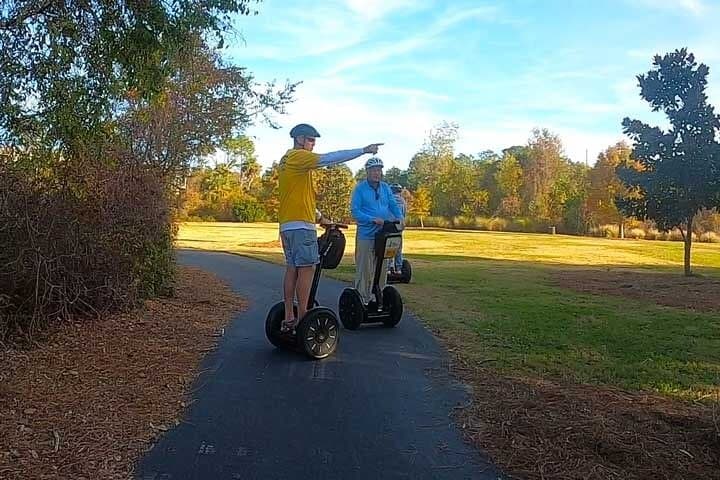
What the day feels like
By the time the group falls into an easy rhythm—feet planted on the narrow deck, palms relaxed on the handlebars, eyes tracing a ribbon of shaded trail—Hilton Head starts to reveal itself at walking speed with a borrowed shove. The Segway feels less like a gadget and more like a polite local who knows all the short cuts: it nudges you through maritime pine, skirts salt marshes that smell faintly of brine and peat, and opens up onto wide, breezy bike paths where ospreys wheel above the inlet. In 60 minutes you travel farther than a hike, slower than a bike, and with a view that keeps changing like panels in a picture book.
The 60‑minute Hilton Head Segway Experience is a tidy way to see the island without burning a whole day. Designed for couples, families, and groups, the tour begins with a short safety briefing and practice lap—most people are riding confidently inside ten minutes—then loops along paved multiuse paths and boardwalks that thread the island’s residential corridors, public beaches, and quieter interior greenways. Tours are bookable instantly, run year‑round, and require a two‑person minimum, which makes them a reliable pick whether you’re on a quick weekend trip or a longer Lowcountry escape.
Hilton Head’s landscape is textbook Lowcountry: barrier island, tidal creeks, maritime forest, and wide beaches that change with the seasons. That geography is what makes a Segway ideal here. The terrain is almost flat—expect negligible elevation gain—but the textures are varied: smooth pavement through resort corridors, compacted shell grit on service roads, and occasional wooden boardwalks where the route threads over wetlands. You’ll move at an easy 6–10 mph pace on trail sections, which means a typical 60‑minute tour covers roughly 4–6 miles of island highlights without exhausting anyone in the group.
The island itself has a layered history. It’s named for Captain William Hilton, who charted the area in the 17th century; thereafter it evolved through agricultural plantations and later into the tourism economy it’s known for today. Remnants of that history sit quietly along the routes—old oaks draped in Spanish moss, salt marshes that still support shrimp boats in season, and small historic districts where local artisans keep Gullah and Lowcountry traditions alive. Guides on these Segway tours are good at threading in those local stories—who ran a shrimp boat decades ago, where a particular inlet reshaped a shoreline—so the ride feels like a short living‑history lesson as much as it is an outdoor activity.
Practical realities matter here. If you want the clearest light and gentlest temperatures, aim for late morning in spring or early fall; midsummer brings heat and high humidity, while winter is mild but windier. The Segways are accessible to many ages and mobility levels—the operator welcomes guests with different abilities and does require a minimum party of two. Price starts around USD 70 for the hour, and the booking is instant with free cancellation policies that make last‑minute schedule shifts manageable.
Why choose a Segway over a bike or a walking tour? It’s the balance of speed, comfort, and sightlines. Bikes are great if you want a workout; a walking tour digs into one neighborhood in depth. The Segway compresses more island variety into a short time while keeping it social and low‑effort: grandparents, kids, and anyone who’d rather not pedal can still keep up. You also get better access to certain greenways and boardwalked sections that a car can’t reach. For visitors short on time, the ride is a tidy investment in orientation—the first time you tour the island by Segway, you’ll leave with a much better sense of where you want to come back to explore on foot, by kayak, or with a bike.
Safety and preparation are simple but important. Wear closed‑toe shoes, bring sun protection, and hydrate; the Lowcountry sun can be sharper than you expect even through a cool breeze. Operators provide helmets and a quick coaching session; once you’re comfortable, the rest is mostly about leaning with subtle shifts and enjoying the scenery. If you want photos, bring a small chest or handlebar mount for your phone rather than fumbling with a large camera—hands‑free shots are safer and more consistent while moving.
If you’re ready to book or want the most current departure times and local pickup details, the official tour page will get you signed up: <a href="https://app.advcollective.com/local-experts/hilton-head-segway-experience-60-minute-guided-ride-on-island-bike-trails">Hilton Head Segway Experience</a>. That page also includes guidance on group bookings and accessibility notes. For travelers who prefer a preview, local boards and review sites show consistent praise for friendly guides and routes that balance beach frontage with quieter inland nature.
A final note on pace: Segway tours are short enough to leave room for a proper Lowcountry afternoon. After a glide through the island, plan to shore up with shrimp and grits at a waterfront café, wander a little of the island’s boutique shopping, or find a bench facing the marsh and watch the tide turn. The ride is compact, but it’s a practical, effective way to fall into the island’s rhythm fast—exactly the kind of entry point you want when time is short and curiosity is long.
Trail wisdom
Small choices, better day.
Practice before you go
Arrive 10–15 minutes early for the safety briefing and practice lap so you’re comfortable before the route begins.
Wear closed‑toe shoes
Stable footwear protects your feet on the Segway deck and on any quick dismounts to explore boardwalks.
Bring sun protection
Sunscreen, sunglasses, and a brimmed hat fit under a helmet and prevent the mid‑ride sunburn.
Stay hydrated
Carry a small water bottle; coastal breezes mask dehydration on a moving tour.
Local knowledge
Read the place, not just the route.
Watch for native species including Osprey, White‑tailed deer.
Keep an eye out for wildlife during the transition between areas and habitats. Respect distance guidelines.
Stay on marked paths and boardwalks to protect dune grasses and nesting shorebirds; operators work with local agencies to minimize trail impacts.
Follow the guide's instructions on size limits, ethical handling, and leave-no-trace practices.
Secluded boardwalk overlooks where the marsh narrows—great for quiet birdwatching. Neighborhood kayak launches that reveal a different side of the tidal creeks
Locally recommended viewpoints and quiet spots known best to local operators.
Named after Captain William Hilton who charted the coast in 1663, the island evolved from plantation lands to a resort landscape in the 20th century.
Maritime roots and regional tradition shape the waterways and working coasts.
Seasonal guide
Four versions of the same landscape.
Spring
Best forWildflower blooms · Comfortable temperatures · Birdwatching
ChallengesOccasional rainy days · Higher weekend crowds during spring breaks
Mild temperatures and flowering understory make spring one of the best times for a comfortable, scenic ride.
Summer
Best forLong daylight · Beach views · Family outings
ChallengesHigh heat and humidity · Afternoon thunderstorms
Summer offers long days and active beach life but plan for early departures to avoid peak heat and storms.
Fall
Best forCooler weather · Fewer crowds · Golden light
ChallengesUnpredictable cold snaps · Some seasonal closures of amenities
Fall delivers crisp air and great lighting—ideal for photography and comfortable cruising.
Winter
Best forMild winter escapes · Bird migration viewing · Lower prices
ChallengesWindier conditions · Cooler mornings
Winters are mild compared with inland areas, though it can be windy; dress in layers and you’ll be comfortable.
Operator details
What the booking data adds.
Included
- ✓Bottled water
- ✓Segway and helmet
Good to know
- ✓Not recommended for travelers with spinal injuries
- ✓Not recommended for pregnant travelers
- ✓Suitable for all physical fitness levels
Pack with intention
What to bring.
Good to know
Common questions.
The standard tour is 60 minutes and typically covers about 4–6 miles of mixed paved paths and boardwalks, depending on the route and group pace.
Plan the edges
The details that make the day easier.
Hilton Head Island is named after Captain William Hilton, who charted the area in 1663; the island later became a recreational destination in the 20th century.
After a ride, head to Shelter Cove or Coligny Plaza for fresh Lowcountry seafood—shrimp and grits or she-crab soup are local musts. For evening music and local craft beer, check out The Jazz Corner or a waterfront tavern in Harbour Town.
- Closest airport
- Savannah
- Hilton Head International (SAV) ~45 minutes by car; Driving distance from Savannah
- about 45 miles; Cell service: generally good in developed areas, patchy on some marsh boardwalks; Permits
- passes
- None required for the tour—book directly with operator.
Stay on designated trails and boardwalks to protect fragile dune ecosystems and shorebird nesting sites; operators partner with local conservation groups to reduce trail impacts.
Explore by topic
Follow the threads.
Keep exploring
Make the story part of the trip.
 Related story
Less than two hours from Nairobi, Kereita Forest pairs hands-on canopy adventure with quiet montane trails and a sobering colonial history—perfect for families, teams, and curious travelers seeking a full-day pulse of nature.
Set out from Bass Harbor for a private, customizable day on Blue Hill Bay — lighthouses, puffins, seals, and the chance to feel Acadia from the water. Small groups, local captains, unforgettable views.
In four hours you can move from shaded canyon ferns to wind-scoured coastal ridgelines, guided by someone who knows where the light—and the hidden views—live. This private half-day hike on the Monterey Peninsula or Big Sur is compact, curated, and perfect for travelers who want depth without a multiday commitment.