
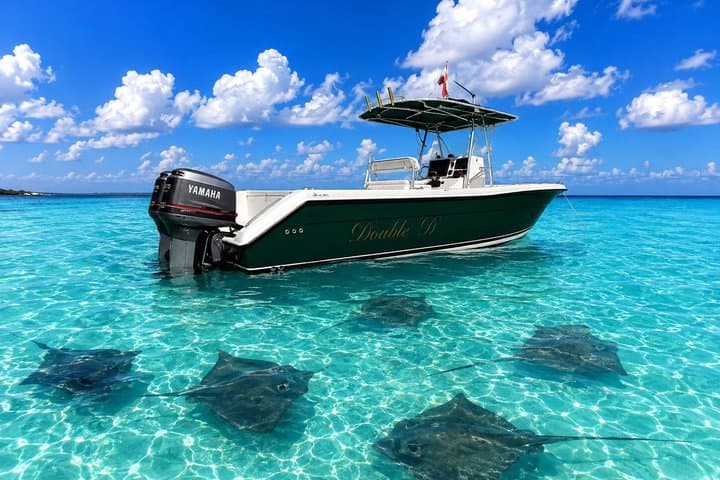
What the day feels like
The boat slips from the marina like a promise kept. A crisp bow wake splits the Caribbean glass and the captain—local, steady-handed—casts off with the casual efficiency of someone who spends his life reading wind and water. Within twenty minutes the skyline of George Town compresses to a thin horizon and the North Sound opens: a bowl of layered blue that dares you to decide how deep you want the day to go.
This is what a private charter on Grand Cayman feels like: intimate, flexible, and laced with the island’s reputation for clean water and civil ease. Ocean Blue Charters packages that ease into a four-hour loop of the island’s most photogenic and accessible marine haunts—Stingray City’s shallow sandbars, the fringe reefs alive with parrotfish, and a string of snorkel stops that feel like secret postcards until you remember they’ve been this way for millennia.
Geology and history are quiet companions here. Grand Cayman is a raised carbonate platform—essentially ancient coral and limestone uplifted and shaped by wind, waves, and the gradual choreography of sea level. The shallow sandbars where southern stingrays rest are the ongoing product of that choreography, and they have long attracted both marine life and people. The islands’ human history—first visited by Arawak peoples, then charted by European explorers, and today a blend of Caymanian culture with an outsized global finance industry—has always pivoted around the sea. Boats were how people moved, traded, and ate; today they’re how many visitors find the best shorelines.
Culturally, a charter day is also a lesson in Caymanian hospitality. Captains are storytellers and naturalists in equal measure, passing along local lore—about where turtles nest, which reef tongues flush with trumpetfish at dawn, and which sandbars will grant you a moment of calm clear enough to read the clouds in the water. This is not adrenaline-only tourism. It’s slow-moving wonder; the ocean is given an implied agency here, nudging you toward quiet observation as much as toward action.
Why book a private charter rather than follow a crowded shared-boat itinerary? Control, mostly. You set the tempo: linger while a kid coaxes a stingray closer, spend extra time on a reef you didn’t want to leave, or simply drop anchor on an empty sandbar and let the world narrow to the slap of water. For families and small groups, it eliminates the queuing and accelerates the feeling that this day is yours.
Practicalities matter here. The four-hour window is long enough to cover two to three quality snorkel stops plus the flagship Stingray City shallow. Expect about 240 minutes of on-water time, and factor in transport to the marina (George Town is minutes away from Owen Roberts International Airport, GCM). Ocean Blue provides snorkel gear and usually ice-filled coolers—bring reef-safe sunscreen and a sense of ease.
Visibility is usually excellent in the dry season (roughly December–April). Trade winds can pick up in the afternoon, creating chop that makes some people turn green; mornings tend to be calmer. The captain will read the weather and adjust the day to sea conditions, sometimes swapping a planned reef stop for a more sheltered bay.
Safety and conservation go hand in hand. The stingrays at Stingray City are wild, though habituated to human presence; never chase or corner them, and allow the interaction to be led by the animals. Corals are fragile—don’t stand on them, and use reef-safe sunscreen. Captains affiliated with responsible operators monitor moorings and avoid anchoring directly on coral.
If you’re packing for a four-hour private charter, think light and purposeful: a light windbreaker for early morning rip, biodegradable sunscreen, a snorkel that fits your face (if you have one), water shoes, and a small dry bag for phone and keys. Plan for shade—charters often have a bimini top, but prolonged sun on the water is relentless.
Who will love this trip? Families with children, couples seeking a private way to experience the Caribbean, and small groups that want a varied half-day of wildlife, snorkeling, and easy photo ops. Fitness needn’t be elite; most activities are shallow-water snorkeling and short climbs on and off the boat. Expect gentle to moderate physical demand—climbing in and out of boats, treading in waist-deep water, and perhaps a swim through a patch of reef.
Photography is straightforward and rewarding: a polarizer will pack color into the seascape, and a small waterproof camera or housing will capture close encounters without risking a smartphone. The best light is often early—soft, low, and reflective—and the low-angle sun in late afternoon can illuminate reefs from an oblique that shows texture and depth.
On returning to shore, George Town offers a simple, delicious counterpoint: local seafood, fruity rum punch, and dockside rum shops where the mood is island-casual. A charter gives you the last piece of a day built for balance—a wild half-day on the water and an easy evening ashore.
Bottom line: Ocean Blue Charters’ private boat option is a tidy, flexible way to experience the Cayman marine world without the crush of larger tour groups. It’s a practical luxury—time, space, and a captain’s local knowledge bundled into a four-hour taste of why Grand Cayman’s water is worth the trip. Whether you’re chasing an Instagram moment with a stingray or planning a gentle family outing, this is a proven way to meet the Caribbean on its terms: clear, candid, and quietly insistent that you pay attention.
Trail wisdom
Small choices, better day.
Go Early
Morning trips are calmer and have better visibility for snorkeling; trade winds typically pick up in the afternoon.
Use Reef-Safe Sunscreen
Protect coral and your skin by applying biodegradable sunscreen before you board; reapply as needed from a small bottle.
Bring a Dry Bag
Keep electronics and documents safe from spray during transfers and while snorkeling.
Listen to the Crew
Captains are local experts—follow their guidance for safe interactions with wildlife and the best photo moments.
Local knowledge
Read the place, not just the route.
Watch for native species including Southern stingrays, Green sea turtles.
Keep an eye out for wildlife during the transition between areas and habitats. Respect distance guidelines.
Respect local marine park rules: avoid touching coral, use mooring buoys where provided, and choose reef-safe sunscreens.
Follow the guide's instructions on size limits, ethical handling, and leave-no-trace practices.
Quiet sandbars near the North Sound fringes for a private picnic. Fringe reef ledges that drop into deeper blue—good for observing schools of fish
Locally recommended viewpoints and quiet spots known best to local operators.
Grand Cayman’s limestone platform formed from ancient coral and marine life; the island’s culture evolved around seafaring and reef fishing.
Maritime roots and regional tradition shape the waterways and working coasts.
Seasonal guide
Four versions of the same landscape.
Spring
Best forClear water visibility · Migratory birdwatching · Calm seas
ChallengesOccasional showers early in season · Warmer sun exposure
Spring (March–May) offers excellent snorkeling visibility and comfortable temperatures, but pack light rain gear for brief showers.
Summer
Best forLess crowded marinas · Warmest water temps · Extended daylight
ChallengesHigher humidity and heat · Increased afternoon winds and possible storms
Summer brings warm water and quieter marinas, but be mindful of heat, humidity, and the higher chance of afternoon squalls.
Fall
Best forMarine life activity · Fewer tourists · Good value on charters
ChallengesHurricane season runs June–November—watch forecasts · Choppier seas possible
Fall can be a good value time with active reefs, but it overlaps hurricane season—book with flexible cancellation policies.
Winter
Best forCalm seas · Peak visibility · Dry-season weather
ChallengesHigher demand and prices · Cooler mornings
Winter (Dec–Apr) is peak season for clear, calm conditions—expect higher tourist numbers and premium pricing.
Operator details
What the booking data adds.
Included
- ✓Soda/Pop
- ✓Bottled water
- ✓Use of Snorkelling equipment
Not included
- —Can be added for additional charge
Good to know
- ✓Service animals allowed
- ✓Public transportation options are available nearby
- ✓Infants are required to sit on an adult’s lap
- ✓Not recommended for travelers with spinal injuries
- ✓Not recommended for pregnant travelers
- ✓Not recommended for travelers with poor cardiovascular health
- ✓Suitable for all physical fitness levels
Pack with intention
What to bring.
Good to know
Common questions.
The standard trip runs approximately 240 minutes (four hours), enough for two to three snorkel stops plus Stingray City.
Plan the edges
The details that make the day easier.
Stingray City is a naturally occurring sandbar where southern stingrays congregate; these interactions have become a popular tourist activity for decades.
After the water, head to George Town’s waterfront for fresh local seafood and a rum-based cocktail—seek out small beachside stands and fish shacks for authentic flavors and island conversation.
- Closest airport
- Owen Roberts International (GCM); Marina
- Meeting Point
- George Town harbor (short drive from most hotels); Driving distance: 5–20 minutes from central George Town; Cell service: Generally good near shore, may be spotty offshore; Permits: No guest permits required, but follow marine park regulations and mooring rules.
Use reef-safe sunscreen, avoid touching coral and wildlife, dispose of trash on shore, and choose operators who use moorings rather than anchors in reef areas.
Explore by topic
Follow the threads.
Keep exploring
Make the story part of the trip.
 Related story
Less than two hours from Nairobi, Kereita Forest pairs hands-on canopy adventure with quiet montane trails and a sobering colonial history—perfect for families, teams, and curious travelers seeking a full-day pulse of nature.
Set out from Bass Harbor for a private, customizable day on Blue Hill Bay — lighthouses, puffins, seals, and the chance to feel Acadia from the water. Small groups, local captains, unforgettable views.
In four hours you can move from shaded canyon ferns to wind-scoured coastal ridgelines, guided by someone who knows where the light—and the hidden views—live. This private half-day hike on the Monterey Peninsula or Big Sur is compact, curated, and perfect for travelers who want depth without a multiday commitment.