
What the day feels like
The morning fog in Bach Ma creeps up the road in slow, patient bands, wrapping the pines and the battered French villas in a cool, smelling-of-soil hush. At Hai Vong Dai—the park’s famed ocean-view tower—you can watch that fog peel away to reveal the curve of Lang Co bay, a slice of blue reef and sand that seems to hover under the mountain like a postcard. This is not a place you arrive at by accident; it’s one that reveals itself if you slow your pace, set your boots into damp leaf litter and let the rainforest do the rest.
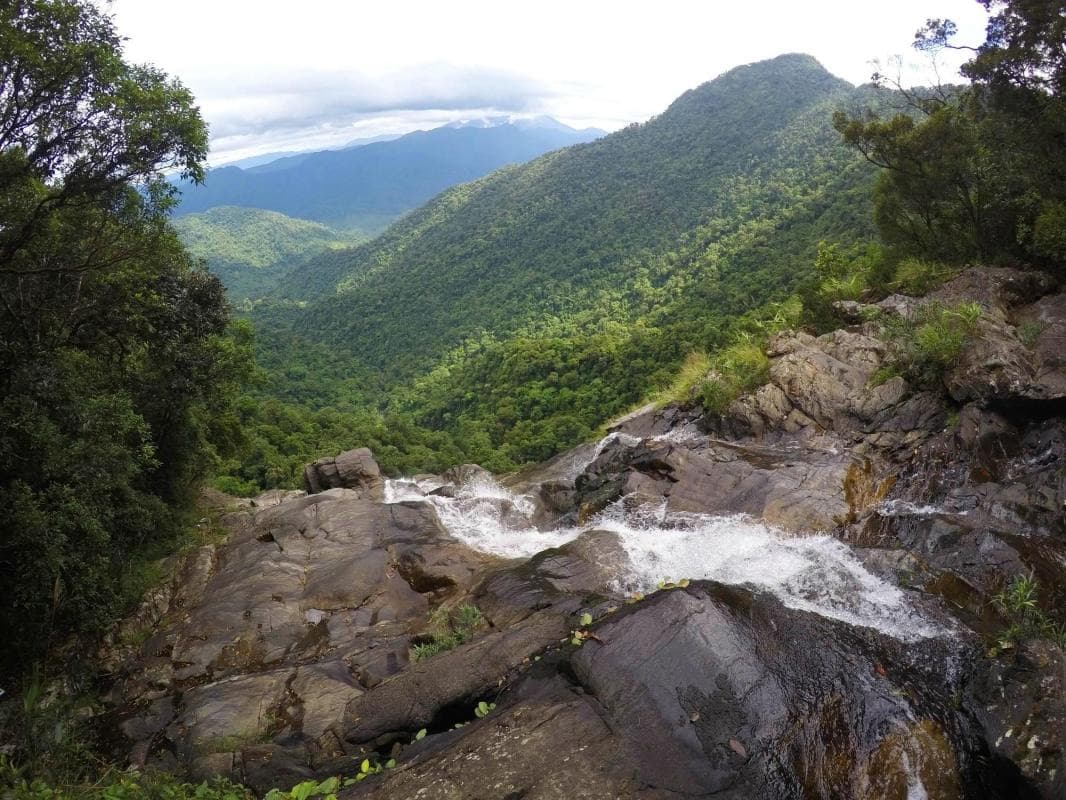
Bach Ma National Park (Vuon Quoc gia Bach Ma) is the high, green spine between Hue and Da Nang: a semi-tropical forest with peaks cresting at 1,450 meters, a scatter of French-era villas, and a handful of waterfalls and alpine lakes that feel improbably cool for central Vietnam. The park reads like a compact anthology of landscapes—mist-shrouded ridgelines, deep valleys threaded by streams, and moss-slick trails that lead to pools so clear the stones at the bottom seem painted.
The park has a layered history. In the early 20th century the French civil engineers and colonial officers carved out summer bungalows here to escape lowland heat; vestiges of those villas—Tran Le Xuan Villa and Ngo Dinh Can Villa among them—sit now as weathered ornaments along shaded roads. Since its declaration as a national park, Bach Ma has been managed to protect a high diversity of flora and fauna: orchids and rhododendrons color the understory, and the higher ridges host species unique to this corridor between the Truong Son range and the coast.
Geology is straightforward and honest. The mountain is a block of older metamorphic and igneous rock that lifts abruptly from coastal plains—hence the sharp views at Hai Vong Dai. Rainfall feeds a series of stepped tarns collectively called the Five Lakes; where streams tumble they carve narrow gullies and small, dramatic falls like Do Quyen Waterfall. Although the park is compact, the vertical rise is significant enough that you feel climate shift as you climb: warmer, wetter air at the base; a clean, cool wind at the summit.
Most visitors choose a day route that combines the highlights: the visitor center, the ocean-view tower at Hai Vong Dai, the Five Lakes, and Do Quyen Waterfall. Tours from Hue, Da Nang or Hoi An typically run full-day (expect 9–11 hours including transfers) and are the easiest way to see it if you’re short on time. For hikers, a full loop that includes the summit and Five Lakes can be 6–10 kilometers and is best described as moderate—trail quality varies between switchbacks of packed earth and root-strewn singletrack.
The character of the place is deceptively tame. Trails are often damp and can be slippery after rain, leeches are present in the wet season, and streams that look shallow can sting with current after heavy rains. But the tradeoff is immediate: pockets of untouched forest, bright orchids clinging to trunks, and the sudden drama of a waterfall boiling white between dark walls. Wildlife punctuates the walk—loud bulbuls, trillers, and the occasional shadow of muntjac—while the persistent hum of the forest keeps time.
Practical planning matters. The simplest, most satisfying visit is early: catch sunrise views from Hai Vong Dai if you can, then descend into the lakes and waterfall in midday light. Bring a guide if you want history and routes, and if you plan to swim in the Five Lakes, pack a quick-dry swimsuit—the water is pristine but brisk. Tours vary from small-group treks to private pick-ups that include the scenic drive over Hai Van Pass; both choices get you the same scenery, but a local guide enriches the trip with bird calls, plant IDs and the backstories of abandoned villas.
Respect for the park’s limits keeps these places alive. Stick to marked trails and avoid feeding wildlife; the park charges entrance fees that help maintain trails and control visitor numbers. Leave no trace—especially in the lakes and near fragile plant communities—and consider supporting local homestays or guides to ensure the economic benefits of tourism stay local.
For travelers: good hiking shoes, a breathable rain layer, and a water system are the obvious musts. And timing: the best months are the spring shoulder season when mist and clear days alternate, creating dramatic light without the heavy rains of monsoon season. When you stand at Hai Vong Dai, coffee steaming at your fingers, and watch the coastline reveal itself under a thinning bank of cloud, you’ll recognize why Bach Ma’s layered character—natural, historic, and slightly unruly—has become a favorite escape for people traveling between Hue and the central Vietnamese coast.
Whether you come for a single-day trek or linger for a night under the trees, Bach Ma is the kind of mountain that rewards attention. It asks for sensible gear, some patience with variable weather and a willingness to be slowed down. Give it that, and it gives you a cool, green pocket of Vietnam that feels like an entirely different climate—and a reminder that the country’s most accessible wild places still deserve reverence.
Trail wisdom
Small choices, better day.
Start at dawn
Early starts give you the clearest ocean views from Hai Vong Dai and cooler trekking conditions before midday heat and fog return.
Shoes for slippery trails
Wear grippy, waterproof hiking shoes—roots and wet rock are common after even light rain.
Bring a local guide
Guides know the best lines to the Five Lakes, can identify wildlife and share historical context about the colonial villas.
Respect water safety
Pools look inviting but can be cold and have uneven bottoms—test before diving and avoid strong currents after rain.
Local knowledge
Read the place, not just the route.
Watch for native species including Orange-breasted trogon (seasonal sightings), Muntjac and a variety of tropical birds.
Keep an eye out for wildlife during the transition between areas and habitats. Respect distance guidelines.
Park entry fees and regulated trails help limit visitor impact; stick to paths, carry out trash and use local guides to support community-based conservation.
Follow the guide's instructions on size limits, ethical handling, and leave-no-trace practices.
Early morning view at Hai Vong Dai for cloud inversions. Secluded swimming holes near the Five Lakes (reachable on quieter trails)
Locally recommended viewpoints and quiet spots known best to local operators.
Bach Ma was a French colonial hill station in the early 20th century; remnants of villas remain and add a human layer to the natural landscape.
Maritime roots and regional tradition shape the waterways and working coasts.
Seasonal guide
Four versions of the same landscape.
Spring
Best forClear ocean views · Wildflower blooms · Comfortable trekking temperatures
ChallengesIntermittent mist · Cool mornings
Spring (Feb–Apr) is prime: crisp mornings, rhododendrons in bloom and reliable windows of clear weather for ocean views.
Summer
Best forLush rainforest foliage · Long daylight hours
ChallengesAfternoon storms · Higher humidity and leeches
Summer brings thick green growth and dramatic waterfalls, but expect heavy rains and slippery trails in the afternoons.
Fall
Best forStable weather · Fewer tourists
ChallengesCooler nights · Foggy mornings
Autumn offers stable, pleasant days for trekking; early fog can obscure views, but trails are quiet and comfortable.
Winter
Best forCool summit air · Cloud inversions at dawn
ChallengesChilly mornings · Possibility of persistent fog
Winter is cool and atmospheric—ideal for misty photographs—but dress warmly for chilly summit exposures.
Pack with intention
What to bring.
Good to know
Common questions.
Regular tours offer round-trip transfers from Hue, Da Nang and Hoi An; independent travelers can rent a car or motorbike, but the mountain road includes tight, misty sections—drive cautiously.
Plan the edges
The details that make the day easier.
Bach Ma National Park contains Hai Vong Dai, a peak reaching 1,450 meters, and the area was designated a national park in 1991 to protect its unique montane rainforest.
After a day on the trail, head back toward Hue for a bowl of bun bo Hue or stop at Lang Co for fresh seafood and grilled oysters—local communities around the park are small and hospitality-focused, and homestays offer a direct tie to regional culture.
- Distance
- ~40 km south of Hue; Park peak: 1,450 m; Typical visit: full-day tour or independent day hike; Entrance fee: paid at Visitor Center; Best access: organized transfer from Hue
Use local guides, stay on marked trails, carry out all waste and avoid single-use plastics—park revenues support trail upkeep and community conservation programs.
Explore by topic
Follow the threads.
Keep exploring
Make the story part of the trip.
 Related story
Less than two hours from Nairobi, Kereita Forest pairs hands-on canopy adventure with quiet montane trails and a sobering colonial history—perfect for families, teams, and curious travelers seeking a full-day pulse of nature.
Set out from Bass Harbor for a private, customizable day on Blue Hill Bay — lighthouses, puffins, seals, and the chance to feel Acadia from the water. Small groups, local captains, unforgettable views.
In four hours you can move from shaded canyon ferns to wind-scoured coastal ridgelines, guided by someone who knows where the light—and the hidden views—live. This private half-day hike on the Monterey Peninsula or Big Sur is compact, curated, and perfect for travelers who want depth without a multiday commitment.