
What the day feels like
By the time the minivan tears away from Catania’s traffic, the city noise has already thinned into a different kind of sound—the low, persistent breath of a sleeping mountain. Mount Etna dominates the horizon, a layered silhouette of blackened rock and sudden green. You climb onto the flanks in an SUV, rattling over old lava, and the landscape starts to speak: the pines along Via Mareneve whisper, the lava fields radiate a slow heat, and the ground underfoot seems to hold a memory of fire.
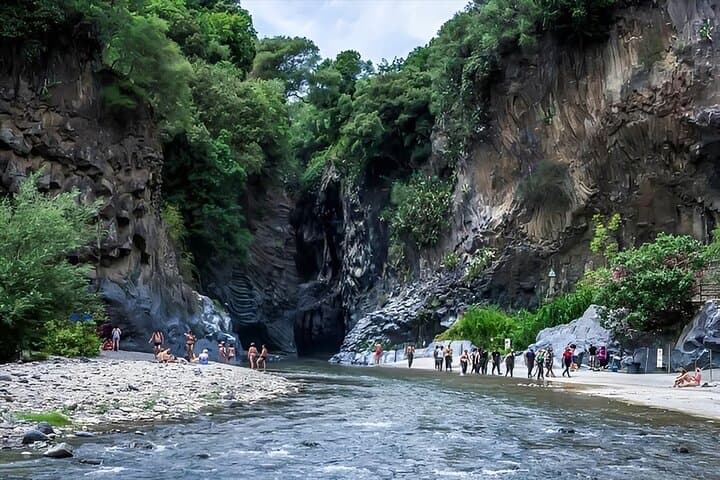
This is the rhythm of the <a href='https://app.advcollective.com/local-experts/etna-and-alcantara-gorges-excursion-lava-trails-and-river-canyons-from-catania'>Etna and Alcantara Gorges Excursion</a>, a single-day loop that parcels a lot of Sicily into useful, sensory bites. You’ll go off-road to the 2002 eruption’s lava front, set out on a short trek through a Ragabo pine forest from 1,650 to 1,750 meters (an easy, well-marked 100-meter ascent), and peer into subterranean blackness inside the Grotta dei Ladroni—helmets and torches provided. After a included lunch at a local chalet, the day cools into the Alcantara Gorges: basalt cliffs rise like frozen waves where the river dares you to dip a hand and test the current.
The geological contrast is the trip’s argument: fire and water carved side-by-side spectacles. Etna is a living stratovolcano—one of Europe’s most active—and its eruptions have repeatedly rewritten the island’s map. The Alcantara Gorges are the other half of the story: columnar basalt walls formed where lava cooled against the river’s flow, cracking into hexagonal pillars that make the canyon look engineered. Walking through those basalt columns feels like walking through time, each layer a page in Sicily’s deep history.
There’s culture threaded into the geology. The towns that dot Etna’s base—Rifugio Sapienza, Linguaglossa, Castiglione di Sicilia—are built on volcanic soil, which is why vineyards producing Etna’s bright, mineral-driven wines cluster on these slopes. After a day on the trail you’ll appreciate why locals prize these small, high-altitude vineyards: the harvest tastes like the mountain itself.
The excursion is practical in its pleasures. The hike is accessible—suitable for most people comfortable on uneven ground—and the itinerary is calibrated to a broad audience: off-road driving to dramatic viewpoints, a gentle 1-km walk with 100 m of gain to the Monti Sartorius craters, an exploration of a lava tube, and a late-afternoon visit to the Alcantara Gorges where cooling off in the river is an option. Helmets, torches, and a guided group limit (up to 8) keep the route safe and intimate. Lunch—an included pasta course, drink, and coffee at a local chalet—grounds the trip in the island’s hospitality.
If you’re thinking in terms of fitness and logistics, consider this: the day runs 6–8 hours, with roughly 100 meters of elevation gain on the primary walk. Trails are volcanic scree and compacted dirt; the lava cave requires stooping and steady footing. Pack for sun, wind, and sudden temperature shifts—Etna can be blazing at the base and brisk near the craters.
Why do this trip instead of just driving to one viewpoint? Because the itinerary stitches together varied terrains—forest, recent lava, cave, and river canyon—in a loop that reads like a compact primer on Sicilian geology and landscape culture. Guides bring local knowledge—where the 2002 flow stopped, how communities rebuilt, which vineyards are family-run—and because the tour links these stops, you get both the big picture and the human detail.
A practical caution: currents in the Alcantara can be deceptively strong and water temperatures are cold year-round. If you go in, treat the river with respect. Also, volcanic landscapes host fragile plants and soil: stay on trail. If you want to book, the trip is commonly sold as a day excursion from Catania—search for the <a href='https://app.advcollective.com/local-experts/etna-and-alcantara-gorges-excursion-lava-trails-and-river-canyons-from-catania'>Etna and Alcantara Gorges Excursion</a> to get the exact meeting point and seasonal schedules.
For travelers, the day leaves space for an aftertaste of Sicily: a tasting of Etna wine in Castiglione, a stroll through Catania’s fish market, or an evening in Taormina with its coast views and old stone streets. It’s a complete day that’s both accessible and richly textured—fire, forest, cave, and river all in one itinerary—and it’s a smart option if you want geological spectacle without a multi-day commitment.
If you go, arrive rested, wear good boots, bring swimwear and a small towel, and leave time afterward for a slow, local meal. The mountain and the river are patient; they’ll teach you what they want to reveal.
Trail wisdom
Small choices, better day.
Footwear Matters
Wear sturdy hiking boots with a grippy sole—the volcanic scree and basalt are slippery when wet.
Bring Swim Gear
Pack a swimsuit and quick-dry towel if you want to cool off in the Alcantara river; currents can be strong so stay near the shore.
Helmet Provided
Helmets and torches are supplied for the Grotta dei Ladroni lava cave; still bring a small headlamp if you prefer a personal light.
Start Early
Begin in the morning to avoid mid-day crowds and to have cooler conditions on the higher flanks of Etna.
Local knowledge
Read the place, not just the route.
Watch for native species including Peregrine falcon (commonly seen near cliffs), Mouflon and local mountain fauna in quieter slopes.
Keep an eye out for wildlife during the transition between areas and habitats. Respect distance guidelines.
This area sits within regional protected zones—stay on marked trails, avoid collecting geological samples, and pack out all waste to protect fragile volcanic soils and river habitats.
Follow the guide's instructions on size limits, ethical handling, and leave-no-trace practices.
Ragabo pine viewpoints overlooking recent lava fields. Small family-run vineyards in Castiglione di Sicilia offering Etna wines
Locally recommended viewpoints and quiet spots known best to local operators.
Etna’s eruptions have shaped local communities for millennia; the Alcantara’s basalt columns formed when lava cooled quickly against river water, creating the canyon’s striking geometry.
Maritime roots and regional tradition shape the waterways and working coasts.
Seasonal guide
Four versions of the same landscape.
Spring
Best forWildflowers and mild temperatures · Less crowded trails
ChallengesVariable weather on the mountain · Cool water in the gorges
Spring is ideal for comfortable hiking and flowering scrub; expect cool mornings and rapid temperature swings by noon.
Summer
Best forLong daylight hours · Perfect river cooling stops
ChallengesHigh temperatures at lower elevations · Busy tourist season
Summer brings hot lowlands and packed beaches—the Alcantara river is a welcome refuge but book in advance.
Fall
Best forCrisp air and clear views · Harvest season and wine tastings
ChallengesUnpredictable rains on the slopes · Cool nights
Autumn offers great visibility and cultural harvest events; bring warm layers for cooler crater-top conditions.
Winter
Best forSnow-capped crater views · Fewer visitors
ChallengesCold temperatures and possible snow · Restricted access to higher routes
Winter can deliver dramatic snowy contrasts on Etna but may limit off-road access—check with your operator.
Operator details
What the booking data adds.
Included
- ✓Entrance fee to the Alcantara Gorges (through the municipal entrance)
- ✓Private transportation
- ✓A first course, water and coffee or tea
- ✓Bottled water
- ✓Trekking equipment: helmet and flashlight, hiking poles (upon request)
- ✓Air-conditioned vehicle
Good to know
- ✓Not recommended for pregnant travelers
- ✓Public transportation options are available nearby
- ✓Suitable for all physical fitness levels
- ✓NOT suitable for cruise ship passengers due to scheduling conflicts.
- ✓For safety reasons, due to volcanic activity or particularly unfavorable weather conditions, the tour may be modified or canceled at the guide’s discretion. We’re here to have fun together, but safety comes first.
Pack with intention
What to bring.
Good to know
Common questions.
Yes—children who are steady walkers can do the itinerary; however the lava cave requires careful supervision and entrance is at the guide’s discretion.
Plan the edges
The details that make the day easier.
Mount Etna is one of the world’s most active volcanoes and the highest in Italy, frequently reshaping its slopes and nearby landscapes.
After the hike, head to Castiglione di Sicilia or Linguaglossa for a glass of Etna red and local antipasti. Back in Catania, don’t miss the La Pescheria fish market and a plate of pasta alla Norma.
- Closest airport
- Catania–Fontanarossa (CTA)
- Typical drive to trailhead
- 1–1.5 hours from Catania
- Cell service
- intermittent above 1,500 m
- Permits
- no special permits but park rules apply, helmets provided in-cave
Stay on designated trails to protect endemic plants and volcanic soils; pack out all trash and avoid disturbing riverbank habitats in the Alcantara Gorges.
Explore by topic
Follow the threads.
Keep exploring
Make the story part of the trip.
 Related story
Less than two hours from Nairobi, Kereita Forest pairs hands-on canopy adventure with quiet montane trails and a sobering colonial history—perfect for families, teams, and curious travelers seeking a full-day pulse of nature.
Set out from Bass Harbor for a private, customizable day on Blue Hill Bay — lighthouses, puffins, seals, and the chance to feel Acadia from the water. Small groups, local captains, unforgettable views.
In four hours you can move from shaded canyon ferns to wind-scoured coastal ridgelines, guided by someone who knows where the light—and the hidden views—live. This private half-day hike on the Monterey Peninsula or Big Sur is compact, curated, and perfect for travelers who want depth without a multiday commitment.