
What the day feels like
The canyon takes its time revealing itself. From the shuttle van that peels away from Moab’s low-slung sandstone skyline, the land unfolds into a raked, red-brown amphitheater: fins of Wingate and Navajo sandstone, sculpted by wind and time, leaning toward a ribbon of river that threads the bottom of Westwater Canyon. On approach the river looks confident, deceptively calm between seams of white. Then the guides unload boats, straps creak, and the canyon’s voice becomes louder—an insistence that you are about to be part of something moving.
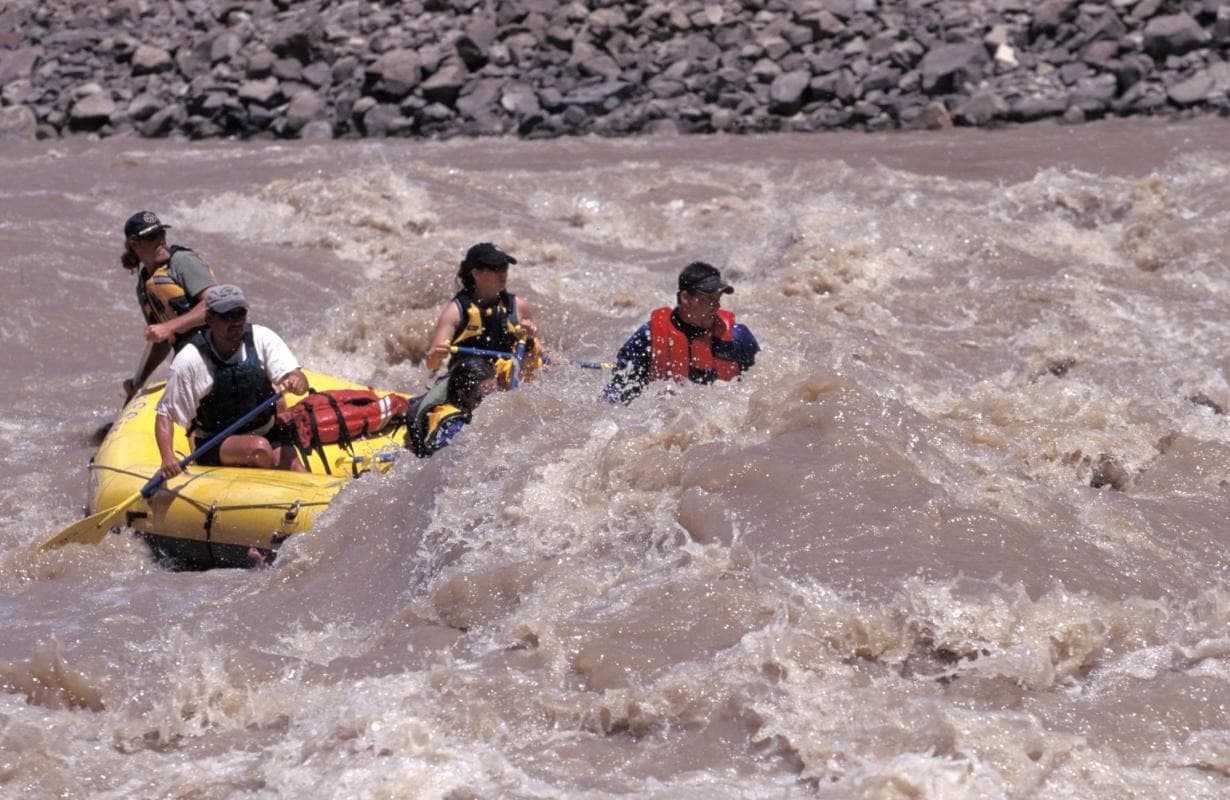
Westwater Canyon is a compact, dramatic stretch of the Colorado River about an hour west of Moab. It’s one of the region’s most concentrated whitewater experiences: a full-day trip here strings together a sequence of Class III and IV rapids—Marble Canyon, Sock-It-To-Me, Funnel Falls and Skull—framed by steep red walls and geological layers you can read like a field guide. The rapids are the headline, but the canyon’s quieter moments are what linger: eddies that polish reflections of rust and gold, shorelines alive with cottonwoods and desert scrub, and expanses of exposed rock that hold the patina of human history.
Geology and history are inseparable in the canyon. The rock formations that flank the river record a deep-time story—sandstone shaped by ancient dunes and braided rivers—while evidence of human presence stretches back centuries in the form of petroglyphs and indigenous pathways higher on the rims. European explorers and early river runners later followed the same waterway, testing the limits of craft and courage. Today guided trips balance that history with modern safety and interpretation; guides point out fossil fragments, explain the canyon’s formation, and occasionally call attention to cultural sites—always respectful and often reverent.
The experience is kinetic. In the rapids you paddle hard, then let the river take over; guides call commands that cut clean through the canyon acoustics. Between booms of whitewater there are languid pools where you can hang an arm in the current and feel the river’s cool insistence. The canyon’s personality alternates: sometimes it dares you—fast, technical drops and surging hydraulics—other times it invites you to look and listen, to notice a kestrel hovering or a ring of petroglyphs glimpsed on a bench above the waterline.
Why come here? For the intensity of the whitewater, certainly. Westwater is one of the most accessible places near Moab to find sustained Class III–IV rapids in a dramatically framed canyon. But the trip also offers a balanced day: adrenaline peaks punctuated by slow stretches that let you savor the landscape and learn the natural and human stories that made it.
Practicalities are straightforward but worth planning. Most operators run full-day Westwater Canyon trips out of Moab with door-to-river logistics handled for you: shuttle, safety briefing, gear, and a guide who reads the river like a map. Trip durations commonly run 6–8 hours from pickup to drop-off. Wear quick-drying layers, a hat, and a high-SPF sunscreen; river spray and sun in the slot-canyon geometry can be relentless. Footwear that straps on (river shoes or sandals with toe protection) is better than bulky hiking boots. Bring a dry bag for camera gear, and keep any loose items secured—the river claims stray sunglasses and flip-flops.
Timing matters. Spring runoff usually means higher flows and more dynamic rapids—best for those chasing a bigger ride—while late summer brings warmer water and mellower currents in some sections. Guides assess daily water levels and will adjust lines and safety protocols accordingly. For photographers, the best light is often early morning or late afternoon, when canyon walls glow and the contrast is softer.
Safety is not optional here. Westwater’s rapids can be technical; reputable outfitters staff trips with professional guides, provide personal flotation devices and helmets, and walk groups through rescue protocols before launching. Listen closely to briefings, follow the guide’s commands on the water, and be honest about your comfort and physical limitations when booking. Many operators offer alternate Colorado River sections—like Castle Valley or Fisher Towers—for paddlers seeking gentler Class II runs or more photography-friendly floats.
Local culture and logistics: Moab is the basecamp for Westwater Canyon adventures. The town hums with outdoor commerce—gear shops, outfitters, and restaurants catering to river and trail people. Respecting private land and archaeological sites is part of being a good visitor here; if a guide points out a petroglyph, keep a healthy distance and photograph from afar. Leave no trace applies doubly in the canyon: the River carries what you put in and spreads it downstream.
For many, a Westwater Canyon trip is transformative because it condenses the American Southwest—the stark geology, the desert sun, the river’s raw energy—into a single, full-bodied day. It’s the kind of trip you tell other adventurers about: a sequence of rapids that test your mettle, pockets of calm that invite reflection, and landscapes that feel both ancient and immediate. If you like your travel with an edge—but also with clear logistics, expert guidance, and meaningful context—this stretch of the Colorado delivers.
Plan: book with a licensed guide, pack for sun and spray, and set aside a full day. Arrive curious and prepared to get wet. The canyon rewards both.
Trail wisdom
Small choices, better day.
Trust the guides, listen to the brief
Guides know daily river conditions; follow commands exactly during rapids and ask questions during calm stretches for interpretation and safety context.
Wear secure, quick-drying footwear
Strap-on river shoes or sandals protect toes, dry quickly, and won’t come off in rapids like loose flip-flops will.
Protect your head and skin
A helmet is provided on most trips; bring a brimmed hat and high SPF sunscreen for long exposure between canyon walls.
Bring a waterproof camera or dry bag
Water and spray are constant—secure electronics in a dry bag or bring an action camera for hands-free shots.
Local knowledge
Read the place, not just the route.
Watch for native species including American kestrel, River otter (occasionally).
Keep an eye out for wildlife during the transition between areas and habitats. Respect distance guidelines.
Operators follow strict leave-no-trace practices and avoid touching cultural sites; choose outfitters that emphasize pack-in/pack-out, minimal-impact lunches, and local stewardship programs.
Follow the guide's instructions on size limits, ethical handling, and leave-no-trace practices.
Quiet eddies and side channels where you can drift and watch canyon wall textures up close. Shoreline stops with accessible petroglyph panels noted by guides (observe from a distance)
Locally recommended viewpoints and quiet spots known best to local operators.
Westwater Canyon’s river corridor has been a travel route for indigenous peoples for centuries; later Euro-American explorers and ranchers used the river for transport and resources.
Maritime roots and regional tradition shape the waterways and working coasts.
Seasonal guide
Four versions of the same landscape.
Spring
Best forHigh-flow adrenaline · Dynamic Class IV lines
ChallengesCold mornings and chilly spray · Variable rapid strength
Spring runoff increases flows and power—expect bigger rapids and a more technical ride; layers and a waterproof outer layer help stay comfortable.
Summer
Best forWarmer water · Extended photo windows in calm stretches
ChallengesIntense sun exposure · Lower flows can change rapid features
Warm weather makes for comfortable swims and relaxed shore breaks, but sun protection and hydration are critical.
Fall
Best forStable water and mild temps · Fewer crowds
ChallengesCooler mornings · Shorter daylight hours
Fall offers balanced flows and pleasant air temperatures—an ideal window for photographers and mixed-skill groups.
Winter
Best forSolitude · Clear, crisp light
ChallengesCold water temps · Limited commercial trips
Winter trips are uncommon; expect cold conditions and fewer outfitters operating—confirm availability and protective gear in advance.
Pack with intention
What to bring.
Good to know
Common questions.
Full-day trips typically take 6–8 hours from pickup in Moab to drop-off, including shuttles, safety briefings, and on-river time.
Plan the edges
The details that make the day easier.
Westwater Canyon’s Colorado River run features sustained Class III–IV whitewater and is carved through distinctive Navajo and Wingate sandstone formations visible in the canyon walls.
Moab’s hospitality blends outfitter grit with laid-back desert culture—refuel at local cafés serving hearty breakfasts and southwestern fare, and check gear shops for last-minute river essentials and local route intel.
Choose outfitters that practice minimal-impact river operations, respect cultural sites, and participate in local river corridor stewardship; pack out all trash and avoid disturbing archaeological features.
Explore by topic
Follow the threads.
Keep exploring
Make the story part of the trip.
Set out from Bass Harbor for a private, customizable day on Blue Hill Bay — lighthouses, puffins, seals, and the chance to feel Acadia from the water. Small groups, local captains, unforgettable views.
In four hours you can move from shaded canyon ferns to wind-scoured coastal ridgelines, guided by someone who knows where the light—and the hidden views—live. This private half-day hike on the Monterey Peninsula or Big Sur is compact, curated, and perfect for travelers who want depth without a multiday commitment.
 Related story
Beneath a sky of shifting light, Skaftafell’s ice reads like a map of time. This three-hour guided glacier hike mixes technical instruction with geology and culture: compact, safe, and unforgettable.