
What the day feels like
The air on Point Loma tastes like salt and motion. A brisk wind threads through scrubby coastal sagebrush and the low, gnarled windrows of torrey pines, carrying the distant rasp of breakers. Stand on the western lip at Cabrillo National Monument and the Pacific opens like a dark, living map: whale spouts along the horizon in winter, a scatter of kelp beds nearer shore, and, below, the ragged terraces of Sunset Cliffs giving way to tide pools that the ocean reads and rewrites each hour. This is a headland that asks you to move slowly and look closely—where geology, history and modern city life converge at the edge of California.
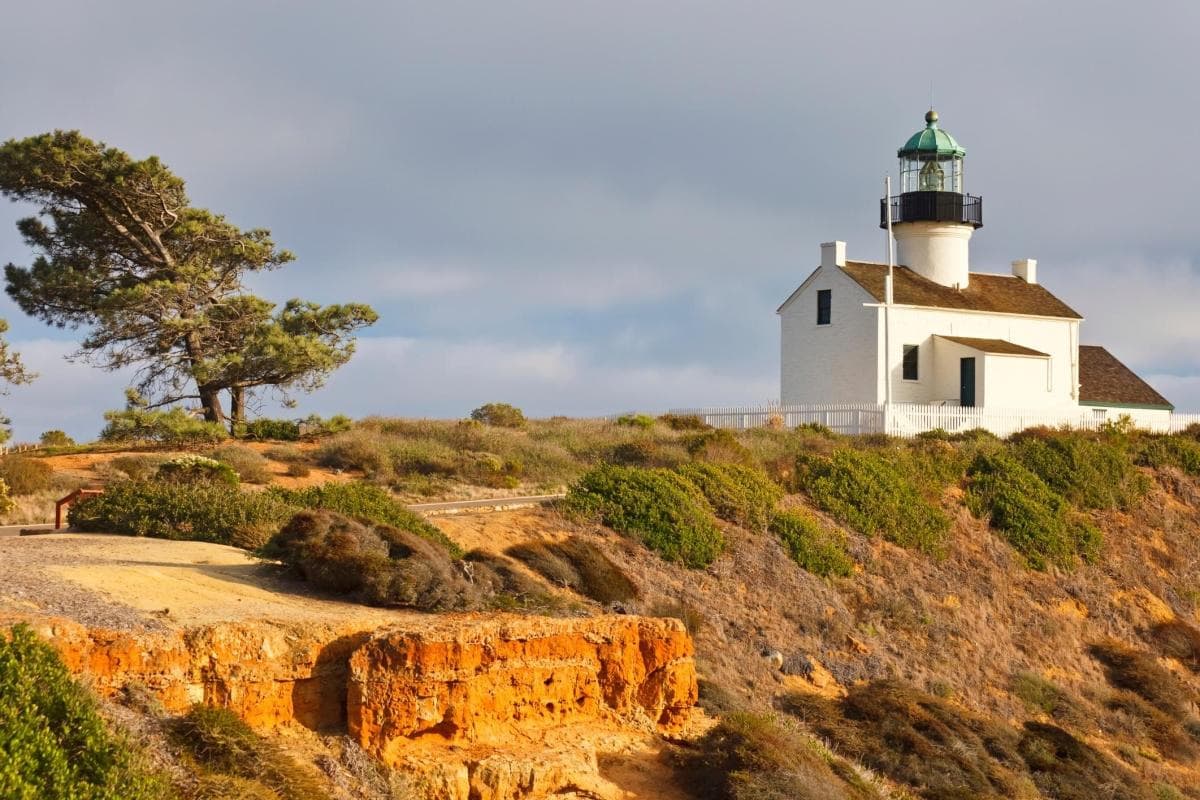
Start with the obvious draw: the lighthouse at Cabrillo National Monument. The whitewashed Old Point Loma Lighthouse perches above the ocean like a maritime sentinel, a 19th-century answer to the peninsula’s raw geology. The monument commemorates Juan Rodríguez Cabrillo’s 1542 landing, the first recorded European entry into what is now the U.S. West Coast. The lighthouse and the museum make for a compact dose of history, but the landscape is the real exhibit. Volcanic outcrops and uplifted marine terraces tell a long story of tectonic pressure, sea-level swings and relentless wave erosion. The cliffs cut vertically; the sea carves horizontally, and the human imprint—historic forts, lighthouses, and the neighborhoods of Point Loma—clings to both forms.
Walk the peninsula and you’ll find contrasting textures: paved viewpoints at the monument with interpretive panels and binoculars; a patchwork of asphalt and packed dirt paths that bend with the coastline; stairway descents to exposed tidepools; and a network of neighborhood streets and small marinas that frame the inner bay. One practical route that gives a thorough sense of the place is a Point Loma coastal loop—starting at Cabrillo, following the Bayside Trail toward the lighthouse and continuing west along Sunset Cliffs to the tidepools and back via the coastal road. It’s roughly 3–4 miles and climbs and drops a few hundred feet—manageable for a morning outing yet varied enough that you feel like you’ve been somewhere.
This peninsula is not only for walkers. Birders stake out the cliffs during fall and spring migration; grizzled anglers cast from the rocks and small boats thread the harbor; photographers come for the halation of sunrise and the saturated skies of marine layer sunsets. Tidepool explorers, meanwhile, learn patience: low tide is the time to go, and the intertidal life—sea anemones, hermit crabs, small sculpins—sits vulnerably in tidepools that demand quiet and respect.
Practicalities live close to the poetry here. Cabrillo National Monument charges an entrance fee (national park rates apply), parking fills up on fair-weather weekends, and the wind—constant and often cold—makes the morning or late afternoon deceptively chilly even when the sun peeks through. Public transit reaches parts of Point Loma but a car gives the most flexibility. Because tidepools are a highlight, check the tidal schedule before you go; low tide windows are the golden hours for intertidal exploration and photography.
Terrain is mixed: paved viewpoints, compact dirt trails, and narrow cliff-top paths that can be uneven underfoot. Expect sections of stair descent to the waterline; slip-resistant shoes or low-profile hiking footwear are the pragmatic choice. Elevation changes are not alpine—think hundreds of feet rather than thousands—but the exposure to wind and sun makes layering essential.
Culture and cuisine anchor the area back to San Diego. After a morning on the headland, head to nearby Liberty Station or Point Loma Avenue for tacos, fresh seafood, or a local brew. Point Loma Seafoods and neighborhood taquerías capture the city’s maritime and Mexican-American culinary threads; the sunset crowd often drifts from cliffs to patio dining in a single seamless movement.
Conservation matters here. The intertidal zone is fragile—don’t pry animals from the rocks, and keep dogs and feet off sensitive algae beds. The monument and local groups actively manage erosion, invasive plants and visitor access to protect nesting birds and coastal scrub. Small actions—packing out trash, staying on established trails and observing wildlife at a respectful distance—make a disproportionate positive difference.
For the planner: aim for fall if you want the best balance of sun and low marine layer, and for winter to catch gray whale migration from the headland. Mornings bring calmer seas and softer light; afternoons can kick up strong onshore wind that produces a dramatic but chilly experience. Bring layers, check tide tables, and give yourself time—Point Loma rewards wandering, not rushing.
Whether your visit is a brisk coastal walk, a slow hour at a tide pool, a photography-focused sunrise, or a short history lesson by the lighthouse, Point Loma combines the immediacy of the sea with shaped rock, maritime heritage and modern city life close at hand. It’s an accessible edge of continent that still manages to feel wild, where each step along the cliff is equal parts geology lecture and invitation. If you go prepared—to read the tide, to respect the ecology, and to dress for wind—you’ll find a place that’s as informative as it is arresting.
Distance & logistics summary: Expect 3–4 miles for a full loop that includes Cabrillo and Sunset Cliffs, roughly 250–350 ft of cumulative elevation gain, mixed paved and packed dirt terrain, and stair sections to access tide pools. Check the National Park Service site for Cabrillo hours and fees. Low tide = tidepool window; fall = best overall weather; winter = whale season and more dramatic seas. Pack layers, shoes with grip, water, and leave no trace.
Trail wisdom
Small choices, better day.
Time low tide for tide pools
Plan your visit around the low-tide window (typically morning) to explore marine life safely and avoid submerged rocks.
Layer for wind and sun
Bring a windproof layer and sun protection—temperatures can feel much cooler on exposed cliff tops even on sunny days.
Pay monument fees and arrive early
Cabrillo National Monument charges an entrance fee and parking fills quickly; arrive early on weekends or use a weekday morning.
Respect fragile habitats
Stay on marked paths at the cliffs and avoid touching tide pool animals to preserve delicate ecosystems.
Local knowledge
Read the place, not just the route.
Watch for native species including brown pelican, harbor seal.
Keep an eye out for wildlife during the transition between areas and habitats. Respect distance guidelines.
Local agencies and volunteers actively manage erosion and restore native coastal scrub; visitors are asked to stay on paths and avoid disturbing tidepool organisms to protect fragile habitats.
Follow the guide's instructions on size limits, ethical handling, and leave-no-trace practices.
The narrow trail down to the tide pools beneath Sunset Cliffs (best at low tide and quiet weekday mornings). Small viewpoints near the Point Loma Nazarene University shoreline for a quieter skyline view of San Diego Bay
Locally recommended viewpoints and quiet spots known best to local operators.
Point Loma is the site of Juan Rodríguez Cabrillo's 1542 landing and hosts the Old Point Loma Lighthouse (mid-19th century), connecting maritime exploration and coastal defense history.
Maritime roots and regional tradition shape the waterways and working coasts.
Seasonal guide
Four versions of the same landscape.
Spring
Best forwildflower blooms · migratory birds · moderate hiking
Challengeslate-season winds · variable visibility from marine layer
Spring brings coastal wildflowers and migrating birds; mornings can be foggy but days often clear—dress in layers and watch wind forecasts.
Summer
Best forevening sunsets · long daylight hours · family tidepooling
Challengesmarine layer (June gloom) · crowded weekends
Summer has long daylight and excellent sunset photography, but expect foggy mornings (June Gloom) and busier parking areas.
Fall
Best forclear skies · mild temperatures · ideal hiking conditions
Challengesoccasional Santa Ana winds · cool evenings
Fall is often the most pleasant time—less marine layer, milder temperatures and lower visitor density—great for full coastal loops.
Winter
Best forgray whale watching · dramatic surf · moody light for photography
Challengesstrong winds and storms · rough seas making some areas hazardous
Winter offers whale sightings and dramatic waves but can bring strong onshore winds and rainy weather—check conditions before visiting.
Pack with intention
What to bring.
Good to know
Common questions.
Yes—Cabrillo National Monument is managed by the National Park Service and charges a vehicle entrance fee; check the NPS site for current rates and free-entry days.
Plan the edges
The details that make the day easier.
Juan Rodríguez Cabrillo's 1542 landing at Point Loma is the first recorded European exploration of what is now the U.S. West Coast; the Old Point Loma Lighthouse was later built on the headland in 1855.
Point Loma blends maritime tradition and San Diego’s Mexican-American flavors—after a walk, try fish tacos or fresh seafood at Point Loma Seafoods, and sip local craft beer at Liberty Station restaurants.
Stay on designated trails, avoid touching tide pool life, pack out all trash and consider traveling by bike or transit to reduce car congestion and protect fragile coastal habitats.
Explore by topic
Follow the threads.
Keep exploring
Make the story part of the trip.
 Related story
Less than two hours from Nairobi, Kereita Forest pairs hands-on canopy adventure with quiet montane trails and a sobering colonial history—perfect for families, teams, and curious travelers seeking a full-day pulse of nature.
Set out from Bass Harbor for a private, customizable day on Blue Hill Bay — lighthouses, puffins, seals, and the chance to feel Acadia from the water. Small groups, local captains, unforgettable views.
In four hours you can move from shaded canyon ferns to wind-scoured coastal ridgelines, guided by someone who knows where the light—and the hidden views—live. This private half-day hike on the Monterey Peninsula or Big Sur is compact, curated, and perfect for travelers who want depth without a multiday commitment.