
What the day feels like
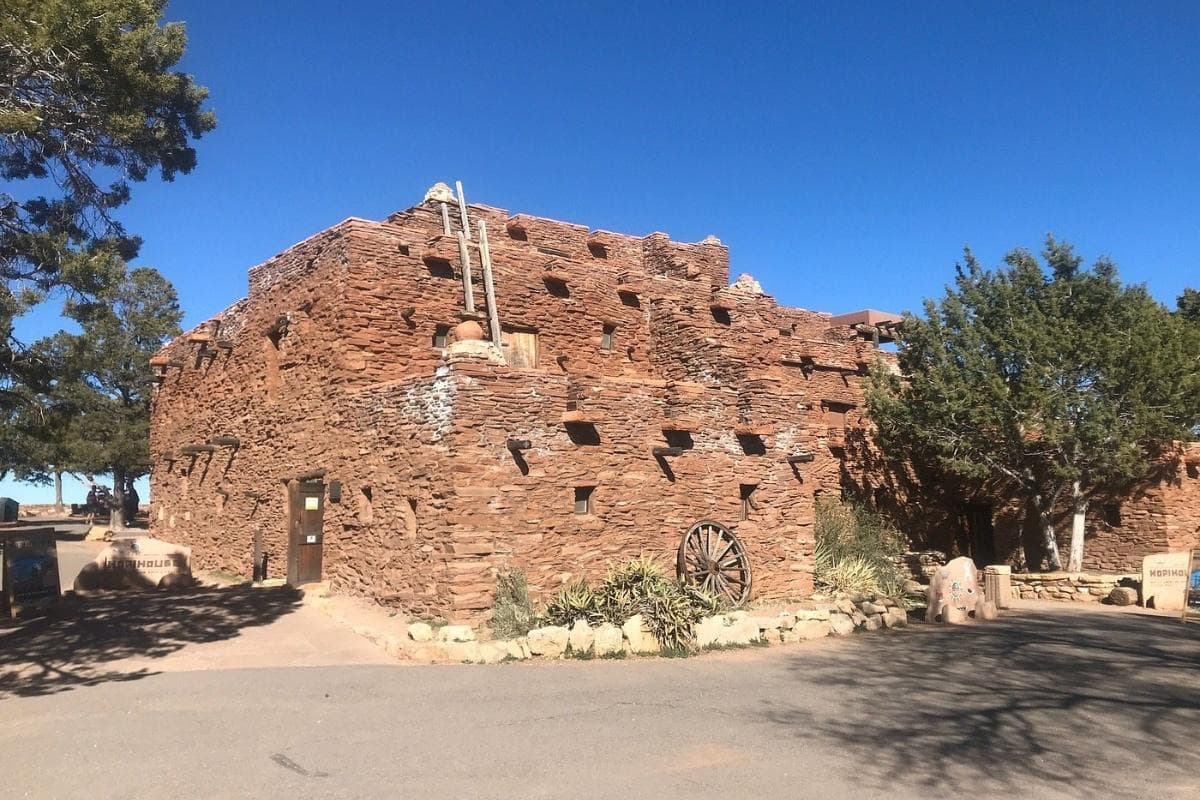
The first light of morning slides across the canyon like a slow curtain call. From the rim the Grand Canyon yawns wide and stratified—an amphitheater of reds, creams, and shadowed terraces. Framed against that raw horizon is Hopi House: a low, terraced silhouette of stone and adobe that doesn’t so much belong to the hotel-lined promenade of the South Rim as gently remind it of another scale—human craft, Indigenous lives, and the long sweep of place that predates the tourist gaze.
Step closer and the building’s intent becomes clear. Hopi House is not a museum preserved behind glass; it was conceived as a living storefront. Built in the early 20th century by Mary Colter for the Fred Harvey Company, its design echoes Hopi pueblos, a deliberate hand that sought to showcase—and sell—Native-made arts. Today, it still houses artisan-made pottery, kachinas, and weavings. It is both a portal into regional craft traditions and a quiet counterpoint to the spectacle that is the Grand Canyon.
The house sits at the heart of Grand Canyon Village, a terse human cluster on a rim that averages about 7,000 feet above sea level. From here you can watch geology in action: the rim’s Kaibab Limestone shelves give way to an exposed cross-section of the Colorado Plateau, exposing rock records spanning hundreds of millions of years. The canyon’s terraces feel alive—sun moves, shadows chase the ridgelines, and thermals lift the occasional raptor. Soon after dawn, condors and ravens test the updrafts; later, mule deer may pick their way through scrub near the lodges.
Hopi House’s cultural context matters. Mary Colter’s architecture recognized the value and dignity of Native aesthetics at a time when tourism’s appetite for the “authentic Southwest” was only beginning; the house became a market intended to employ Native artisans and to educate visitors about craft traditions. While its history is interwoven with a commercial impulse, the building remains a portal to living traditions. When you browse the displays, ask about provenance—many items are now clearly labeled, and seasonal pop-ups or traveling traders sometimes appear in the plaza outside.
If your visit to Hopi House is part of a single-day Grand Canyon trip, you’ll find it easy to fold in other highlights. The El Tovar Hotel, Kolb Studio, Lookout Studio, Mather Point and Bright Angel Trailhead are all within a short, polished rim walk. For travelers short on time, a host of guided options make sense: private tours from Sedona or Flagstaff let you roll up via Route 66 or the red rocks and leave the driving to someone else; small-group vans and luxury buses from Las Vegas deliver a comfortable, interpretation-rich day at the rim; and for a more off-grid feeling, a three-hour back-road safari uses a 4x4 route to bypass entrance-line traffic and offers wildlife viewing opportunities along with strategic rim walks.
Each option has trade-offs. Private tours offer flexibility—linger in Hopi House, ask questions, and enjoy a quieter moment on the rim. Small-group and bus tours are budget-friendly and pack the park’s essential viewpoints into a day. The back-road safari is practical during busy periods: the permit-backed route saves time and adds a sense of adventure as you approach the canyon through Kaibab National Forest.
For planning, remember two straightforward facts: the South Rim sits at high elevation, and the rim’s walkways are often fully exposed. Hydrate before you arrive; short rim walks are deceptively tiring at 7,000 feet, especially in summer heat or if you’re coming from near sea level. Good footwear matters—paved paths hide uneven rock and grit—and sun protection is non-negotiable. If you plan to explore beyond the rim for any distance (for example, a short descent on Bright Angel Trail), fold in snacks, layers, and a headlamp for early starts or lingering light.
Timing changes everything. Sunrise and sunset render the canyon cinematic and keep the sun off your back during rim walks. Midday is busiest, with tour buses and family clusters crowding viewpoints. If you want to video or photograph Hopi House without crowds, try early morning or the late golden hour, when light kisses the building’s rounded edges and the air cools.
Buying a handcrafted piece at Hopi House is more than a memento; it’s a small transaction with a cultural footprint. Look for authenticity statements and ask staff where the pieces come from—many items come from regional artisans and tribal co-ops. If you can’t afford a major purchase, ask about small stamped jewelry, postcards illustrated by Native artists, or the occasional demonstration—these are ways to contribute to local craft economies while keeping your pack light.
On any visit, stay curious and respectful. The canyon is a living landscape with human stories layered into it: ancestral routes, contemporary residency, and an ongoing relationship between tribes and the park. Listen to ranger talks, read the interpretive panels in Kolb Studio, and give yourself a few slow minutes on a rim bench to let the scale settle in. Hopi House is a human frame within that vast, geologic theater, a place where craft and canyon coexist. Approach it not just as a stop on a sightseeing map but as a point of connection—between artistry and place, between past and present, and between your own small journey and a landscape that has been telling its story for far longer than any of us have been listening.
Trail wisdom
Small choices, better day.
Acclimate to the elevation
Spend an hour resting after arrival and sip water—7,000 ft can sap energy quickly even on short rim walks.
Timing matters
Visit Hopi House at sunrise or late afternoon to avoid crowds and get the best light for photos.
Ask about provenance
If you plan to buy Native-made crafts, ask staff for origin details and look for tribal or artisan labels.
Use the shuttle or a guided tour
Parking at the South Rim fills quickly—consider the park shuttle or one of the private/small-group tours to avoid lot headaches.
Local knowledge
Read the place, not just the route.
Watch for native species including California condor, mule deer.
Keep an eye out for wildlife during the transition between areas and habitats. Respect distance guidelines.
The National Park Service works with tribal partners and vendors to improve provenance transparency and supports leave-no-trace practices—buying from verified artisans helps sustain local communities.
Follow the guide's instructions on size limits, ethical handling, and leave-no-trace practices.
Kolb Studio’s historic photography exhibits just downhill from Hopi House. Sunrise at Yavapai Point—less crowded than Mather Point but equally dramatic
Locally recommended viewpoints and quiet spots known best to local operators.
Hopi House was designed by architect Mary Colter in 1905 for the Fred Harvey Company as a place to display and sell Native-made crafts and to employ regional artisans.
Maritime roots and regional tradition shape the waterways and working coasts.
Seasonal guide
Four versions of the same landscape.
Spring
Best forwildflower accents on rim · milder temperatures · birdwatching
Challengesunpredictable weather · cool mornings · possible late snow
Spring brings cool, comfortable days and migratory birds, but mornings can be chilly and occasional storms still occur—pack layers.
Summer
Best forlong daylight hours · full tour schedules · family travel
Challengeshigh daytime heat at lower elevations if hiking · crowds · monsoon storms in afternoons
Summer fills the park with visitors and activity; plan early starts, carry sun protection, and watch for fast building monsoon storms.
Fall
Best forcrisp air and clear light · fewer crowds · ideal photography
Challengescooler mornings and evenings · shortening daylight
Autumn is arguably the sweetest time to visit: cooler weather, clearer air, and dramatic light make rim walks and craft shopping more pleasant.
Winter
Best forsnow-dusted vistas · quiet trails · unique photos
Challengesicy paths, road closures possible · limited services · cold temperatures
Snow transforms the rim into a quieter, starkly beautiful place—dress warmly and verify road and service status before you go.
Pack with intention
What to bring.
Good to know
Common questions.
Yes—Hopi House is generally open year-round, but hours can vary seasonally and on holidays; check the National Park Service or local visitor center for current hours.
Plan the edges
The details that make the day easier.
Hopi House was designed by architect Mary Colter in 1905 and was intended both as an architectural homage to Hopi pueblos and as a marketplace for Native artisans—a model that helped shape early cultural tourism in the Southwest.
Pair a stop at Hopi House with lunch at El Tovar Dining Room for historic Southwestern hospitality, visit nearby Native-owned galleries in Tusayan or Flagstaff for deeper craft connections, and seek out Navajo and Hopi storytelling sessions when available.
Buy verified Native-made goods, follow leave-no-trace principles on the rim, and choose small-group or permit-backed operators that adhere to park conservation rules to minimize impact.
Explore by topic
Follow the threads.
Keep exploring
Make the story part of the trip.
 Related story
Less than two hours from Nairobi, Kereita Forest pairs hands-on canopy adventure with quiet montane trails and a sobering colonial history—perfect for families, teams, and curious travelers seeking a full-day pulse of nature.
Set out from Bass Harbor for a private, customizable day on Blue Hill Bay — lighthouses, puffins, seals, and the chance to feel Acadia from the water. Small groups, local captains, unforgettable views.
In four hours you can move from shaded canyon ferns to wind-scoured coastal ridgelines, guided by someone who knows where the light—and the hidden views—live. This private half-day hike on the Monterey Peninsula or Big Sur is compact, curated, and perfect for travelers who want depth without a multiday commitment.