Down the Spine of Crete: A Day in Samaria Gorge
A full-day descent through one of Europe’s most dramatic limestone gorges—mountain to sea, wild goats to village tavernas.
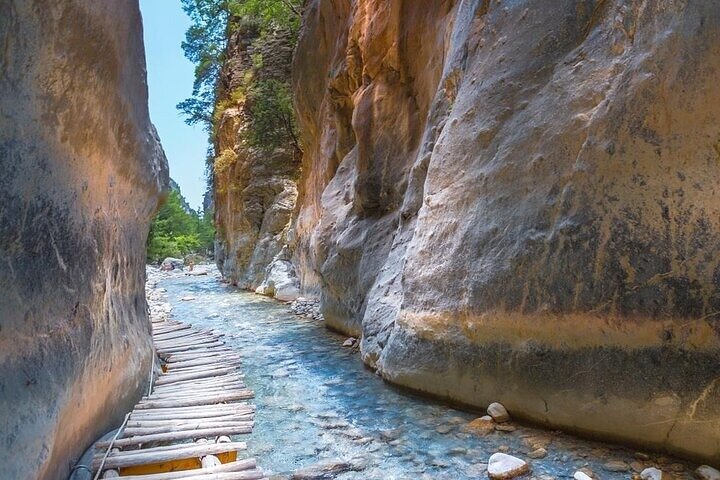
You begin the day before the sun fully wakes: a ribbon of diesel hum along a coastal road, the island cooling behind you as the White Mountains shrug off dawn. The trailhead at Xyloskalo perches on a plateau called Omalos; below, the Samaria Gorge yawns open — a raw cut through limestone that narrows and widens like a lung. First steps are on pale rock, the path angling down through sparse pines. The air smells faintly of resin and dry earth, and somewhere ahead the gorge narrows until the cliffs lean in close, shadowing the track and turning every footfall into an intimate exchange with the land.
Trail Wisdom
Start early
Begin at Xyloskalo to avoid heat and crowds; the best light and coolest conditions are in the morning.
Protect your knees
Use trekking poles and take controlled steps on long descents to reduce impact on knees and ankles.
Carry extra water
There’s no reliable potable water in the gorge—bring at least 2–3 liters per person in summer.
Plan ferry times
Check the afternoon ferry schedule from Agia Roumeli ahead of time—missed ferries can add hours to your return.
Local Knowledge
Hidden Gems
- •Quiet viewpoint at the lower canyon near the old iron gate (Iron Gates) where cliffs squeeze to their narrowest
- •Agia Roumeli’s small seafront taverna that serves freshly grilled fish and local Sfakia pies
Wildlife
Kri-kri (Cretan wild goat), Linnets and raptors such as buzzards
Conservation Note
The gorge is a protected area; stick to the trail, pack out waste, and avoid feeding wildlife—especially the endemic kri-kri.
Samaria has been a natural refuge for Cretan villagers for centuries and was declared a national park in the early 1960s, protecting its unique flora and fauna.
Seasonal Guide
spring
Best for: Wildflowers, Cooler hiking temperatures, Fewer crowds
Challenges: Unpredictable showers, Mud in shaded sections
Spring is ideal for mild weather and blooming flora, though showers can make some sections slick.
summer
Best for: Sea swim post-hike, Long daylight hours, Dry trail surfaces
Challenges: High heat and sun exposure, Crowds and limited shade
Summer offers hot, dry conditions and great sea-swimming but start early and plan for full sun.
fall
Best for: Comfortable hiking temps, Autumn light for photography, Reduced summer crowds
Challenges: Shortening daylight, Occasional storms late in season
Autumn balances mellow temperatures and light; still expect occasional storms as season progresses.
winter
Best for: Dramatic weather scenes, Off-season solitude, Snow on the high ridges
Challenges: Trail closures or limited services, Cold conditions and possible snow/ice
Winter is quiet and dramatic but services and ferry schedules are reduced; check park openings.
Photographer's Notes
What to Bring
Sturdy hiking shoesEssential
Support and durable soles are crucial for uneven limestone and scree descents.
Trekking polesEssential
Reduce knee strain on long descents and help with balance on loose rock.
3L hydration system or water bottlesEssential
Carry ample water; there’s limited reliable potable water in the gorge.
Sun protection (hat, SPF 30+, sunglasses)Essential
Sections of the trail are exposed with little shade—sun protection is non-negotiable.
Common Questions
How long is the Samaria Gorge hike?
The trail is approximately 16 km one-way from Xyloskalo to Agia Roumeli; hikers typically take 4–7 hours on the trail, though full-day tours run 9–12 hours including transfers and ferry time.
Do I need a guide or permit?
No permit is required for day hiking, but guides add local knowledge and logistical ease; check seasonal park openings before you go.
Is the route technical or exposed?
The trail is not technical; it includes rocky and narrow passages but no technical climbing. Good footwear and caution on loose sections are important.
Can I be picked up at Agia Roumeli?
Agia Roumeli is accessible only by foot or sea. Many tours include a ferry from Agia Roumeli to the southern ports (Sougia or Hora Sfakion) as part of return logistics.
Are there places to buy food or water on the trail?
There are no reliable shops inside the gorge. Agia Roumeli has small tavernas and shops at the end of the hike—carry food and water for the trail itself.
When is the best time of year to hike Samaria?
Shoulder seasons—May and September—offer the best balance of mild weather, blooming flora (in spring), and fewer crowds.
What to Pack
Sturdy shoes (support on descent), 2–3L water (hydration), sun protection (hat + sunscreen), lightweight layers (temperature change)
Did You Know
Samaria Gorge is approximately 16 km long and was designated a national park in the early 1960s to protect its unique endemic species such as the kri-kri.
Quick Travel Tips
Fly into Chania (CHQ); book transfers and ferries ahead; wear sturdy shoes with grip; bring cash for small tavernas.
Local Flavor
After the hike, stop in Agia Roumeli for grilled fish or Sfakianes pites (Sfakia pies) and a cold beer; alternatively, finish the day back in Chania Old Town for waterfront meze and raki in a taverna.
Logistics Snapshot
Closest airport: Chania International (CHQ); Trailhead: Omalos/Xyloskalo (~75 km, 1.5-hour drive from Chania); Cell service: patchy in gorge; Permits: no permit needed for day hikes but check seasonal park openings.
Sustainability Note
Samaria is a protected national park—stay on marked trails, pack out all trash, and avoid feeding wildlife to minimize human impact.