
What the day feels like
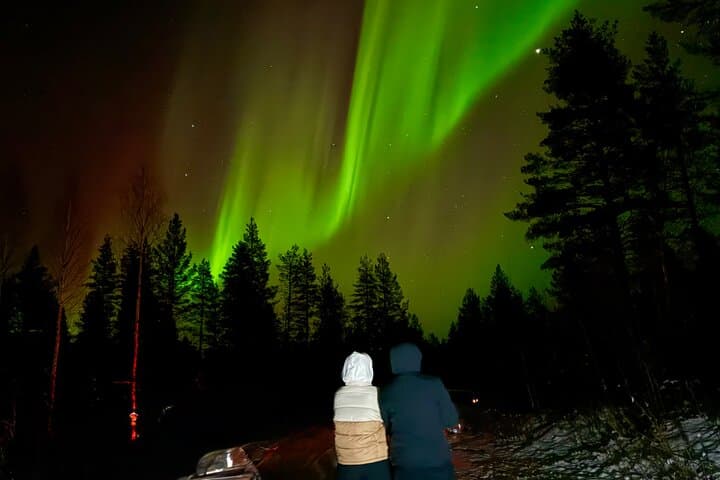
The night begins in a hush—a black so complete it seems to press into your lungs. You step from the van into a world that smells of dry spruce and cold iron; the forest around Rovaniemi holds its breath. Ten minutes feel like hours as your eyes adjust. Then the sky exhales. A pale green band unfurls, slow as a curtain, then splits and ripples like water pushed by an invisible current. The aurora dares you to watch. For three hours you are both intruder and guest, driven tens of kilometers away from the sodium glow of town, deeper into the frozen boreal where the lights have room to perform.
Northern Lights Hunting of Rovaniemi is a compact, hard-to-beat introduction to aurora aurora-chasing: a three-hour evening tour that’s equal parts fieldcraft and folklore. The operator ferries small groups out beyond the Arctic Circle, scouting multiple vantage points to stack the odds against an unpredictable sky. Between stops you stand beside a crackling fire, grill sausages, tuck into Finnish pie, sip hot berry juice, and toast marshmallows—simple comforts that feel monumental under the polar night.
Why this place? Rovaniemi sits at the southern edge of Finnish Lapland where the auroral oval regularly sweeps overhead. Geologically, the spectacle owes itself to charged particles from the sun slamming into Earth’s magnetosphere and funnelling along magnetic lines to collide with atoms in the upper atmosphere. The result is a natural light show, a conversation between the sun and the sky that has inspired Sámi stories and modern photographers alike.
The human side of the trip is as important as the celestial. Rovaniemi is a crossroads of Arctic cultures: Sámi traditions, reindeer herding, and a postwar rebuilding that gave the town its modern, modest rhythm. The tour’s fireside treats—local berry juice and simple pastries—are small nods to Lapland’s culinary staples. The guides, often locals who grew up knowing the rhythms of the polar night, read the sky the way a sailor reads sea-swell; cloud cover, geomagnetic indices, and even the smell of the air inform where they pull the van off the road.
Practicalities matter when you hunt auroras. This tour runs about three hours in the evening and takes you tens of kilometers from Rovaniemi’s center, so plan for a late return and cold. Terrain is flat to rolling tundra and frozen forest; you’ll be walking on packed snow and ice to reach viewpoints, not mountaineering but not a sidewalk stroll either. Because nature is fickle, the operator often moves between vantage points during the evening—what looks cloudy in one valley can be clear five kilometers away.
For photographers, the operation is efficient: guides look for dark foregrounds—snow-laden trees, the crown of a spruce, a frozen river—to give scale to the lights’ choreography. Bring a tripod, a wide-aperture lens (f/2.8 or faster), and a remote release; ISO settings in the 800–3200 range and exposures between 1–10 seconds are common starting points depending on activity. Battery life collapses in sub-zero air, so keep spares tucked against your body.
Comfort is tactical in Lapland. Layering is everything: a moisture-wicking base layer, insulating mid-layer, and a windproof, insulated outer shell will keep you in the field longer. Heated insoles, a wool hat, and rewarmable hand warmers are worth their weight in marshmallows. Hydration matters—cold air is dry and deceptive—so sip warm fluids between photo stints.
Booking is simple and accessible: the experience is offered with instant confirmation and free cancellation, making it a low-friction add-on to a Rovaniemi itinerary. Price starts from roughly $89, and small groups keep the atmosphere intimate and the search nimble.
No guide will promise a guaranteed aurora sighting; the whole point is the chase. When the sky doesn’t oblige, the trip still gives you a clear Arctic night, the hush of the snow, and a cultural vignette—an evening meal outdoors under a black dome, stories exchanged beside the fire. When the lights come, you’ll know why people travel here: they reset your sense of scale and contingency, reminding you how small and wild the world can feel.
If you go: aim for the months of peak darkness and stable weather; communicate dietary needs in advance for the fireside snacks; and treat the land gently. These landscapes feel fragile underfoot. Leave the sticks for the guides, pack out non-compostables, and keep flash photography to a minimum between shots so other hunters can enjoy the display. The aurora is a public performance for anyone willing to show up and wait,
In three hours you’ll experience a lot: patient searching, warm food, the camaraderie of strangers under the same sky, and—if the universe cooperates—an all-out light show. It’s an evening that asks only curiosity and sensible gear in return, and rewards with something old as the planet itself: a sky that moves like a living thing.
Trail wisdom
Small choices, better day.
Dress in layers
Use moisture-wicking base layers, an insulating mid-layer, and a windproof outer shell to manage Arctic temperatures.
Bring a tripod and spare batteries
Cold drains batteries fast—carry spares inside your jacket and use a sturdy tripod for long-exposure shots.
Book flexible windows
Tours move between locations; choose a night early in your trip so you can rebook if weather cancels.
Respect the environment
Stay on packed snow where instructed, avoid trampling vegetation, and pack out all trash.
Local knowledge
Read the place, not just the route.
Watch for native species including Reindeer, Arctic hare.
Keep an eye out for wildlife during the transition between areas and habitats. Respect distance guidelines.
Dark-sky etiquette and leave-no-trace practices are emphasized; avoid using bright lights and respect fragile tundra to minimize impact.
Follow the guide's instructions on size limits, ethical handling, and leave-no-trace practices.
Small frozen river corridors that reflect auroral light for doubled effects. Secluded spruce clearings where sound carries and groups stay isolated from roads
Locally recommended viewpoints and quiet spots known best to local operators.
Rovaniemi sits on the Arctic Circle and was rebuilt after WWII; it’s a modern gateway to Sámi culture and Lapland’s outdoor traditions.
Maritime roots and regional tradition shape the waterways and working coasts.
Seasonal guide
Four versions of the same landscape.
Spring
Best forLonger daylight for activities · Late-season auroras · Lower wind chill
ChallengesVariable snowpack · Melting ice patches
Early spring still delivers strong auroras with slightly longer days—expect cold nights but milder days and changing snow conditions.
Summer
Best forMidnight sun experiences · Hiking and fishing · Long daylight photography
ChallengesNo auroras in peak midnight sun · Warmth replaces snow scenery
Summer months are not suitable for Northern Lights hunting because the midnight sun prevents dark skies; use summer for other Arctic activities.
Fall
Best forEarly aurora season · Fewer tourists · Crisp, clear nights
ChallengesUnstable weather · Shorter daylight for daytime exploration
Autumn brings a return of dark nights and often clear skies—dress warm and be prepared for quickly changing weather.
Winter
Best forPeak aurora visibility · Snow-covered landscapes · Evening winter activities
ChallengesExtreme cold · Short daylight hours for daytime sightseeing
Winter is the optimal season for aurora hunting in Rovaniemi—long nights and snowbound scenery increase the chances of memorable displays.
Operator details
What the booking data adds.
Included
- ✓Traditional Lapland BBQ by the fireplace
- ✓Hotel pick up and drop-off
- ✓Air-conditioned vehicle
- ✓Licensed guide / driver
- ✓Some photo for free
Not included
- —Special warm clothes
Good to know
- ✓Suitable for all physical fitness levels
Pack with intention
What to bring.
Good to know
Common questions.
The standard tour duration is approximately three hours, typically in the evening to maximize dark-sky viewing.
Plan the edges
The details that make the day easier.
Rovaniemi lies right on the Arctic Circle (approximately 66°30′N) and is officially recognized as the hometown of Santa Claus.
After the tour, warm up with local Lappish dishes—reindeer stew, smoked salmon, and cloudberry jam are staples in Rovaniemi; finish with a Finnish sauna if your schedule allows to get a full Arctic evening reset.
- trailhead
- Rovaniemi Airport (ROV); Driving distance from Rovaniemi center: typically 20–60 km to search locations; Cell service: generally available but intermittent in remote spots; Permits or passes required: none for this commercial tour—respect private land and follow guide instructions.
Minimize light pollution by using red lights and avoid flash photos; pack out all trash and stay on hard-packed snow to protect delicate tundra vegetation.
Explore by topic
Follow the threads.
Keep exploring
Make the story part of the trip.
 Related story
Less than two hours from Nairobi, Kereita Forest pairs hands-on canopy adventure with quiet montane trails and a sobering colonial history—perfect for families, teams, and curious travelers seeking a full-day pulse of nature.
Set out from Bass Harbor for a private, customizable day on Blue Hill Bay — lighthouses, puffins, seals, and the chance to feel Acadia from the water. Small groups, local captains, unforgettable views.
In four hours you can move from shaded canyon ferns to wind-scoured coastal ridgelines, guided by someone who knows where the light—and the hidden views—live. This private half-day hike on the Monterey Peninsula or Big Sur is compact, curated, and perfect for travelers who want depth without a multiday commitment.