
What the day feels like
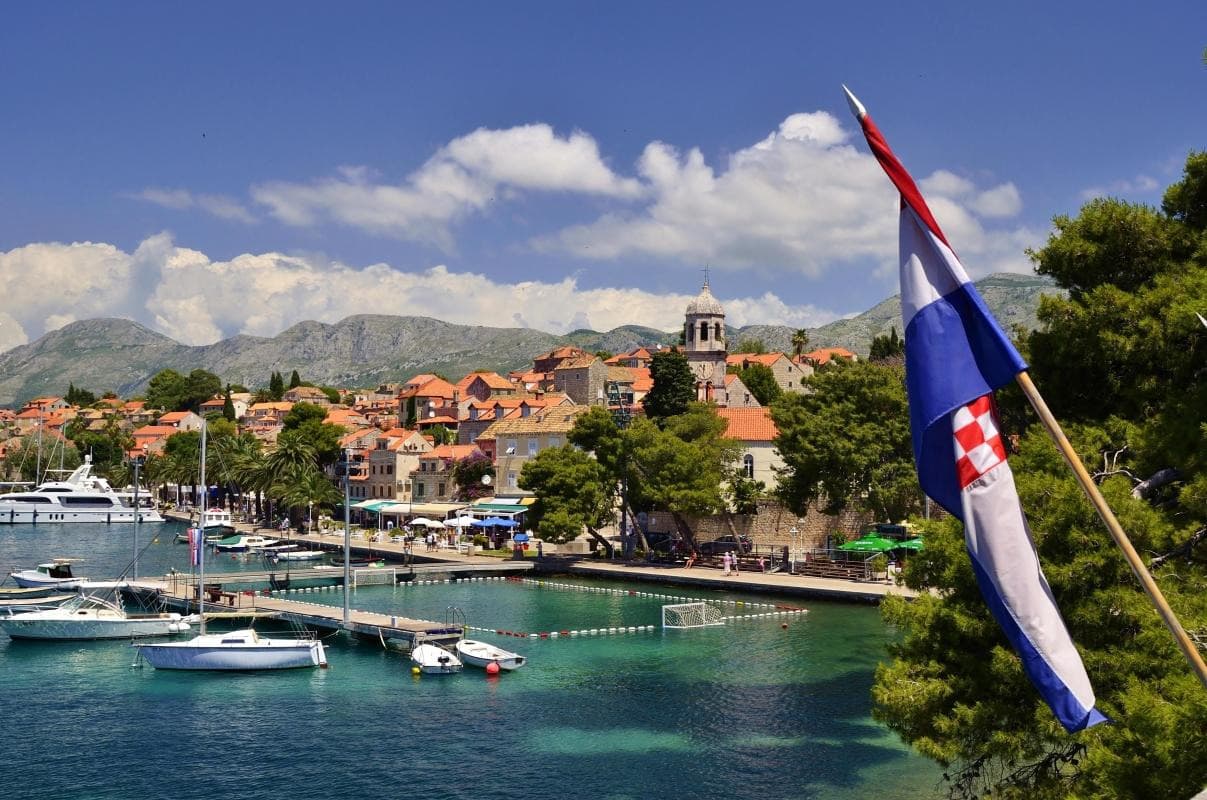
The first thing you notice in Cavtat is how the light refuses to settle. It slides along the harbor-side promenades, flattens the pale stone façades and turns the Adriatic into a slow-moving mirror. In the early morning the town yawns—fishermen mend nets beneath the church bells, a café owner sweeps the pebble steps and the Rat peninsula, a narrow finger of land, sends out a saline breath that feels like an invitation.
Walk the seafront and the town reveals itself in chapters: white-washed summer houses with painted shutters, tiny family-run konobas where sun-cured prosciutto hangs like an offering, and narrow alleys that open suddenly onto bays so still the boats seem to float in glass. The shoreline here is neither dramatic cliff nor endless sand; it’s a stitched-together edge of rocky shelves and small pebble beaches—perfect for a salty plunge after a morning of wandering and for watching currents push and tug at moored boats in the afternoon.
Cavtat’s compactness is its charm. From a practical perspective it’s a walking town—self-guided loops that take an hour or a lazy afternoon. Guided options flourish: a two-hour art-and-history walk that follows in the footsteps of Vlaho Bukovac and Ivan Meštrović, private half-day shore excursions linking Cavtat with panoramic photo points above Dubrovnik, and evening boat cruises that fold the town into the larger archipelago of Mrkan, Bobara and Supetar. Each product is a different lens on the same place: intimate, coastal, and quietly storied.
History is woven into Cavtat like the fishing lines along its piers. The town sits on the site of the ancient Greek colony Epidaurus, later woven into the fabric of the Roman and Byzantine eras, then into the maritime republics of the Adriatic. Sculptures and a small mausoleum dedicated to Meštrović sit on a low hill, a reminder that Cavtat punches above its weight in cultural pedigree. Geologically the Bay of Cavtat is Dalmatian coast: karst limestone folded by tectonics and sculpted by the sea, creating shallow bays, hidden coves and those long, patient rock shelves perfect for sunbathing or a jump into clear, cool water.
Culturally, the town is inseparable from the Konavle valley that unfurls inland—olive groves, vineyards and smallholdings that have fed Dubrovnik for centuries. Food here is simple and direct: grilled fish, octopus under a baker’s crust, home-pressed olive oil and the kind of bread that insists you eat slowly. Locals still celebrate saints’ days, and in summer, small concerts or exhibitions pop up in the piazzas.
Practicalities you’ll want: Cavtat is 15–20 minutes by car from Dubrovnik’s airport and roughly the same from Dubrovnik’s Old Town by road—close enough for a half-day trip, far enough to feel like you’ve slipped into a different rhythm. If you’re arriving on a cruise, private shore excursions give you a curated window into the town and often pair Cavtat with a dizzying viewpoint above Dubrovnik or a drive through Konavle’s agricultural plains. For less structured time, take a 1–2 hour self-led loop along the Rat peninsula promenade, then book a sunset boat drive (many run one hour) to see the coastline from water level—the islands look different from sea: jagged, private, patient.
Terrain is forgiving: minimal vertical gain, mostly paved promenades and stone steps. Bring footwear that can handle slick rock and shady cobbles—flip-flops are fine for the beach but not for the town’s uneven stones. If you plan to swim, know the water shelves into crevices; a soft-soled water shoe and a mask will let you explore small submerged coves.
Timing is everything. Visit in shoulder seasons—May and September—when the sea is warm enough for swims, terraces are less crowded and light is at its most cinematic. Late afternoons are for promenades and pre-dinner aperitifs; sunsets are best experienced from a small boat, where the coast turns a particular gold only the Adriatic manages.
Be mindful of the sea. The underwater meadows of Posidonia are fragile; book operators who follow ‘no-anchor’ practices and respect no-entry zones. Support small local guides and family-run konobas—tourism in Cavtat still runs on relationships as much as reservations.
Whether you want the intimacy of a 2-hour art-and-history walking tour that unfolds local biographies, the conviviality of a Konavle cooking class in a family household, or the slow romance of a sunset pasara boat gliding through Župa dubrovačka bay, Cavtat rewards a close look. It’s a place where the sea dares you to slow down and where history waits patiently on a sun-warmed bench to be listened to.
For planning: expect short transfer times from Dubrovnik, book sunset cruises in advance in high season, and leave time for a leisurely meal—this is no place to rush the last course of olive oil and bread. The town’s scale makes it ideal as a day trip from Dubrovnik or a calm base for exploring the southern Dalmatian coast. And once you’ve stood on its seafront and felt the light, you’ll understand why Cavtat keeps asking to be revisited—quietly, and on its own slow timetable.
Trail wisdom
Small choices, better day.
Book sunset cruises early
Sunset boat rides are popular—reserve in advance, especially in July–September, to secure a preferred time and boat type.
Wear grippy shoes
The promenades and rock shelves are beautiful but can be slick when wet—choose footwear with good traction.
Bring a snorkel or mask
Small coves off the Rat peninsula have clear water and interesting rock formations worth exploring.
Respect marine vegetation
Avoid anchoring on seagrass (Posidonia); opt for operators who moor responsibly to protect underwater habitats.
Local knowledge
Read the place, not just the route.
Watch for native species including Common dolphins, Mediterranean gulls and cormorants.
Keep an eye out for wildlife during the transition between areas and habitats. Respect distance guidelines.
Local operators are increasingly following no-anchor policies to protect Posidonia seagrass; support guides who practice low-impact boating and local sourcing of food.
Follow the guide's instructions on size limits, ethical handling, and leave-no-trace practices.
Walk the Rat peninsula at dawn—its small coves and sculpture-studded paths are serene before tour groups arrive. Take the short pasara out to Mrkan island for a quiet swim and to spot local seabirds
Locally recommended viewpoints and quiet spots known best to local operators.
Cavtat occupies the site of the ancient Greek colony Epidaurus and later produced notable artists like Vlaho Bukovac; Meštrović's mausoleum overlooks the town.
Maritime roots and regional tradition shape the waterways and working coasts.
Seasonal guide
Four versions of the same landscape.
Spring
Best forWildflower walks · Easter and local festivals · Calm walks without crowds
ChallengesCooler sea temperatures · Variable rainfall · Some services open seasonally
Spring brings mild weather and blooming hillsides—ideal for walking and local festivals, though the sea is still cooling down.
Summer
Best forSwimming and sunbathing · Long evening terraces · Full-service tourism options
ChallengesHigh season crowds · Higher prices · Hot midday sun
Summer is peak season for swimming and boat trips; plan for crowds and book dining or cruises ahead.
Fall
Best forWarm sea for late swims · Golden light for photography · Quieter streets and tables
ChallengesShorter daylight hours · Some seasonal closures late in season
Early fall (September) is optimal—sea retains summer warmth, crowds thin, and evening light becomes especially striking.
Winter
Best forOff-season cultural visits · Local life and low prices · Birdwatching along the coast
ChallengesCooler weather and limited boat services · Some restaurants closed · Shorter daylight
Winter is quiet and affordable—good for cultural visits and low-season travel, but expect reduced boat schedules and cooler swims.
Pack with intention
What to bring.
Good to know
Common questions.
By car or private transfer it's about 20–25 minutes; many shore excursions and private tours also include pickup from Dubrovnik cruise terminals.
Plan the edges
The details that make the day easier.
Cavtat was established on the site of the ancient Greek colony Epidaurus and is the birthplace of painter Vlaho Bukovac; Meštrović’s mausoleum sits on the town’s headland.
Cavtat’s culinary identity is tied to Konavle: fresh-caught fish, olive oil, homemade cheese, and family-run konobas—seek the slow-cooked lamb and seasonal pastries for authentic flavors.
- From Dubrovnik
- 20–25 min by car; self-guided loop 1–2 hours; guided art
Choose operators who use mooring buoys, avoid single-use plastics, dine at family-run konobas, and follow marked trails to minimize erosion and protect Posidonia meadows.
Explore by topic
Follow the threads.
Keep exploring
Make the story part of the trip.
 Related story
Less than two hours from Nairobi, Kereita Forest pairs hands-on canopy adventure with quiet montane trails and a sobering colonial history—perfect for families, teams, and curious travelers seeking a full-day pulse of nature.
Set out from Bass Harbor for a private, customizable day on Blue Hill Bay — lighthouses, puffins, seals, and the chance to feel Acadia from the water. Small groups, local captains, unforgettable views.
In four hours you can move from shaded canyon ferns to wind-scoured coastal ridgelines, guided by someone who knows where the light—and the hidden views—live. This private half-day hike on the Monterey Peninsula or Big Sur is compact, curated, and perfect for travelers who want depth without a multiday commitment.