
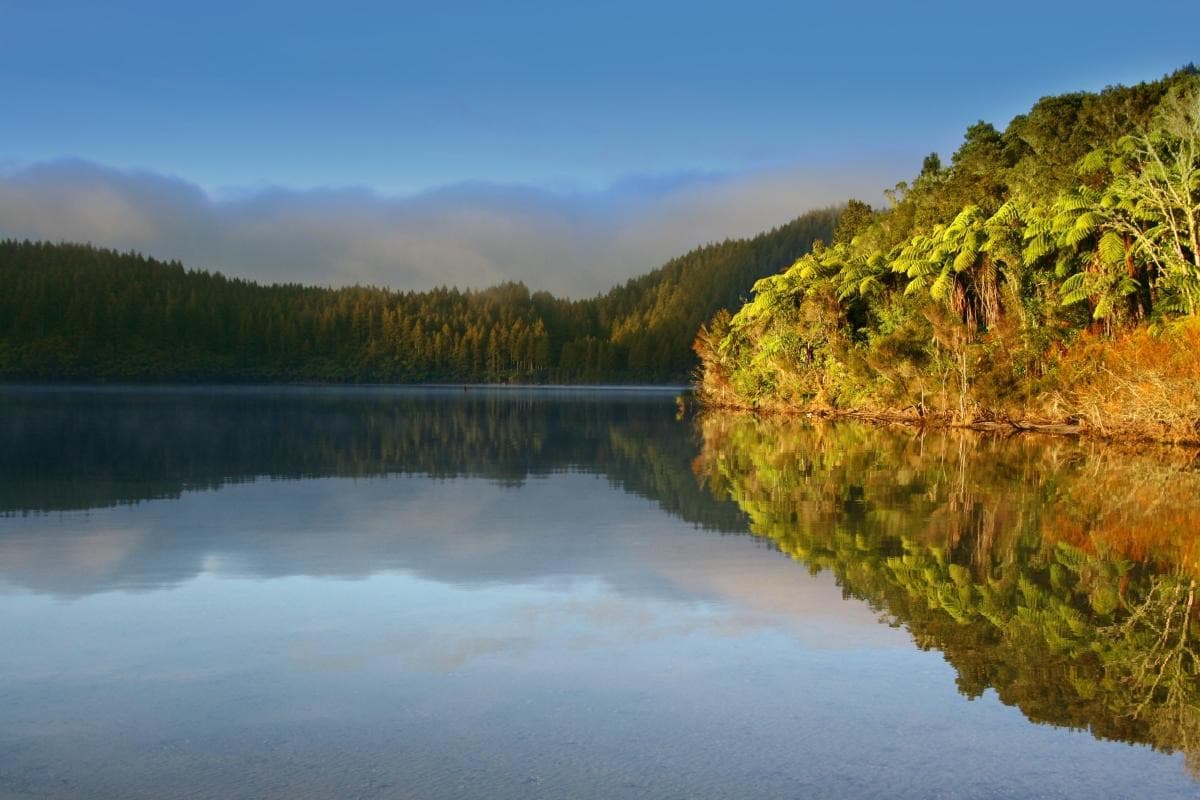
What the day feels like
You arrive at the car park before sunrise and the first thing you notice is color — an impossible, clear blue that the brightening sky seems to borrow and deepen. A ring of pōhutukawa and kānuka frames the bowl of water; a light breeze makes the surface shimmer like silk. On the trail, a runner passes with the kind of calm, efficient stride that comes from training on volcanic trails. A pair of kayakers glide out onto the lake as steam hisses from a distant geothermal vent, a reminder that this bright, calm basin sits inside an active volcanic neighborhood.
Lake Tikitapu — known to most visitors as Blue Lake — sits a ten-minute drive east of Rotorua and delivers one of the region’s quickest, most satisfying escapes. The loop path around the lake is compact (see the logistics section) but it packs in the elements that make Rotorua addictive: forest walks under tall trees, open viewpoint drops, shorelines so vivid you keep double-checking your eyes, and an immediacy of place — the visible interplay of volcanic earth, Māori history, and modern-day outdoor play.
Geology gives Blue Lake its personality. It is a volcanic lake formed within the Ōkataina volcanic complex; the color comes from water clarity and light interacting with mineral-rich bedrock. The wider Rotorua district is a quilt of crater lakes and geothermal features, with the 1886 eruption of nearby Mount Tarawera still part of the local story. Walk the shores here and you’re literally traversing a landscape shaped by explosions, ash flows and centuries of thermal activity.
The cultural overlay is as important as the rocks. The Māori name Tikitapu carries meaning and connection; local iwi have long-standing relationships with these waters and lands. Guides on the region’s lakes tours — the WWII amphibious “Duck” boat rides and smaller eco-boat trips available from Rotorua operators — weave Māori stories and European settlement history into their narratives, explaining place names and sharing why certain spots are tapu (sacred) or managed differently. Respecting those guidelines is part of enjoying the place responsibly.
Blue Lake works as a quick loop, a half-day outing, or a relaxed stop on a broader Rotorua lakes circuit. That flexibility is part of its charm: families launch inflatable paddle boards off the small beach; photographers wait for reflected clouds; birders scan for waterfowl and tūī in the trees; tour groups disembark from Ducks and stepped-out vans for short guided walks that highlight geothermal features and the scars of past eruptions.
For those who prefer structure, a half-day lakes tour from Rotorua — the “Explore the Lakes” small-group trip — stitches Blue Lake into a line-up with Green Lake, Lake Tarawera, and Hamurana Springs, adding waterfall viewpoints and native forest walks. The amphibious Duck tours are worth the novelty alone: they roll from road into water and give a compact, narrated primer on Rotorua’s lake origins and Māori heritage. For a longer immersive option, the Tarawera & Lakes eco-boat tour travels across multiple lakes and places you at the foot of Mt Tarawera, a dramatic endpoint that ties geology and human history together.
Practical edge: the Blue Lake walking loop is short but not trivial. The trail alternates between packed earth, exposed roots, and short boardwalk sections; wear supportive shoes and expect mud after rain. The water is inviting — many people swim in the warmer months — but check signage and local guidance: water temperature, currents and cultural protections can change where swimming is encouraged. Bring a lightweight rain shell; Rotorua’s weather can flip in an hour. Aim to visit early or late in the day for the best light and to avoid tour-bus crowds.
Safety and conservation are part of the visit. Stay on marked trails, carry out all rubbish, and be mindful of cultural restrictions that local iwi may place on diving or taking freshwater samples. If you join a guided tour, ask about the history of the lakes and the best ways to enjoy them without harming native flora and fauna. Those conversations will enrich your view: these lakes are not just scenic backdrops but living places with stories.
End your outing with a practical reward: a stop at a nearby café in Rotorua for a hot drink, or a dip in one of the thermal pools that put the region on many travelers’ maps. If you’re timing it right, combine Blue Lake with a visit to Whakarewarewa redwoods or a longer Tarawera circuit; many operators offer private or small-group itineraries that include both storytelling and the kind of local insight you won’t get from a map alone.
Why go? Blue Lake is compact, immediate, and honest. It doesn’t require a full-day commitment, but it delivers texture: clear water, warm forest shade, a visible history of fire and water, and a cultural framework that makes the scenery mean something. Whether you’re a quick day-tripper from Rotorua, a photographer chasing color, or someone who loves layering a short hike into a broader geothermal tour, Lake Tikitapu rewards attention and curiosity. Pack well, be respectful, and let the blue settle in — it’s the kind of place that socks off, shoes on, and remembers you long after you leave.
Trail wisdom
Small choices, better day.
Start early for light and solitude
Arrive at dawn or early morning to catch the glassy reflections and avoid coach groups; parking is small and fills quickly on fine weekends.
Wear supportive trail shoes
The loop includes roots and occasional slippery boardwalks—sturdy footwear reduces the chance of a sprain and keeps you comfortable.
Check cultural signage before swimming
Local iwi and park signage may note areas with spiritual significance or seasonal restrictions—respect these when entering the water.
Bring insect repellent
Dusk can bring mosquitoes along the shoreline; a small bottle of repellent makes late-afternoon visits more pleasant.
Local knowledge
Read the place, not just the route.
Watch for native species including Grey duck (parera), Tūī and kererū in the forest canopy.
Keep an eye out for wildlife during the transition between areas and habitats. Respect distance guidelines.
Local conservation efforts focus on pest control and native plant restoration; visitors can help by staying on trails and avoiding feeding wildlife.
Follow the guide's instructions on size limits, ethical handling, and leave-no-trace practices.
The small rocky vantage near the northeast shore for unobstructed reflections at sunrise. A short side path toward the southern end that gives quieter, bird-rich shoreline views
Locally recommended viewpoints and quiet spots known best to local operators.
Lake Tikitapu sits within the Ōkataina volcanic complex and is part of a landscape shaped by eruptions, including the 1886 Mt Tarawera event that rearranged shorelines and local ecosystems.
Maritime roots and regional tradition shape the waterways and working coasts.
Seasonal guide
Four versions of the same landscape.
Spring
Best forWildflower and bird activity · Cool-weather hikes
ChallengesMud on trails after rains · Unpredictable temperatures
Spring brings fresh green growth and active birdlife; expect variable weather and muddy sections after rain.
Summer
Best forSwimming and paddling · Long daylight visits
ChallengesHigher visitor numbers · Warm daytime sun
Summer is peak for water activity and warm, clear days—arrive early to beat the crowds and bring sun protection.
Fall
Best forCrisp light for photography · Quieter trails
ChallengesCooler mornings · Shorter days
Autumn offers golden light and fewer people; layers are helpful as mornings can be chilly and afternoons mild.
Winter
Best forMoody, dramatic scenery · Fewer tourists
ChallengesCold water and wind · Occasional ice or frost on paths
Winter visits are quiet and dramatic but require warm clothing and caution on frosted or wet trails.
Pack with intention
What to bring.
Good to know
Common questions.
The most common loop route around Blue Lake is approximately 3.5–4 km, typically taking 45–90 minutes depending on pace and stops.
Plan the edges
The details that make the day easier.
Lake Tikitapu is one of several Rotorua lakes formed within the Ōkataina volcanic complex and its color and shape were influenced by historic eruptions including the 1886 Mount Tarawera event.
Rotorua pairs outdoor adventure with strong Māori cultural experiences — look for hangi meals, guided storytelling at cultural centres, and locally run ecotours that support iwi and conservation groups.
- Access
- 10–15 minute drive from central Rotorua; Trail: ~3.5–4 km loop, 45–90 minutes; Facilities: small car park, limited toilets; Accessibility: uneven surfaces not suitable for full mobility access.
Stick to marked paths, carry out all waste, and follow guidance from local iwi regarding culturally sensitive sites — small actions help protect native species and sacred places.
Explore by topic
Follow the threads.
Keep exploring
Make the story part of the trip.
 Related story
Less than two hours from Nairobi, Kereita Forest pairs hands-on canopy adventure with quiet montane trails and a sobering colonial history—perfect for families, teams, and curious travelers seeking a full-day pulse of nature.
Set out from Bass Harbor for a private, customizable day on Blue Hill Bay — lighthouses, puffins, seals, and the chance to feel Acadia from the water. Small groups, local captains, unforgettable views.
In four hours you can move from shaded canyon ferns to wind-scoured coastal ridgelines, guided by someone who knows where the light—and the hidden views—live. This private half-day hike on the Monterey Peninsula or Big Sur is compact, curated, and perfect for travelers who want depth without a multiday commitment.