
What the day feels like
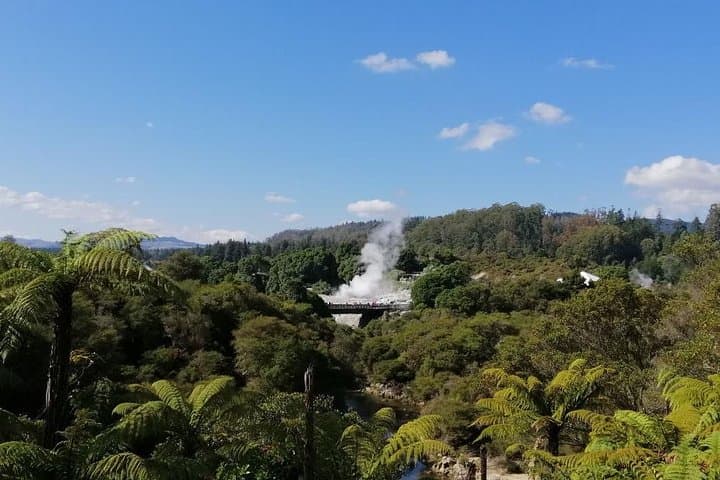
The van hums north to south, a thin ribbon of road unspooling through farmland, forest, and the occasional sheep-dotted ridge. On Day One you slip underground: a black, cool passage, the guide's whisper the only sound until the ceiling above the silent boat bedazzles with a trembling galaxy. Those tiny pinpricks are not stars but glowworms, congregated along the limestone of the Waitomo Caves. Days later you will stand in a movie set meadow beneath the framed doorway of the Hobbiton Movie Set, the cut of green sod and thatched façade so exact it tricks your brain into thinking fiction might be real. In between is Rotorua, a raw, steamy place where geysers puncture the sky and mud ponds bubble like nature’s own kiln. By the final morning Wellington reveals itself—a compact, windy city with coffee, craft beer, and a tidy civic harbor—and the arc of the trip closes with a new perspective on the North Island's uncanny variety. This four-day route is a concentrated primer on why New Zealand's North Island refuses to be summarized: subterranean bioluminescence, cinematic landscapes, and geothermal theater, all threaded through Maori culture and small-town hospitality. The experience is part geology class, part folklore, and part scenic road trip; it's also highly accessible, with hotel pick-ups, mid-range accommodations, and guided highlights. Practical readers should note the tour runs daily from Auckland and includes three nights in 4–4.5-star hotels anchored in Rotorua and Wellington, so pack for comfort and for walking short to moderate distances. The itinerary's headline moments—Waitomo's glowworm boat ride, a guided stroll of Hobbiton, a Te Puia visit in Rotorua with geysers and a Maori cultural performance, and a Wellington sightseeing circuit—are staged to balance spectacle with downtime. Walks at Hobbiton and Te Puia are flat but often on uneven ground; the Waitomo experience is an indoor boat trip requiring minimal mobility. For photographers this tour offers micro-scenes: the cool blue of glowworms reflected in cave water, the contrasting sulfur-yellow steam vents of Rotorua against a green backdrop, and cinematic light on the rolling pastures of Matamata. Time your shutter for soft mornings or late afternoons to avoid harsh overhead light; inside Waitomo you must rely on the low light of devices or set cameras to high-ISO, long exposures if allowed. Local culture is threaded through the route: Te Puia's Maori performance supports hapu who operate cultural centers, and your presence contributes to community economies that value interpretation and stewardship. Geologically, the North Island sits atop a subduction zone that fuels the Rotorua thermal field and has sculpted limestone karst that shelters Waitomo's caves. The Hobbiton Movie Set lives on private farmland in Matamata but has been preserved as an interpretive site that links cinematic tourism to rural livelihoods. Booking practicalities are straightforward: this Viator-listed tour runs about four days (roughly 96 hours), costs from USD 874.39, and includes hotel transfers; spaces can fill, so pre-book. Expect at least two long coach stints—Auckland to Waitomo/Matamata, and a final drive to Wellington—so bring layered clothing, good walking shoes, and patience for scenic stops. For planning, consider starting early from Auckland to maximize daylight at each stop and keep a flexible mindset: geothermal activity is natural and shifts, weather in the central North Island can be brisk and wet, and the glowworm show relies on dark, low-disturbance cave conditions. If you'd like a one-stop resource for booking and local expert insights, check this guided itinerary that ties the stops together: <a href="https://app.advcollective.com/local-experts/auckland-to-wellington-in-4-days-waitomo-glowworms-hobbiton-rotorua-geothermal-highlights">Auckland to Wellington in 4 Days</a>. The trip rewards curiosity: ask guides about the biology behind glowworms (they're larvae, not insect adults), about the geothermal stewardship work in Rotorua, and about how local farmers steward the landscapes that became Middle-earth. End your days by sampling local food—Rotorua's hangi or Wellington's seafood and craft beer—and you'll leave with a compact, layered portrait of a place where the subterranean and the cinematic sit side by side. For travelers who want a concentrated, low-fuss introduction to the North Island's unique collisions of nature and culture, this four-day arc delivers.
Trail wisdom
Small choices, better day.
Bring Waterproof Layers
Weather changes quickly between coastal Auckland and inland Rotorua; a lightweight waterproof shell keeps you dry without bulk.
Comfortable Walking Shoes
Expect uneven, muddy paths at geothermal sites and at Hobbiton—sturdy, grippy shoes will keep you stable.
Protect Your Camera
Cave interiors and geothermal steam can be challenging for gear—use a rain cover and wipe lenses after steam exposures.
Carry a Reusable Bottle
Refill opportunities exist in towns; keeping hydrated reduces waste and is handy during long coach stretches.
Local knowledge
Read the place, not just the route.
Watch for native species including New Zealand native glowworm (Arachnocampa luminosa), Kereru (New Zealand wood pigeon).
Keep an eye out for wildlife during the transition between areas and habitats. Respect distance guidelines.
Cave ecosystems and geothermal features are fragile—follow operator guidance, avoid touching formations, and pack out waste to protect these environments.
Follow the guide's instructions on size limits, ethical handling, and leave-no-trace practices.
Blackwater rafting is available near Waitomo for a more active cave experience. Stop at roadside dairy stores for locally made pies and snacks between towns
Locally recommended viewpoints and quiet spots known best to local operators.
The Waitomo Caves have been a significant cultural site for local Maori iwi for centuries and later became a tourist attraction after European exploration in the 19th century.
Maritime roots and regional tradition shape the waterways and working coasts.
Seasonal guide
Four versions of the same landscape.
Spring
Best forMild weather · Fewer crowds · Wildflower displays
ChallengesUnpredictable showers · Cool mornings
Spring brings warming days, blooming paddocks, and fewer tourists—ideal for comfortable walking and clearer photos.
Summer
Best forLong daylight hours · Warmer mornings · Festival season in Wellington
ChallengesHigher visitor numbers · Possible humidity in Rotorua
Summer offers the longest days and lively town scenes but expect more crowds at Hobbiton and popular attractions.
Fall
Best forCrisp light for photography · Autumn colors · Calmer visitor levels
ChallengesShortening daylight · Chilly evenings
Autumn's clear air and golden tones make for great photos and comfortable touring with cooler nights.
Winter
Best forSteamy geothermal contrasts · Lower rates
ChallengesCold temperatures · Short travel daylight
Winter emphasizes Rotorua's steaming landscape and quieter sites, though mornings can be cold and damp.
Operator details
What the booking data adds.
Included
- ✓Guided Tour at Waitomo Glowworm Caves
- ✓This is an INDEPENDENT travel package not a group tour
- ✓Lunch
- ✓Guided Tour of Hobbiton Movie Set
- ✓All transfers and coaching
- ✓Guided Tour and Cultural Performance at Whakarewarewa
Not included
- —Gratuities (optional)
- —Food and Drinks
Good to know
- ✓Public transportation options are available nearby
- ✓Suitable for all physical fitness levels
- ✓This is an independent multiday tour with guaranteed daily departures, on each day of travel you will be travelling with a different driver / guide and different passengers.
- ✓This is not a fully escorted group tour.
- ✓On day three the travel is in a large coach and the passenger numbers may at any given time exceed 35 people.
- ✓Maximum of two checked bags per person (up to 23kg each)
- ✓One piece of small hand luggage permitted onboard
Pack with intention
What to bring.
Good to know
Common questions.
No special equipment is required; the glowworm boat ride is guided and includes helmets where needed—just wear non-slip shoes and bring a light jacket.
Plan the edges
The details that make the day easier.
Waitomo's glowworms are the larvae of Arachnocampa luminosa, a species found only in New Zealand that creates sticky threads to catch insects and produces bioluminescent light.
After a day among steam and song, head to Rotorua's Eat Streat for modern Kiwi cuisine and Maori-influenced dishes, or in Wellington visit Cuba Street for coffee and craft beer—both connect the tour's natural sights to lively local food scenes.
- Closest airport
- Auckland Airport (AKL). Typical driving distances: Auckland to Waitomo ~2–2.5 hours, Waitomo to Matamata
- Hobbiton ~45 minutes, Matamata to Rotorua ~1 hour, Rotorua to Wellington ~6–7 hours (coach). Cell service
- good in towns, intermittent in rural stretches. Permits: none required; tour includes hotel pick-ups and most entrance fees.
Glowworm caves and geothermal terraces are sensitive—stick to paths, follow guides' rules, avoid single-use plastics, and support operators who invest in local conservation.
Explore by topic
Follow the threads.
Keep exploring
Make the story part of the trip.
 Related story
Less than two hours from Nairobi, Kereita Forest pairs hands-on canopy adventure with quiet montane trails and a sobering colonial history—perfect for families, teams, and curious travelers seeking a full-day pulse of nature.
Set out from Bass Harbor for a private, customizable day on Blue Hill Bay — lighthouses, puffins, seals, and the chance to feel Acadia from the water. Small groups, local captains, unforgettable views.
In four hours you can move from shaded canyon ferns to wind-scoured coastal ridgelines, guided by someone who knows where the light—and the hidden views—live. This private half-day hike on the Monterey Peninsula or Big Sur is compact, curated, and perfect for travelers who want depth without a multiday commitment.