
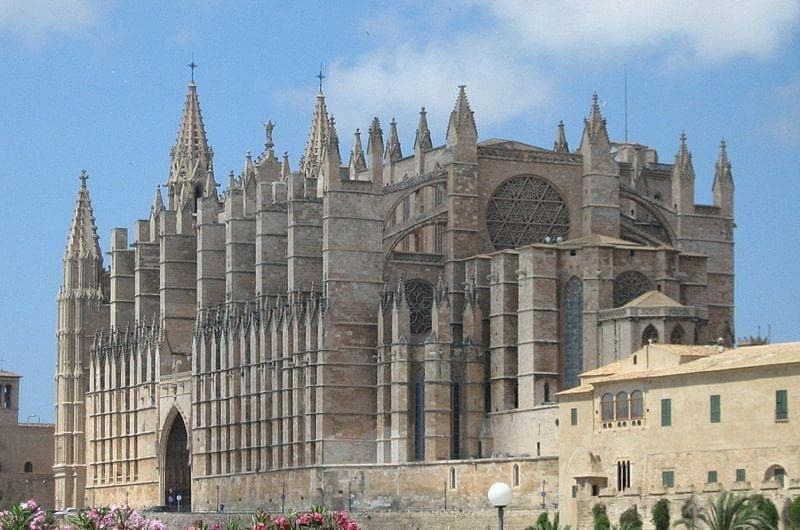
What the day feels like
The first light of a Palma morning slides across the Bay of Palma and finds its way through an enormous stained-glass wheel: the cathedral’s rose window throws a slow, moving mosaic across the stone floor like an awakening tide. Standing on the salt-scented promenade below, the cathedral—La Seu—looks less like a building and more like a monument tuned to the Mediterranean: stoic, sun-polished, and aware of the sea it faces. Walk the steps up from Parc de la Mar and the city unspools at your feet—narrow alleys, shuttered balconies, and the hush of a centuries-old place that somehow still expects you to hurry and see it before the afternoon heat softens everything.
La Seu is where Palma’s layered past becomes legible. The cathedral you enter today began as a Christian response to the island’s recapture in 1229 and was raised over the footprint of an earlier mosque. Construction stretched through the high Gothic centuries into the 17th century, later drawing the attention of Antoni Gaudí in the early 20th century, who reshaped interior lines and light. The result is both medieval muscle and modern intervention; Gaudí’s subtle hand—and later contemporary artists’ touches—keeps the building alive, not as a museum piece but as a working, breathing center of civic and spiritual life.
What travelers feel first is the scale: soaring vaults, slender columns like a stone forest, and that cathedral “eye” that turns light into narrative. But Palma is not only stone. The city’s Old Town is a compact tangle of plazas, cafés, and local shops that reward slow exploration. A food-tasting walking tour threads these lanes through neighborhood bakeries and markets—panades and ensaimadas arrive warm, and a local guide translates the tastes into history. For those who prefer to cover more ground with less sweat, options range from quiet, coached sightseeing on the PalmaBus to playful Segway loops and tuk-tuk hops that still pause long enough for photos at the cathedral and the harbor.
If you have half a day, combine cathedral time with a private walk-and-boat option that ends with a one-hour cruise around the Bay of Palma. From the deck, La Seu’s façade reads differently—facing the sea, its silhouette is an emblem of Mallorca’s maritime life. For a day that’s all about motion—coastline, switchback roads, and small mountain towns—book a private drive into the Serra de Tramuntana. The same cliffs and terraces that earned UNESCO recognition host Valldemossa and Sóller, two of the island’s most atmospheric villages. If you want flash and speed, a GT Cabrio sports-car tour stitches the coastline and mountain passes together with a cinematic flourish.
Practicalities matter here: most cathedral visits fit into a 45–90 minute window if you’re focused, longer if you linger under the rose window or climb to rooftops (restricted access varies). Expect 2–4 km of walking amid cobbled streets when you pair La Seu with the surrounding Old Town—comfortable shoes and a water bottle will make the difference between a pleasant morning and a slog. Summer brings high sun and the need for sun protection; spring and fall are ideal for mixing indoor monument time with coastal drives.
Timing is strategy. Early morning or late afternoon bests the heat and gives you the interior in softer light; the rose window really sings when the sun is low. Book tickets in advance if you’re on a tight schedule—guided small-group visits and premium coach tours often include skip-the-line access and the added benefit of local context that turns carved capitals and chapels into stories. For families, a sailing flavors day on a private boat doubles as a history lesson and a summer playground—paddleboards, snorkel stops, and a chef-prepared BBQ make it an accessible way to sample Mallorca’s sea.
Respect the house: dress modestly for interior chapels, lower voices in religious areas, and keep camera flash to a minimum. Accessibility is decent in the main visitor areas but expect cobbles and steps if you stray into the narrowest alleys. Pickpockets operate in tourist centers—carry a secure wallet and remain aware on busy promenades.
Pairing suggestions: a morning in La Seu and the Almudaina palace, lunch at the Mercat de l’Olivar for fresh seafood or tapas, and an afternoon drive through the Tramuntana, or swap the drive for a gentle one-hour cruise to feel the island’s maritime rhythm. If you want local flavor with minimal planning, join a small-group food tour that stops at a working convent bakery and a century-old café—palate and history in one route.
Palma is generous: its old stones keep secrets but also hand them over to anyone willing to look. Whether you’re cataloging Gothic details, timing the cathedral’s light for photographs, or swapping stories with a guide over a local pastry, La Seu is a place that rewards curiosity and sensible preparation. Bring good shoes, sun protection, and a readiness to let the city guide your pace. The cathedral will be waiting, its rose window opening and closing like a slow, patient blink over the harbor.
Trail wisdom
Small choices, better day.
Time your visit for soft light
Arrive early morning or late afternoon to see the rose window and interior at their most dramatic and avoid midday crowds.
Dress respectfully
Wear shoulders-and-knees-covering clothing inside chapels; lightweight layers work best for shifting indoor/outdoor temps.
Stay hydrated and fueled
Carry a 1L water bottle and a small snack—old-town walking can add up to several kilometers of cobbles and stairs.
Combine modes to see more
Pair a guided walking tour with a short boat cruise or a coastal drive to get both the city’s micro-details and the island’s broader geography.
Local knowledge
Read the place, not just the route.
Watch for native species including yellow-legged gulls that wheel over the harbor, Mediterranean geckos that sun on warm stone walls.
Keep an eye out for wildlife during the transition between areas and habitats. Respect distance guidelines.
The cathedral and Palma’s Old Town are under active preservation; visitors can help by using licensed guides, avoiding off-path wear on fragile stone, and reducing single-use plastics.
Follow the guide's instructions on size limits, ethical handling, and leave-no-trace practices.
Banys Arabs (Arab Baths) — a quiet remnant of the island’s Moorish past tucked near the cathedral. Rooftop terrace at Es Baluard museum for a less-crowded panorama of La Seu and the bay
Locally recommended viewpoints and quiet spots known best to local operators.
La Seu was begun after James I’s 13th-century reconquest of Mallorca; construction spanned medieval centuries and drew Gaudí’s attention in the early 20th century.
Maritime roots and regional tradition shape the waterways and working coasts.
Seasonal guide
Four versions of the same landscape.
Spring
Best formild walking · outdoor cafés · photography of cathedral light
Challengesoccasional rain · variable temperatures
Spring offers mild temperatures and blooming terraces—ideal for mixing an interior cathedral visit with coastal drives into the Serra de Tramuntana.
Summer
Best forlong daylight hours · boat cruises · evening tapas
Challengeshigh heat · crowds and full bookings
Summer is perfect for sailing, beach stops, and late-night dining—book tickets and tours in advance and prioritize early cathedral visits to beat the heat.
Fall
Best forscenic drives · fewer tourists · fresh markets
Challengesshorter days · some seasonal business closures
Autumn’s warm light is great for photography and for combining La Seu visits with drives through the Tramuntana when roads are quieter.
Winter
Best foroff-peak visits · museums and local museums · lower prices
Challengescooler weather · reduced boat schedules
Winter sees fewer visitors—enjoy a quieter cathedral and more authentic city rhythms, though sailing options are limited.
Pack with intention
What to bring.
Good to know
Common questions.
Advance tickets are recommended during high season—many guided tours and premium coach services include entry to skip lines.
Plan the edges
The details that make the day easier.
Construction of Palma Cathedral began after King James I captured Mallorca in 1229, and Antoni Gaudí worked on its interior restoration between 1904 and 1914.
Palma’s food scene blends Catalan and island traditions—try ensaimada pastries for breakfast, pa amb oli for a simple lunch, and fresh seafood tapas at Mercat de l’Olivar or a harbor-side bar.
Choose licensed local guides, limit single-use plastics, avoid stepping on sensitive stonework, and favor small-group tours to reduce visitor pressure on fragile sites.
Explore by topic
Follow the threads.
Keep exploring
Make the story part of the trip.
 Related story
Less than two hours from Nairobi, Kereita Forest pairs hands-on canopy adventure with quiet montane trails and a sobering colonial history—perfect for families, teams, and curious travelers seeking a full-day pulse of nature.
Set out from Bass Harbor for a private, customizable day on Blue Hill Bay — lighthouses, puffins, seals, and the chance to feel Acadia from the water. Small groups, local captains, unforgettable views.
In four hours you can move from shaded canyon ferns to wind-scoured coastal ridgelines, guided by someone who knows where the light—and the hidden views—live. This private half-day hike on the Monterey Peninsula or Big Sur is compact, curated, and perfect for travelers who want depth without a multiday commitment.