
What the day feels like
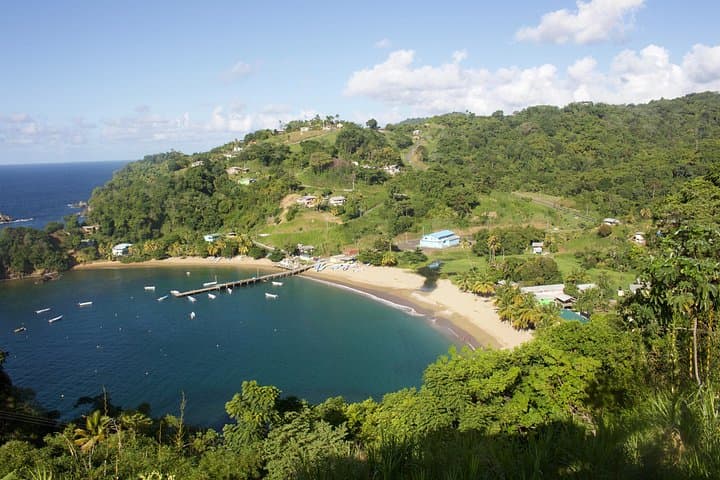
The minivan turns a corner and the Caribbean opens up like someone peeling back a curtain. Blue so bright it seems impossible sweeps along the road; coconut palms lean toward the sea as if trying to listen to the waves; a dog naps on a sun-warmed rock by a small fishing shed. That first, slow inhale of Tobago—salt in the air, lacquered greens of rainforest, and the soft punctuation of village life—arrives in a single, striking tableau. Around the Island is designed to let that tableau repeat itself: a steady sequence of shorelines, lookouts, and villages unraveled over the course of an eight-hour day.
There’s a particular honesty to traveling an island by road. You’re not racing past views from a cruise deck; you’re in the middle of them. The trip sweeps along Trinidad and Tobago’s northeastern coastlines, down to the Caribbean-facing coves and back around the calmer Atlantic side. You stop at Mt. Dillon, a ridge that yanks your view inland—green terraces folding into a distant village cove—and at Castara, an old fishing village where men still pull nets and the pier doubles as a social calendar. You’ll detour through the Main Ridge Forest, one of the oldest legally protected forests in the Western Hemisphere, and pass sugar-plantation-era ruins, coral-sanded beaches, and roadside stalls selling fried fish and cold drinks.
Geology and history are braided here. The island’s low mountains are the product of ancient volcanic activity; once dense, eroded peaks now host long ridgelines that frame the beaches. European colonization—first Spanish, then Dutch, French, and British—left a litter of place names and estates, and the legacies of plantations are visible in architecture and land use. Yet Tobago’s story is not only colonial: it’s also the story of fishing communities whose rhythms still define much of coastal life, and of conservation efforts—the Main Ridge Forest Reserve was protected in 1776 to preserve water sources—that shape modern stewardship.
Culturally, the island is hospitable without pretension. Music and chatter spill from corner shops; kitchen smoke marks out where a woman is frying saltfish; small roadside stands sell mangoes so sweet they taste like a discovery. Local guides are the connective tissue of the tour: they aren’t only drivers but interpreters, translating a landscape into a narrative of seasons, storms, and livelihoods.
The practical side of this postcard is simple and generous. The tour is a full-day, roughly eight-hour loop (the operator advertises a 480-minute excursion), priced from about $130 per person with instant confirmation and free cancellation—useful if the weather curdles into squalls. Terrain is mostly paved roads and short, well-maintained walking paths at lookouts and beaches; no long technical hikes are required. Bring shoes you can slip on and off for beach stops and a light pair of walking shoes for short lookout trails. Water and shade are intermittent; plan for sun and sudden tropical rain.
Timing matters. Morning light brings the coastline into saturated contrast—ideal for photos—and roads are generally quieter before late-morning traffic. Conversely, late afternoons can be spectacular around Mt. Dillon as the sun slants low and villages soften into gold. Rain is a frequent, short-lived companion through much of the year; the dry months (December to May) offer the most predictable conditions.
If you’re plotting this day as part of a longer Tobago trip, consider pairing it with snorkeling at a coral garden the following morning or a guided birdwalk in the Main Ridge. Bring a refillable bottle (locals are increasingly switching away from single-use plastic), reef-safe sunscreen, and a camera with a polarizer to tame glare on the sea. For food, expect fresh, simple seafood—fried or grill—sold in village shacks and small beachside restaurants; try crab and dumplings if it’s offered.
Why take the tour? If you want compressed intimacy with an island—the look of its reefs, the cadence of its villages, and the reach of its ridgelines—an organized around-the-island run is efficient and expansive at once. It removes the stress of navigation on unfamiliar roads, adds local insights at every stop, and stitches isolated highlights into a coherent, no-wasted-miles experience.
Book with an eye to small-group options if you crave a quieter day, but even in a larger group the rhythm of stops—beach, village, lookout, forest—lets you step away from the bus and into real place. Travel light, bring curiosity, and let the island set the tempo: the sea will dare you to look farther, the roads will nudge you toward an unplanned turn, and the villages will reward the time you slow down to listen.
Trail wisdom
Small choices, better day.
Start Early
Morning light makes for better photos and quieter roads—aim to begin the tour just after sunrise if available.
Bring Cash
Small stalls and village eateries often accept cash only—carry small bills for food and tips.
Sun and Rain Ready
Pack a lightweight rain shell and reef-safe sunscreen; showers are frequent but brief.
Respect Beaches at Night
If you visit nesting beaches, stay off marked areas and follow guide instructions to avoid disturbing turtles.
Local knowledge
Read the place, not just the route.
Watch for native species including Hummingbirds around garden flowers, Leatherback and green sea turtles (nesting season varies).
Keep an eye out for wildlife during the transition between areas and habitats. Respect distance guidelines.
Support local guides and businesses, use reef-safe sunscreen, and avoid walking on marked nesting beaches—these steps help protect coral reefs and turtle nesting sites.
Follow the guide's instructions on size limits, ethical handling, and leave-no-trace practices.
Early-morning cast at Castara Pier—watch fishermen mend nets and return with the day’s catch. A small roadside shop near Mt. Dillon serving freshly fried plantain and cold drinks (ask your guide)
Locally recommended viewpoints and quiet spots known best to local operators.
Tobago’s Main Ridge Forest Reserve was set aside in 1776, making it one of the oldest legally protected forests in the Western Hemisphere; plantation-era ruins dot the coastline reflecting colonial agriculture.
Maritime roots and regional tradition shape the waterways and working coasts.
Seasonal guide
Four versions of the same landscape.
Spring
Best forBirdwatching · Calmer seas for snorkeling · Fruiting mango stands
ChallengesOccasional showers · Humidity increases
Late spring offers warm water for snorkeling and active birdlife, though expect brief rain and higher humidity.
Summer
Best forLush rainforest hikes · Warmer sea temperatures
ChallengesHigher rainfall and possible tropical storms · Hotter midday heat
Summer brings dense green forests and warm water but also more frequent heavy showers and heat; pack for rain.
Fall
Best forFewer tourists · Lush landscapes after rains
ChallengesHurricane season overlaps (lower probability but possible) · Unpredictable weather
Fall is quieter on visitors but carries the risk of broader Atlantic storm systems—check forecasts before booking.
Winter
Best forDry days and clear seas · Whale and dolphin sightings offshore (seasonal)
ChallengesCan be busier with holiday travel · Cooler trade winds some mornings
The dry season (Dec–Feb) offers the most reliable weather and visibility—prime for photography and coastal views.
Operator details
What the booking data adds.
Included
- ✓Enjoy Tobago's best local food at the famous Jemma's Sea View Kitchen
Good to know
- ✓Specialized infant seats are available
- ✓Suitable for all physical fitness levels
Pack with intention
What to bring.
Good to know
Common questions.
The tour runs approximately eight hours (480 minutes) and includes multiple stops along the island loop.
Plan the edges
The details that make the day easier.
The Main Ridge Forest Reserve in Tobago was legally protected in 1776 and is one of the oldest forest reserves in the Western Hemisphere.
After the drive, head to a beachside shack in Castara or Charlotteville for freshly grilled fish and a cold drink—look for crab and dumplings or fried flying fish; Scarborough’s market offers local sweets and spices if you want to sample island flavors.
- Closest airport
- ANR Robinson International (TAB), Crown Point — ~30–40 minute drive to Scarborough; Tour duration: ~8 hours; Cell service: good near towns, patchy in Main Ridge; Permits: none required for day tours; Operator: meet at central pickup or hotel transfer typically provided.
This tour visits sensitive coastal and forest habitats—use reef-safe sunscreen, avoid single-use plastics, stay on marked paths, and follow guide instructions to protect turtle nesting sites and coral reefs.
Explore by topic
Follow the threads.
Keep exploring
Make the story part of the trip.
 Related story
Less than two hours from Nairobi, Kereita Forest pairs hands-on canopy adventure with quiet montane trails and a sobering colonial history—perfect for families, teams, and curious travelers seeking a full-day pulse of nature.
Set out from Bass Harbor for a private, customizable day on Blue Hill Bay — lighthouses, puffins, seals, and the chance to feel Acadia from the water. Small groups, local captains, unforgettable views.
In four hours you can move from shaded canyon ferns to wind-scoured coastal ridgelines, guided by someone who knows where the light—and the hidden views—live. This private half-day hike on the Monterey Peninsula or Big Sur is compact, curated, and perfect for travelers who want depth without a multiday commitment.