
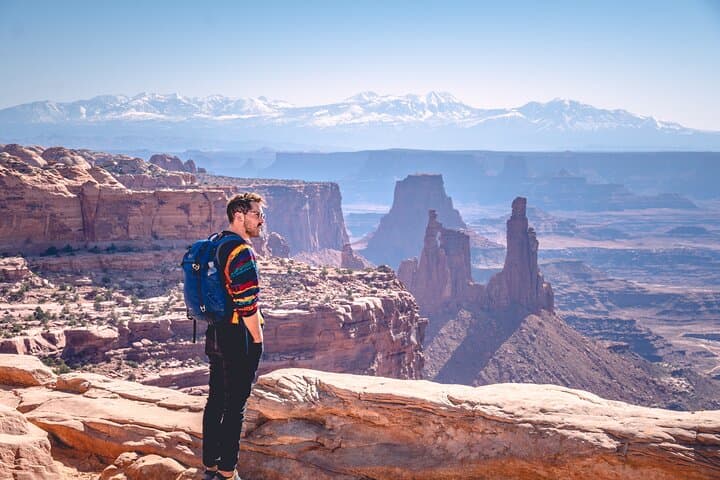
What the day feels like
Sunrise wakes the rock before it warms your skin. Shadows pour off fins of Entrada sandstone, sliding into canyons and gathering under the famous spans that made Arches National Park a pilgrimage site for walkers with a camera and a thirst for big, clean air. Underfoot, slickrock grips like sandpaper. Overhead, ravens ride the early thermals and heckle you for starting late. The desert does not whisper; it sets the tempo and dares you to keep pace.
A full-day private tour and hike in Arches begins in motion—wheels humming past the park’s welcome sign as a local guide folds the day open. With timed-entry reservations filling fast most of the year, traveling with a guide means you glide past the gate without watching the clock. That small stress disappears in the rearview as the road climbs to Park Avenue, where walls glow like newly stoked embers. Step out and the scale hits first. These monoliths don’t loom so much as lean in, teaching you the vocabulary of place: fins, arches, alcoves, cryptobiotic soil.
Arches is not accidental. Its story starts with salt—ancient beds deposited 300 million years ago that buckled and collapsed under younger layers. As that cap fractured, water and ice threaded every weakness, carving fins and punching through until rock connected sky. Today more than 2,000 cataloged arches dot the park, from the clean, airy curve of Landscape Arch to the iconic free-standing stride of Delicate Arch. On a private tour, you pick your chorus line: an early leg-stretcher along Park Avenue; a contemplative loop around The Windows and Double Arch; a focused push to Delicate Arch, where the bowl below the span holds wind like a tuned drum; or a stroll to the ribbon-thin miracle of Landscape Arch in Devils Garden. Your guide calibrates the day to your group’s energy, curiosity, and comfort with exposure.
On the trail, desert life introduces itself in small, resilient gestures: a claret cup cactus lighting its own match in the sand; a lizard sprinting across sun-warmed stone as if the heat were a nudge; juniper trunks twisting like old rope to withstand centuries of drought. The big moments come easy—turn a corner and an arch frames the La Sal Mountains like a postcard you can breathe—but the park’s character shines in the in-between. The ground itself asks for respect. That dark, knobby crust along the trail edge is living cryptobiotic soil, a micro-community that holds this landscape together. Stay on rock and worn paths and the desert thanks you by holding its shape for the next pair of boots.
Culture runs as deep as geology here. The Ute and ancestral Puebloan peoples moved through these canyons long before any road touched them, leaving petroglyphs that speak across time. Your guide can fold that perspective into the day, pointing out panels near Delicate Arch’s trailhead or sharing how water, the desert’s most powerful sculptor, also governed seasonal movement and survival. History lingers in the pioneer era ruins and in the names etched into maps—some poetic, some plain. But the stone keeps the longest memory.
By midday, the sun turns urgent. The wind pushes forward. You might switch to a shadier itinerary—Sand Dune Arch’s cool slot, or the short climb to Skyline Arch—then retreat to the truck for cold water as the guide cruises to the next trailhead. If conditions permit, late afternoon is prime for Devils Garden, where fins march like stone ribs. Kids often love scrambling in safe, low-angle bites; experienced hikers can tack on side paths for bigger views. As daylight stretches thin, Balanced Rock earns its name anew and the Windows glow like backlit amber.
A private day here is ambitious but not punishing if you pace it. Expect 4–8 miles of hiking across dirt and slickrock, with occasional steps and short, steep pitches. Delicate Arch demands a steady climb and mild exposure near the end; The Windows and Double Arch are family-friendly; Landscape Arch is a gentle out-and-back with payoff far bigger than the effort. Your guide handles the sequencing, shuttle, and timing so you can watch how the light plays its own game, hunting shadows from one formation to the next.
Practical matters are simple but essential. This is high desert. Summer bakes. Winter bites. Spring and fall offer the sweet spot: crisp mornings, manageable afternoons, long golden hours. Carry more water than you think you’ll need, wear grippy shoes, and guard your skin. The park provides restrooms at main trailheads but no services once you step onto rock. Drones are prohibited. Dogs are not allowed on park trails. And the crust—the humble, living crust—remains the one thing you must not touch.
In the end, the day narrows to a last stop. Maybe you stand under Double Arch and feel the scale like a cathedral with no roof. Maybe you watch a sliver of moon chase the sun over the La Sals. The arches are not static; they breathe with temperature, expand and contract, and sometimes fail in a sigh of dust. That impermanence is part of the draw. You move through this place, and it moves through you, one careful step at a time.
Trail wisdom
Small choices, better day.
Start With First Light
Sunrise beats the heat, the crowds, and delivers the best color on Park Avenue and The Windows.
Slickrock = Grip
Non-cotton socks and shoes with sticky rubber handle the sandpaper-like sandstone and reduce hot spots.
Carry Real Water
Plan on 3 liters per person for a full day; supplement with electrolytes to handle dry desert air.
Respect the Crust
Cryptobiotic soil is alive—stay on rock or established trails to protect this fragile ecosystem.
Local knowledge
Read the place, not just the route.
Watch for native species including Desert bighorn sheep, Common raven.
Keep an eye out for wildlife during the transition between areas and habitats. Respect distance guidelines.
Cryptobiotic soil holds the desert together; stepping off trail can damage decades of growth. Pack out all waste and never climb on named arches.
Follow the guide's instructions on size limits, ethical handling, and leave-no-trace practices.
Garden of Eden viewpoint near The Windows for crowd-free sunset color. Skyline Arch in late afternoon light—short walk, big reward
Locally recommended viewpoints and quiet spots known best to local operators.
Ancestral Puebloan and Ute peoples traveled these canyons for centuries; petroglyphs near the Delicate Arch trailhead offer a window into that past.
Maritime roots and regional tradition shape the waterways and working coasts.
Seasonal guide
Four versions of the same landscape.
Spring
Best forWildflower pops · Cool mornings · Balanced hiking temps
ChallengesVariable wind · Occasional spring storms
March–May brings ideal hiking weather with crisp dawns and comfortable afternoons; layers are key.
Summer
Best forSunrise and sunset hikes · Clear night skies
ChallengesHigh heat (90–105°F) · Monsoon storms and flash-flood risk
June–August demands early starts, long siestas, and vigilant hydration; watch for lightning and rapidly changing conditions.
Fall
Best forGolden light · Stable weather · Fewer crowds after Labor Day
ChallengesShorter daylight · Cooler mornings
September–November is prime for big itineraries and photography; plan layers for chilly evenings.
Winter
Best forQuiet trails · Snow-dusted arches
ChallengesIcy slickrock · Cold temps and limited services
December–February is serene but cold; traction aids can help on icy sections and many facilities operate on reduced hours.
Operator details
What the booking data adds.
Included
- ✓Private transportation
- ✓Park entry fees
- ✓Private, medically trained, naturalist guide
- ✓Air-conditioned vehicle
- ✓At midday, your guide will serve a gourmet picnic lunch. We cater to all dietary requests, allergies or food restrictions with notice!
Not included
- —Gratuity for guides - If you had a great day, a 10-20% tip is appreciated!
Good to know
- ✓Wheelchair accessible
- ✓Infants and small children can ride in a pram or stroller
- ✓Service animals allowed
- ✓Specialized infant seats are available
- ✓Suitable for all physical fitness levels
Pack with intention
What to bring.
Good to know
Common questions.
Expect 4–8 miles depending on route selection; the itinerary is customized to your group’s interests and pace.
Plan the edges
The details that make the day easier.
Arches National Park contains over 2,000 documented natural stone arches, many formed in the Entrada Sandstone layer above ancient salt beds that deformed the landscape.
After the hike, refuel in Moab: grab a green chile cheeseburger and a cold Dead Horse Amber at Moab Brewery, linger over curry at Thai Bella, or hit Quesadilla Mobilla for fast, satisfying handhelds. For a sweet cool-down, swing by Doughbird for coffee and soft-serve. Stroll Main Street’s galleries for local sandstone photography before the evening glow returns to the cliffs.
- Closest airport
- Canyonlands Field (CNY) 16 miles; larger hubs: Grand Junction (GJT) ~113 miles, Salt Lake City (SLC) ~230 miles. Trailhead hub: Arches Visitor Center. Driving distance from Moab: ~5 miles to the park entrance. Cell service: Spotty beyond trailheads—download offline maps. Permits: Timed-entry required seasonally, but waived when touring with a licensed guide; no drone use permitted.
This desert is slow to heal. Stay on rock or established trails to protect cryptobiotic soil, carry out all trash, use restrooms at trailheads, and never carve or stack rocks on formations.
Explore by topic
Follow the threads.
Keep exploring
Make the story part of the trip.
 Related story
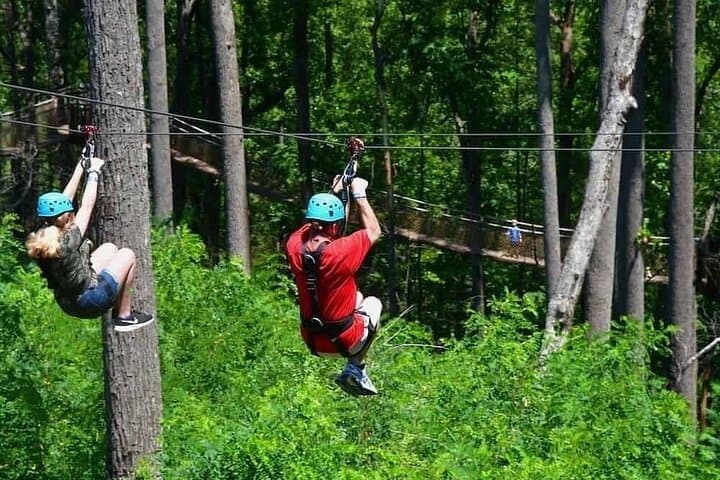
Less than two hours from Nairobi, Kereita Forest pairs hands-on canopy adventure with quiet montane trails and a sobering colonial history—perfect for families, teams, and curious travelers seeking a full-day pulse of nature.
Set out from Bass Harbor for a private, customizable day on Blue Hill Bay — lighthouses, puffins, seals, and the chance to feel Acadia from the water. Small groups, local captains, unforgettable views.
In four hours you can move from shaded canyon ferns to wind-scoured coastal ridgelines, guided by someone who knows where the light—and the hidden views—live. This private half-day hike on the Monterey Peninsula or Big Sur is compact, curated, and perfect for travelers who want depth without a multiday commitment.